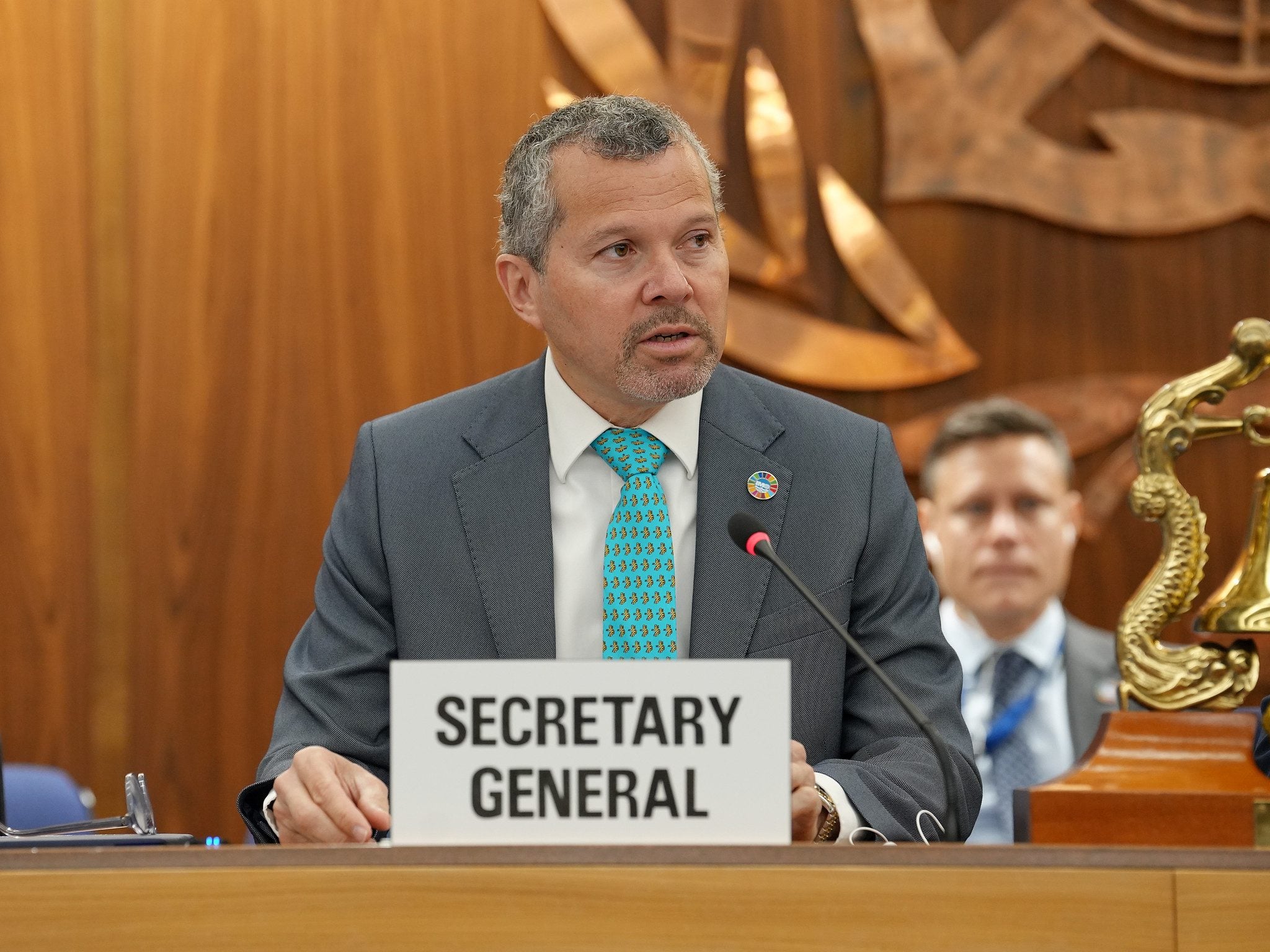
The head of the International Maritime Organization used a rare appearance before the United Nations Security Councilon Monday to deliver some of his strongest statements yet that the crisis in the Strait of Hormuz remains fundamentally unresolved, rejecting transit tolls as unlawful, calling for mine clearance, and warning that commercial confidence cannot return while safe navigation remains in doubt.
The remarks by IMO Secretary-General Arsenio Dominguez came after several days of increasingly blunt statements from the U.N. shipping chief, culminating in a message that aligned closely with warnings from shipowners and security analysts that the real obstacle to reopening the strait is not political declarations but hazards in the water and the lack of credible guarantees for passage.
“The principle of freedom of navigation is not negotiable,” Dominguez told the Security Council.
In one of the sharpest legal rebukes yet to emerging transit restrictions in the waterway, he said there is “no legal basis” for any country to impose payments, tolls, or discriminatory conditions on passage through an international strait, a clear challenge to reports of “permission-to-transit” arrangements and ad hoc fees demanded by Iran from some ships using coordinated routes through Hormuz.
Any departure from long-established transit rights, he warned, would set a dangerous precedent for global shipping.
Just as significant was his explicit call for states, when conditions allow, to assist in clearing hazards to navigation “including mines,” one of the clearest acknowledgements yet from the IMO that mine risks remain central to restoring normal commerce.
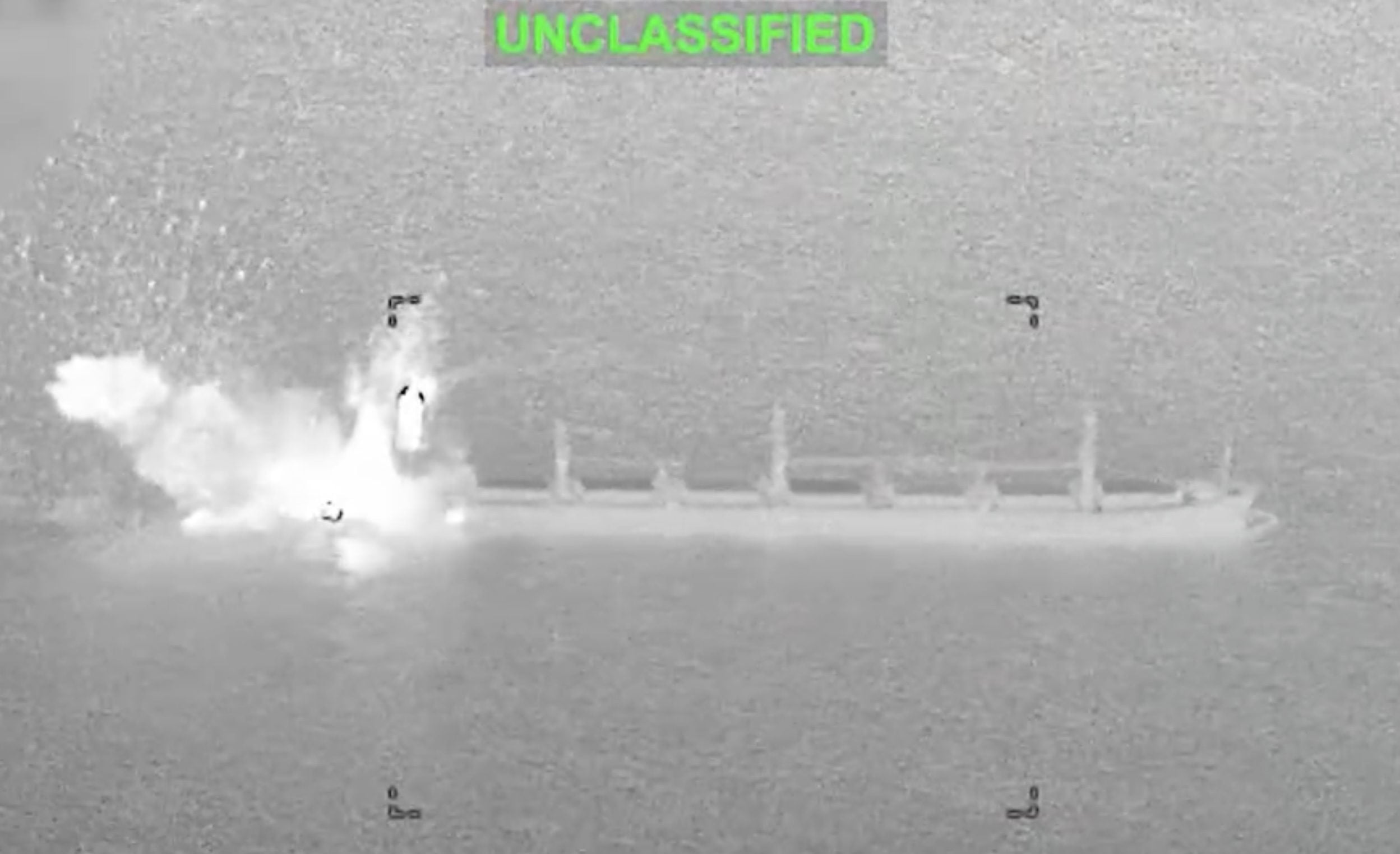
The comments reinforced an even starker warning Dominguez delivered to member states and industry representatives last week, when he said “there is no safe transit anywhere in the Strait of Hormuz,” citing 29 verified attacks on vessels since the conflict began, at least 10 seafarer deaths, several vessels seized in recent days, and what he described as potential mines present throughout the strait.
That blunt assessment may be the clearest answer yet to claims the waterway is reopening.
At the opening of the 84th session of the Marine Environment Protection Committee earlier Monday, Dominguez put the Hormuz crisis ahead of climate negotiations, warning thousands of stranded seafarers remain exposed to growing safety risks and cautioning the prolonged disruption raises the risk of “serious accidents, including environmental accidents.”
For a meeting expected to focus on carbon pricing and shipping decarbonization, it was a notable signal that maritime security has intruded directly into the environmental agenda.
Dominguez also used both appearances to underscore a parallel humanitarian effort taking shape at the IMO: an evacuation framework for trapped vessels and crews using the long-established Traffic Separation Scheme jointly managed by Iran and Oman.
That route, first adopted by the IMO in 1968, “remains the only recognized route through the Strait,” he said.
The proposed safe maritime corridor, first advanced by the IMO Council in March and refined in subsequent discussions, would prioritize stranded vessels for departure based on humanitarian need and use the traffic separation scheme as an evacuation route once all parties provide assurances against attacks.
Dominguez told the Security Council the organization stands ready to implement the framework without delay when it is safe to do so, while calling on states to support the operation, help remove hazards, provide civilian technical assistance, and ensure insurance remains available at reasonable cost to support a broader return of commercial traffic.
Taken together, the emphasis on evacuation, mine clearance and insurance availability may have been the speech’s most consequential signal.
The issue is no longer simply whether a ceasefire holds or whether some ships can transit under tightly managed conditions. It is whether commercial shipping can return under a regime operators regard as lawful, safe and insurable.
Shipping and seafarers, he said, “should never be used as leverage in geopolitical conflicts.”
For weeks, debate around Hormuz has centered on whether the strait is open or closed. Dominguez’s remarks pointed to a different measure: whether shipping can move under conditions operators would regard as safe, lawful and commercially viable.
Both Dominguez’s and Rubio’s comments mirror the position increasingly taking hold across the industry: reopening the strait is less about political declarations than restoring navigational safety and commercial confidence.
And in taking that message to the Security Council while repeating it at the IMO’s flagship environmental summit, the U.N.’s maritime agency appears to be making clear the crisis in Hormuz is no longer merely a regional security issue, but a global shipping challenge.

 Join The Club