Don’t Miss Your Daily Briefing for the Maritime Industry
Join the leading maritime news network
— trusted by our 106,954 members
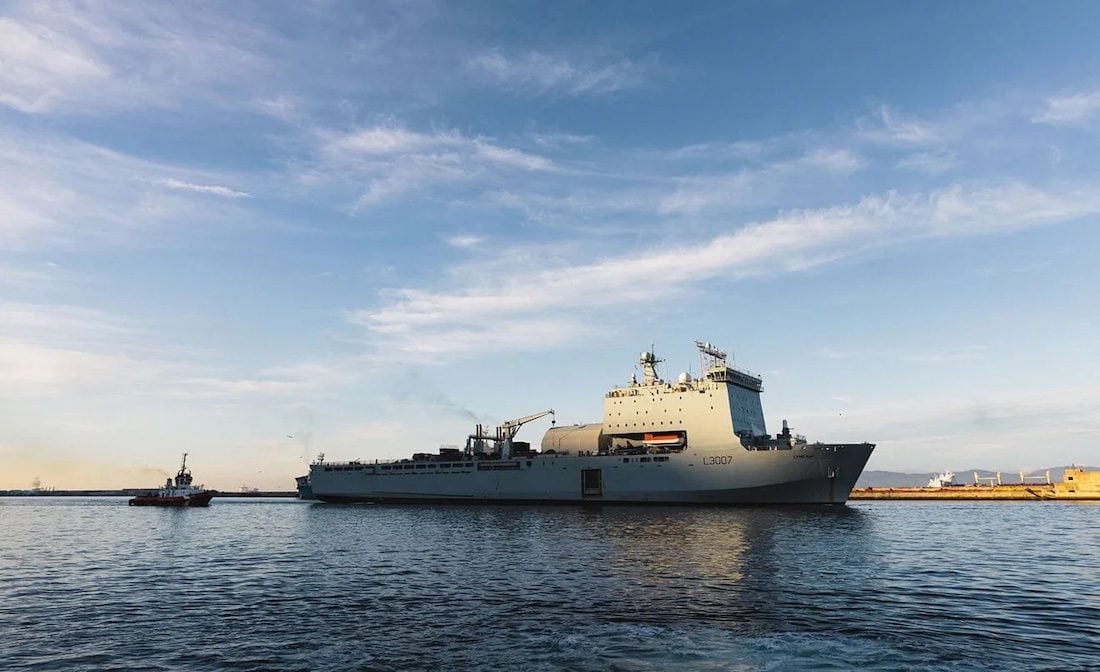
RFA Lyme Bay departs Gibraltar carrying advanced autonomous mine-hunting systems and more than 100 Royal Navy specialists ahead of a potential multinational maritime security mission in the Strait of Hormuz. Photo courtesy Royal Navy
Royal Navy Deploys New Mine-Hunting Drone as 15-Nation Hormuz Coalition Takes Shape
The Royal Navy has deployed a new underwater mine disposal system aboard RFA Lyme Bay as Britain and France finalize plans for a multinational operation to clear naval mines from the Strait of Hormuz once a political agreement allows commercial traffic to resume.
The move offers one of the clearest signs yet that Western military planners are preparing for what many in the shipping industry increasingly see as the biggest obstacle to reopening the strategic waterway: naval mines.
According to Bloomberg, Britain and France have completed preparations for a coalition mission involving up to 15 countries that would begin mine-clearance operations shortly after the United States and Iran reach an agreement restoring freedom of navigation through the strait.
The Royal Fleet Auxiliary vessel RFA Lyme Baydeparted Gibraltar last month carrying advanced autonomous mine-hunting systems and more than 100 specialist Royal Navy personnel.
Among them is the Royal Navy’s Diving Threat and Exploitation Group, which recently completed accelerated training on the Video Ray Defender-Viper system, a portable remotely operated vehicle designed to locate, identify, and destroy underwater mines. Already used by Ukrainian forces, the system forms part of a broader autonomous mine warfare package embarked aboard Lyme Bay as the vessel heads toward the Middle East as a potential mine warfare mothership.
A practice mine as seen on the video display from the Video Ray Defender. Photo courtesy Royal Navy
The system combines the Defender underwater vehicle, a Viper attachment mechanism that secures an explosive charge directly to a mine, and the Tornado firing system used to detonate the charge from a safe distance. Royal Navy officials said it is particularly effective against buoyant mines suspended just below the surface, where they can detonate when struck by passing ships.
“A fundamental principle of Explosive Ordnance Disposal is to use remote means whenever possible, so if we have this tech, we need to use it,” Lieutenant Commander James Carpenter, commanding officer of Delta Squadron, said in a Royal Navy statement.
The deployment comes as attention increasingly shifts from diplomacy to the practical challenge of restoring safe navigation through one of the world’s most important maritime chokepoints.
President Donald Trump said Wednesday that U.S. forces had already removed many of the mines, stating they had “gotten most of them.” Secretary of State Marco Rubio told lawmakers earlier this week that Iran had mined large sections of the waterway during the conflict.
Bloomberg reported that military planners from multiple nations are now in the advanced stages of coordinating a mine-clearing effort led by Britain and France, with additional countries expected to contribute personnel, equipment, and naval assets.
The planning reflects growing concern that even if Washington and Tehran reach an agreement, commercial shipping may not immediately return to normal.
More than three months into the conflict, vessel traffic through the Strait of Hormuz remains well below normal levels as shipowners, charterers, and insurers continue weighing risks from mines, drones, missile attacks, and broader regional instability.
Iran has reportedly expressed interest in participating in mine-clearance operations, but Bloomberg reported that British and French officials prefer the multinational coalition to manage the effort and remain skeptical of Iran’s mine-countermeasure capabilities.
The United Kingdom has already positioned additional assets in the region. Royal Navy destroyer HMS Dragontransited the Suez Canal last month and entered the Middle East ahead of potential coalition operations. The Type 45 destroyer is equipped with the Sea Viper air-defense system and Wildcat helicopters designed to counter drone threats.
The emphasis on mine clearance aligns with repeated warnings from industry groups that naval mines remain one of the greatest barriers to restoring confidence in the Strait of Hormuz. BIMCO has warned that meaningful reopening could require weeks of dedicated mine-clearance operations even after a ceasefire or political settlement is reached.
While diplomats continue negotiating the terms of a broader agreement, military planners are increasingly focused on the next challenge: convincing shipowners, insurers, and energy traders that the world’s most important energy corridor is safe for business again.
Roughly one-fifth of global oil and LNG supplies normally transit the Strait of Hormuz, making the success of any mine-clearance effort critical to restoring global energy flows and maritime trade.
DUBAI, Oct 11 (Reuters) – The United States’ response to Iran’s seven conditions in a proposal to reopen the strategic Strait of Hormuz was “insufficient”, Iran’s security chief, Mohsen Rezaei, was quoted by state...
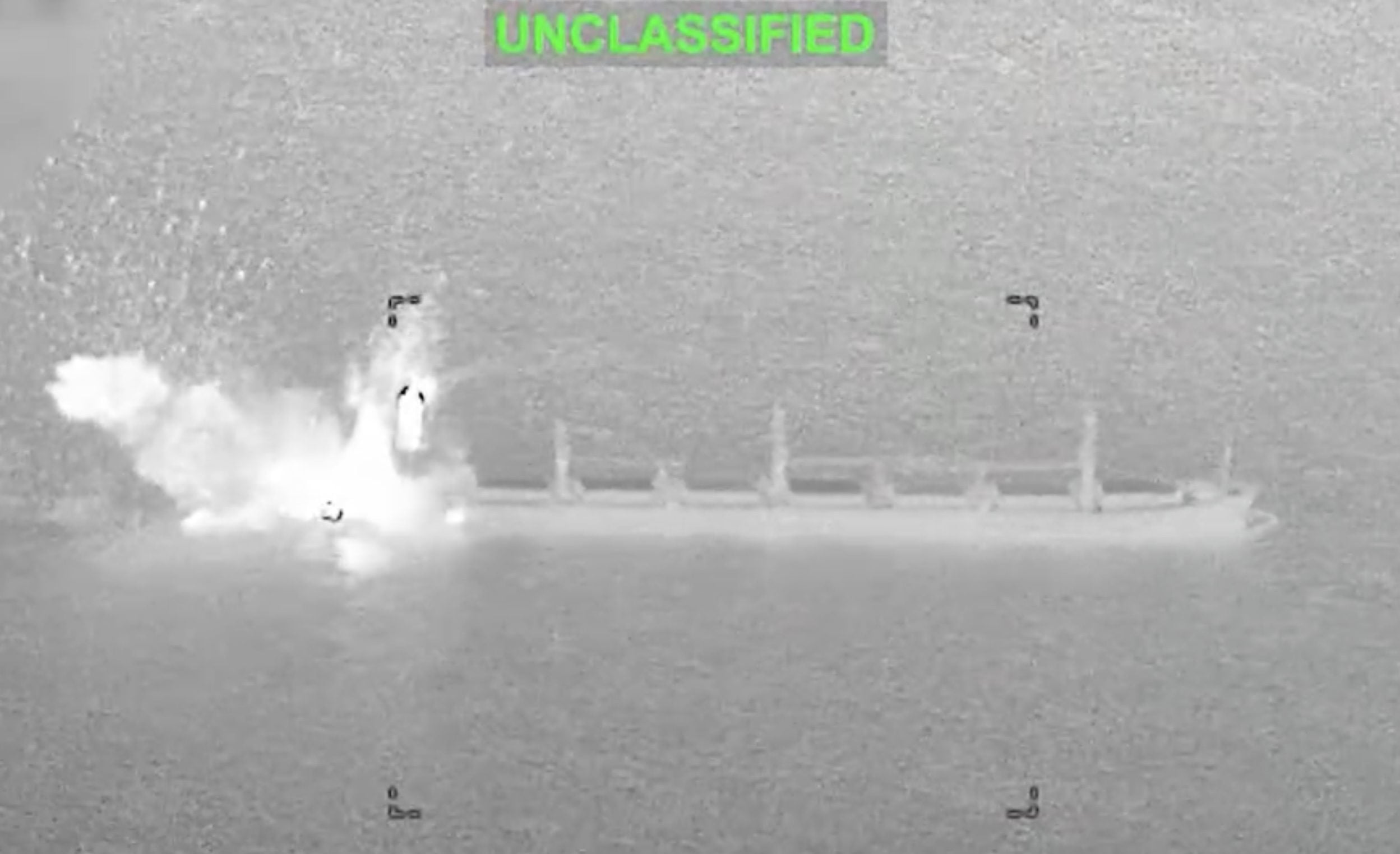
Two more tankers have been struck in the Strait of Hormuz as U.S. forces disable a cargo vessel in the Gulf of Oman, extending a sharp escalation in attacks on commercial shipping.
President Donald Trump said Friday that Russia has agreed to release millions of tons of diesel fuel into U.S. and global markets following a telephone call with Russian President Vladimir...
October 9, 2026
Total Views: 1713
Get The Industry’s Go-To News
Subscribe to gCaptain Daily and stay informed with the latest global maritime and offshore news
— just like 106,954 professionals
Secure Your Spot
on the gCaptain Crew
Stay informed with the latest maritime and offshore news, delivered daily straight to your inbox
— trusted by our 106,954 members
Your Gateway to the Maritime World!
Essential news coupled with the finest maritime content sourced from across the globe.

 Join The Club