By Bloomberg News
Mar 6, 2026(Bloomberg) –US oil posted the biggest weekly gain on record as the war in Iran upends critical energy market flows, with shipping through the Strait of Hormuz at a near-total halt.
West Texas Intermediate added 12% on Friday to settle just below $91 a barrel, the largest daily jump in almost six years, while Brent closed near $93 a barrel. Iran warned that the European Union is a “legitimate” target if it joins the war, adding to bullish momentum.
The Wall Street Journal reported that Kuwait has begun cutting production at some oil fields after running out of places to store bottled-up crude, the latest sign of a hit to regional output. Citigroup Inc. estimates that the oil market is losing 7 million to 11 million barrels of daily supply due to the disruption through Hormuz.
Crude surged even after US President Donald Trump signaled “imminent action” to reduce pressure on prices, while National Economic Council Director Kevin Hassett denied that the White House would tap the Strategic Petroleum Reserve, a cache of crude held in vast underground caverns, anytime soon.
“We’ve got a whole flow chart of tools to use,” Hassett said during a Bloomberg Television interview.
So far, the Treasury Department has eased curbs on India’s ability to buy Russian oil and the US International Development Finance Corp. announced a $20 billion plan for maritime reinsurance, including war risk, in the Gulf region.
Japan was also reportedly considering tapping national reserves. No action has yet been taken, though market participants are speculating that a coordinated release from multiple nations’ emergency oil inventories could be enacted to maximize impact.
Still, with no sign of a let-up in hostilities, Goldman Sachs Group Inc. flagged the risk of scenarios for oil topping $100 a barrel in the case of prolonged disruption. European diesel futures headed for a weekly gain of more than 50%, and central banks signaled unease about a possible resurgence in inflation.
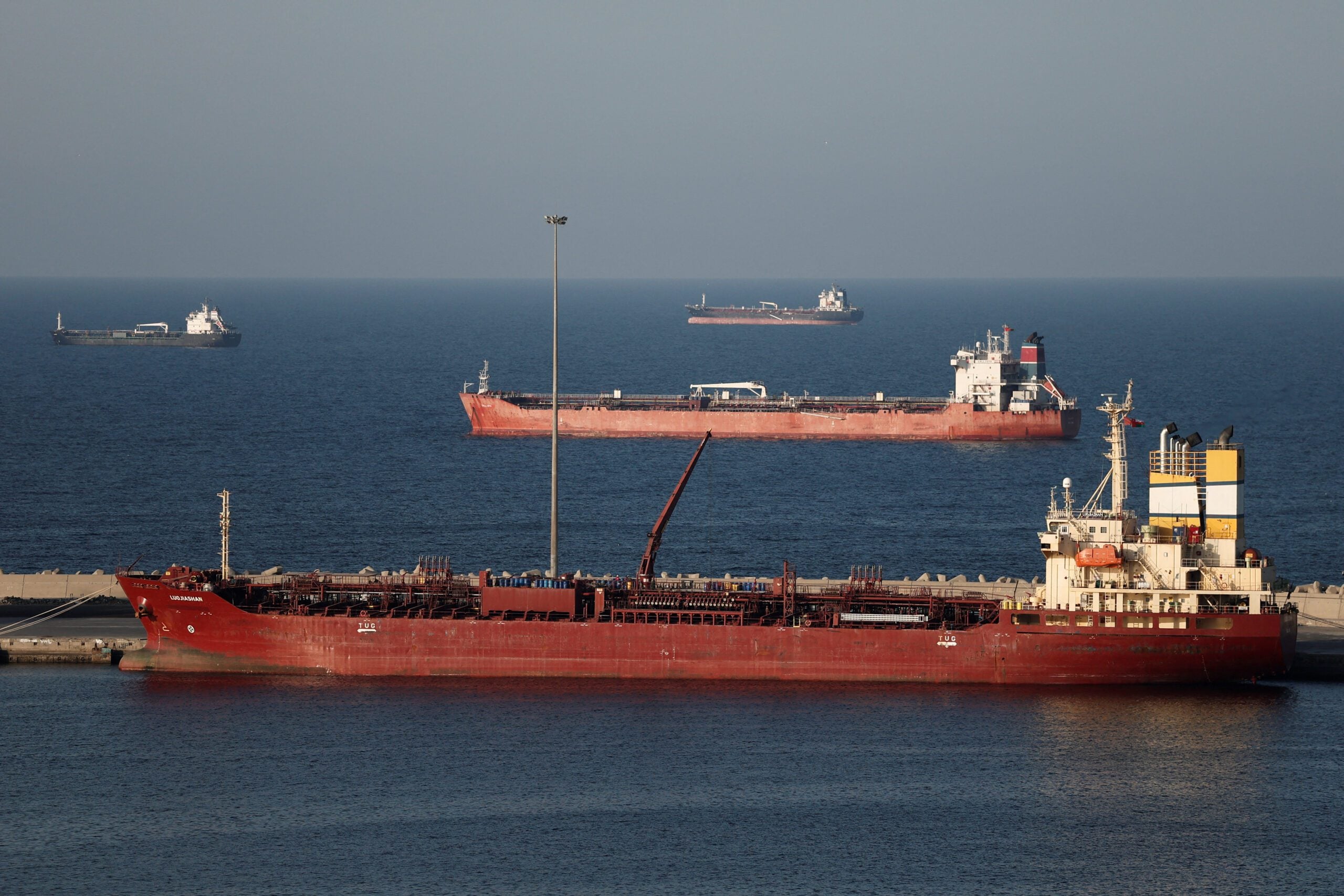
There has been a “near-total” pause in commercial traffic through Hormuz, according to the Joint Maritime Information Center, a multinational naval advisory group. The collapse stems from “security threats, insurance constraints, operational uncertainty and effective disruptions.”
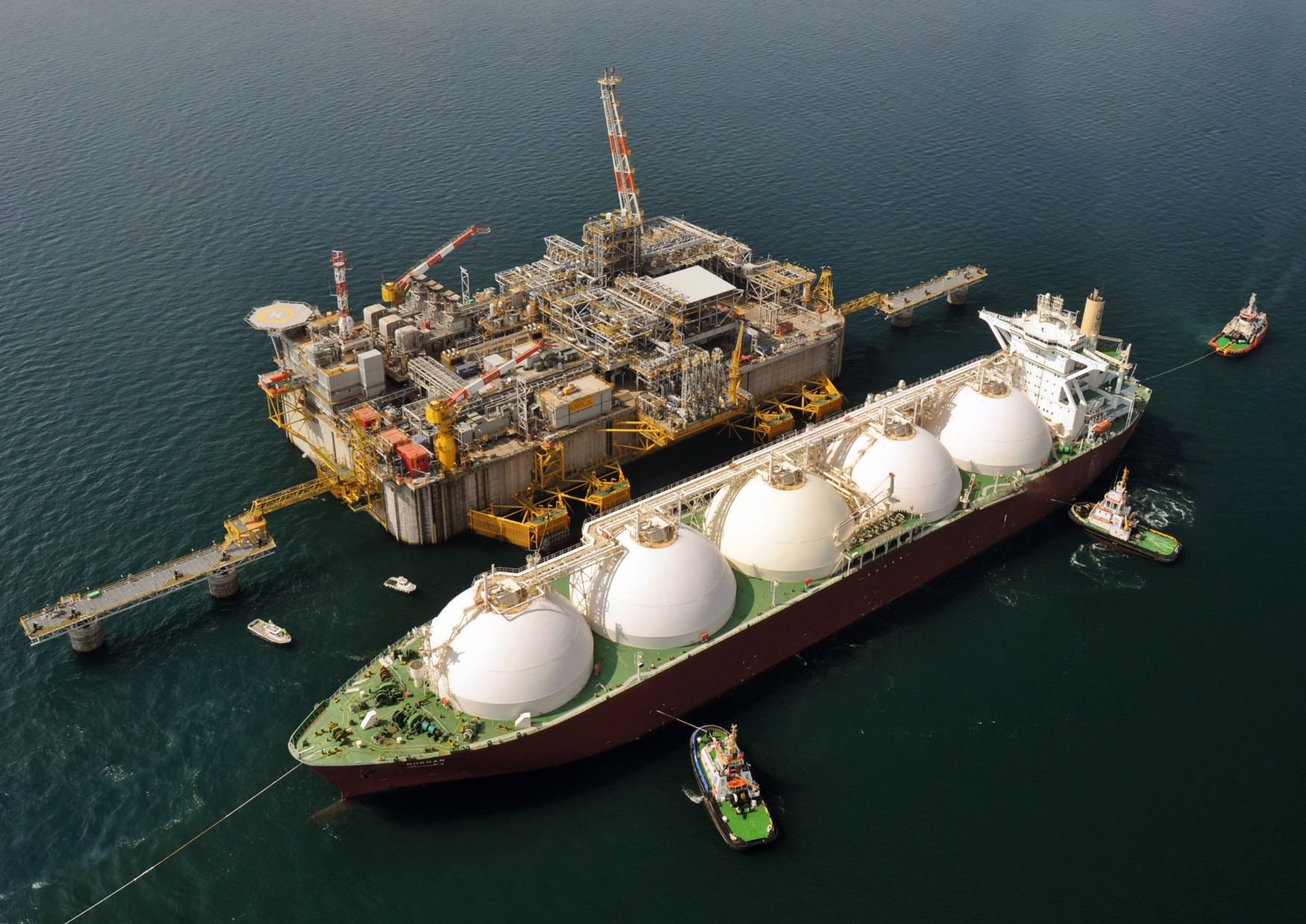
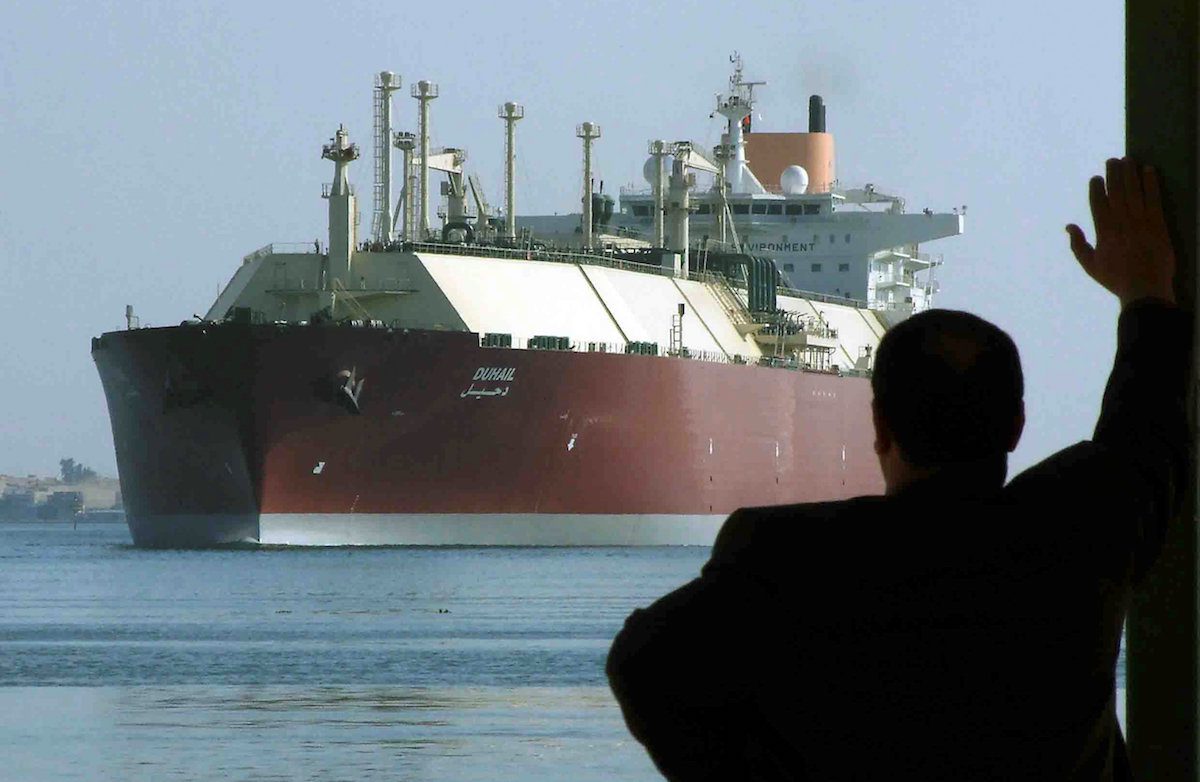
Some shippers are booking smaller vessels to transport oil from the US Gulf Coast to Asia as costs soar for the massive tankers typically used on those routes. Meanwhile, only nine empty VLCCs remain available to store crude from major Middle East producers. Once those are filled, onshore storage tanks will fill rapidly.
Oil markets have been rocked by the conflict, which has ensnared about a dozen nations since the US and Israel launched their campaign on Feb. 28. As the fighting intensified, not only has shipping through the key strait all but ended, but some producers are starting to curb output. Refineries and tankers have also been hit.
Qatar’s energy minister told the Financial Times that crude could soar to $150 a barrel in two to three weeks if tankers and other merchant vessels are unable to pass through Hormuz.
Iranian Foreign Minister Abbas Araghchi told NBC News his country had no intention to negotiate and was ready for a ground invasion, although Trump commented later to the same network that he was not thinking about such a move. Saudi Arabia has stepped up direct engagement with Iran to try and contain the war,
Last year, about 20 million barrels of oil and petroleum products flowed through the Strait of Hormuz daily, according to a tally from the International Energy Agency.
With importers struggling to secure barrels, the Treasury Department’s Office of Foreign Assets Control issued a short-term waiver to allow India to buy Russian crude. The move “only authorizes transactions involving oil already stranded at sea,” Treasury Secretary Scott Bessent said.
Related News: Report: Russia Providing Iran Targeting Data on U.S. Warships in Middle East
Indian refiners have already bought more than 10 million barrels of Russian crude, according to people with direct knowledge of the deals. Much of that may have been purchased even before the one-month waiver announced late Thursday in Washington. India’s Reliance Industries Ltd. is seeking to buy Russian oil, a person familiar with the matter said.
Goldman Sachs warned that a prolonged disruption at Hormuz — which links the Persian Gulf to global markets and typically carries about one-fifth of global oil flows — could lift prices far higher, although the bank’s base case at present is for a gradual recovery of shipments and futures to average $76 a barrel in the second quarter.
“Let’s say you have another five weeks of very low flows of oil through the strait,” Samantha Dart, the co-head of global commodities research at the Wall Street lender, told Bloomberg Television, speaking before the JMIC advisory was issued. “It is possible we would see Brent prices cross the $100-per-barrel threshold.”
In Asia, signs of strain for top economies are mounting. China has told major refiners to suspend exports of diesel and gasoline, reflecting efforts to prioritize domestic needs. Elsewhere, Japanese refiners asked their government to release oil from strategic reserves.
Meanwhile, Saudi Arabia raised the price of its main oil grade for buyers in Asia for April by the most since August 2022. Riyadh is also diverting millions of barrels to Red Sea ports to avoid Hormuz.
The options market may be adding fuel to the rally, as dealers who sold calls need to buy futures to rebalance hedges as prices rise through key strikes. There were large open positions in the April contract at $85 and May at $80 — levels that were blown through on Friday.
WTI options volatility jumped to the highest level since the Covid-19 pandemic, with the skew — a gauge of the premium of calls over puts — reaching the highest in data compiled by Bloomberg back to 2015.
Refined-product prices have also soared. In Europe, low-sulfur gasoil futures have rallied 50% on ICE Futures Europe so far this week, the biggest move on record.
In a sign of near-term tightness, Brent’s prompt spread — the difference between its two nearest contracts — widened to roughly $5.50 a barrel in backwardation, a bullish pattern. A month ago, it was 58 cents.
© 2026 Bloomberg L.P.
Editorial Standards · Corrections · About gCaptain
This article contains reporting from Bloomberg, published under license.

 Join The Club