By Stephen Stapczynski, Ruth Liao, and Salma El Wardany (Bloomberg) — Saad Sherida Al-Kaabi is facing the biggest crisis of his career.
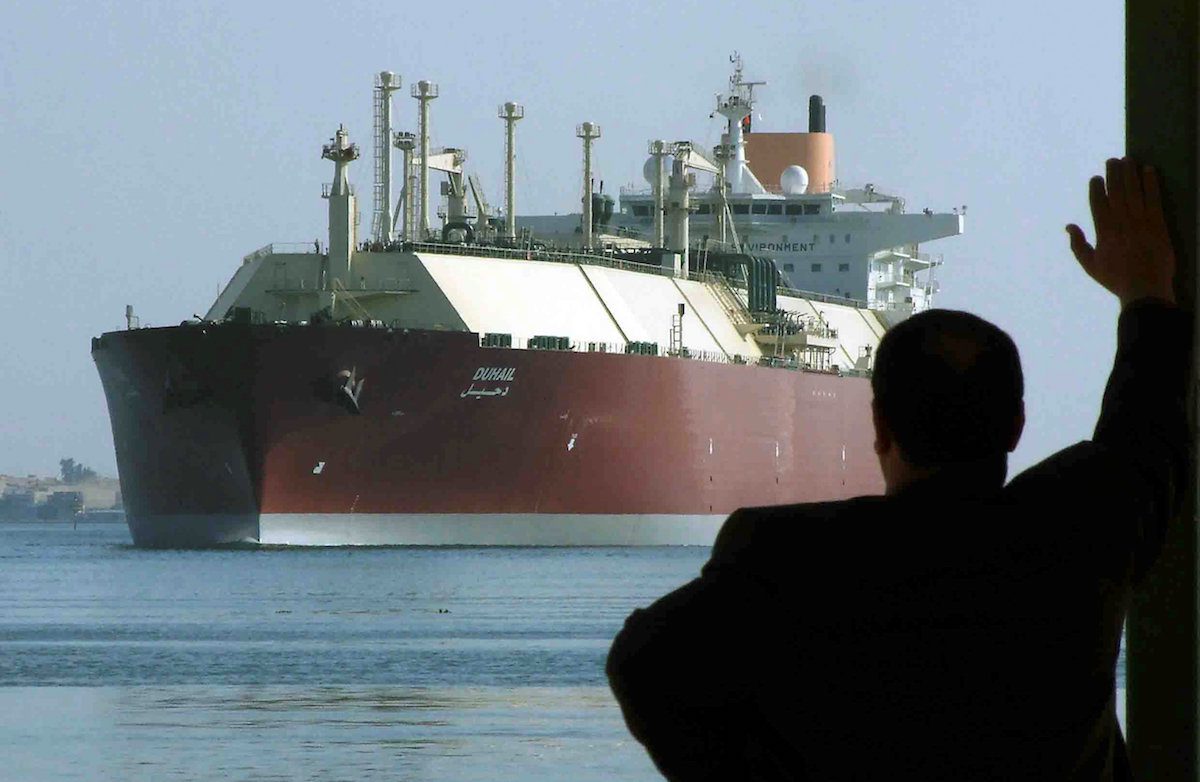
As energy minister for Qatar, the tiny Gulf nation which supplies a fifth of the world’s liquefied natural gas, he has helped the country build a reputation for unimpeachable reliability. In a region marked by unrest, it has been a haven, continuing to produce and ship gas through every crisis thanks to massive, state-of-the-art production facilities and a vast tanker fleet. His country, he has long told buyers, is the world’s most dependable supplier.
Until now. On Monday, an escalating regional crisis forced him to renege on those promises, after an Iranian drone attack shuttered the country’s flagship operation for the first time in nearly three decades of operation.
“The Qatari shutdown is unprecedented in scale and scope,” said Ira Joseph, senior research associate at the Center on Global Energy Policy at Columbia University. “Short term, it will force anyone who needs LNG to bid up US cargoes. Long term, it changes how buyers look at Qataris in terms of security of supply.”
Qatar’s Ras Laffan Is the World’s Biggest LNG Export Complex
The plant accounts for about a fifth of global supply. It was the culmination of days of bad news, beginning from the moment that US and Israel began strikes against Iran over the weekend.
First, tanker owners began to get cold feet about crossing the Strait of Hormuz, the narrow waterway into the Persian Gulf and the only route to the plant at Ras Laffan. Ship traffic soon slowed and exports began to drop. A skeleton crew working at the plant warned that gas tanks were filling up quickly and output would not be able to continue at full blast for long.
Trade through the strait remains effectively halted.
Then on Monday an Iranian drone, one of many launched across the region in retaliation for US and Israeli attacks, hit Ras Laffan, the complex that includes the world’s biggest export plant. Staff were evacuated and, after a number of meetings, Al-Kaabi himself decided to suspend work at the facility, according to people with knowledge of the matter, who asked not to be named as the discussions are not public.
Caught by surprise, buyers were sent scrambling for alternative supply. The shock helped briefly push European gas prices up more than 50% — ending the session with the biggest one-day jump since Russia’s invasion of Ukraine four years ago upended the global market.
QatarEnergy did not respond to Bloomberg’s requests for comment.
The decision to suspend production was not taken lightly. Qatar has kept output flowing in times of crisis before, and even stepped in during moments of dire need. It sent additional gas shipments to Japan after the 2011 Fukushima disaster shut the country’s fleet of nuclear reactors. It was also ready to assist Pakistan with extra supply in 2022, a time when other partners canceled scheduled shipments as gas prices surged.
In return, Qatar has long demanded customers sign up to long-term contracts that last decades, with strict terms that don’t allow for easy resale of shipments and with prices that are often higher than rival suppliers, all in the name of reliable and consistent volumes.
The exact extent of damage at Ras Laffan is not yet known, and the escalating confrontation is only entering its fifth day. But for many in the industry that bargain is already looking more difficult.
China Is the Biggest Buyer of Qatar’s LNG
In 2025, the country accounted for almost a quarter of exports.
“The long held perception of Qatar LNG deserving a premium in terms and price is now shattered,” said Saul Kavonic, a veteran energy analyst at MST Marquee. “LNG customers, especially in Northeast Asia, will have to review their balance of supply sources after this and consider stronger weightings to sources outside the Middle East.”
LNG is Qatar’s most important resource. Those riches have turned the country — which has relatively small oil reserves compared to its Middle Eastern neighbors — into the region’s wealthiest economy on a per capita basis, and brought with it significant diplomatic clout. It provided some insulation when frayed relations with its neighbors resulted in a three-and-a-half year blockade and has allowed the country to assume an increasingly prominent role as international mediator.
Its independent foreign policy and consequent cordial relations with Iran added to the market shock over Monday’s drone attack.
LNG Kingpin
As chief executive officer of QatarEnergy, Al-Kaabi is arguably the most important person in the global LNG industry. Still an engineering student at Pennsylvania State University, he joined what was then Qatar Petroleum in 1986. Through the years that followed he helped build the country into a massive producer and, from 1997, a world-leading exporter.
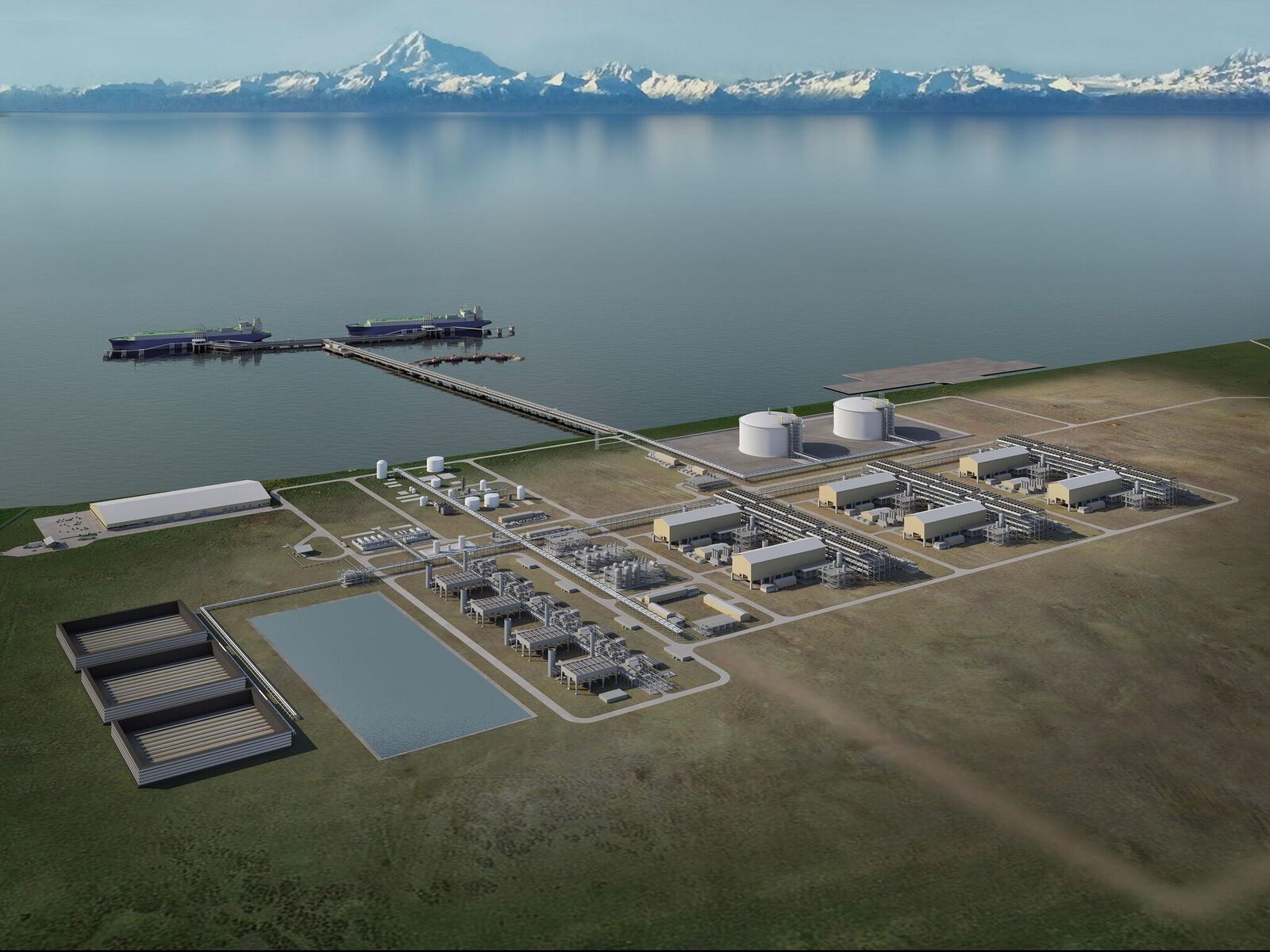
Apart from vast projects at home, it is now, through a partnership with Exxon Mobil Corp., poised to start up its massive US LNG export project Golden Pass on the Texas-Louisiana border. QatarEnergy has also established footholds in Argentina and Egypt.
Al-Kaabi is also known among traders and gas buyers for taking a firm stance with those who do not cooperate.
Japan, once a major buyer of Qatari LNG, let contracts expire without renewal and shifted its buying to American LNG. The growth of Qatar’s expansion in the 1990s was largely due to investment from Japan, underpinned through LNG shipbuilding in Japan and equity investment in the Ras Laffan buildout.
During a conference in Tokyo shortly after that change, in 2022, Al-Kaabi made a point of noting that the Gulf state was no longer “a major LNG supplier to this pioneering market.”
Europe’s green efforts have also irked Al-Kaabi, who has threatened to halt flows to the bloc because of efforts to impose environmental requirements that would penalize major fossil fuel producers. The overreach, he said, made “absolutely no sense.”
Instead, he has remained a firm believer in — and advocate of — gas as a transition fuel, a means of weaning countries off their dependence on coal while easily balancing energy demands and expanding renewable power. The prospect of that profitable bridge means Qatar aims to nearly double exports by the early 2030s. The massive North Field East expansion is set to come online as early as end-2026.
The catch is the need to find buyers for all those volumes, on Qatar’s terms. Contracts signed over the last few years only cover about 60% of Qatar’s planned production expansion — and that’s without including volumes from Qatar’s LNG export project in the US, which is set to start soon without a full roster of customers.
Qatar’s Contracted LNG Sales Lag Expansion Plans
There are also more sellers today competing for that demand — including the US, the world’s biggest supplier. Unlike Qatar, most US LNG is flexible and prices are linked to the domestic American gas benchmark, which has been languishing near multi-year lows.
Short of long-term takers for all its gas, Qatar has turned to LNG trading, hiring talent from around the world.
All of that has become more challenging as a result of Monday’s strikes.
Industrial City
Ras Laffan, which describes itself as an “industrial city”, is a vast complex with an onshore LNG plant about twice the size of Central Park. Suspending work at this sprawling operation is commensurately difficult.
It requires a myriad of calibrated systems to be turned down carefully, in order to minimize stress on the cryogenic equipment. That is usually completed with a single 12-hour shift, said Mehdy Touil, an LNG lead specialist at Calypso Commodities who previously worked at Ras Laffan.
Restarting, when the time comes, would also take time and be “intentionally slow” to avoid overloading the equipment. It cannot be done simultaneously and has to be sequenced unit by unit, he said.
The facility has endured crises before, including from 2017 to 2021, during the effective blockade imposed when Saudi Arabia, the United Arab Emirates, Bahrain and Egypt cut diplomatic and trade ties with Doha. Gas workers in Qatar at the time recall going weeks without staples such as meat, eggs or dairy.
Today QatarEnergy’s team of traders are racing to find replacement shipments to fulfill scheduled deliveries.
Al-Kaabi, meanwhile, has been making personal calls to executives in Beijing, Chinese buyers said, asking not to be named as the conversations were private. The world’s largest gas importer is a vital partner and the assurances are a point of honor for QatarEnergy’s boss, who has long prided himself in never missing “a single cargo delivery,” as he said at a meeting with Europe’s energy commissioner in 2022, as tensions rose around Ukraine.
“Keeping our contractual word is sacrosanct in Qatar,” he said.
© 2026 Bloomberg L.P.

 Join The Club