Don’t Miss Your Daily Briefing for the Maritime Industry
Join the leading maritime news network
— trusted by our 106,954 members
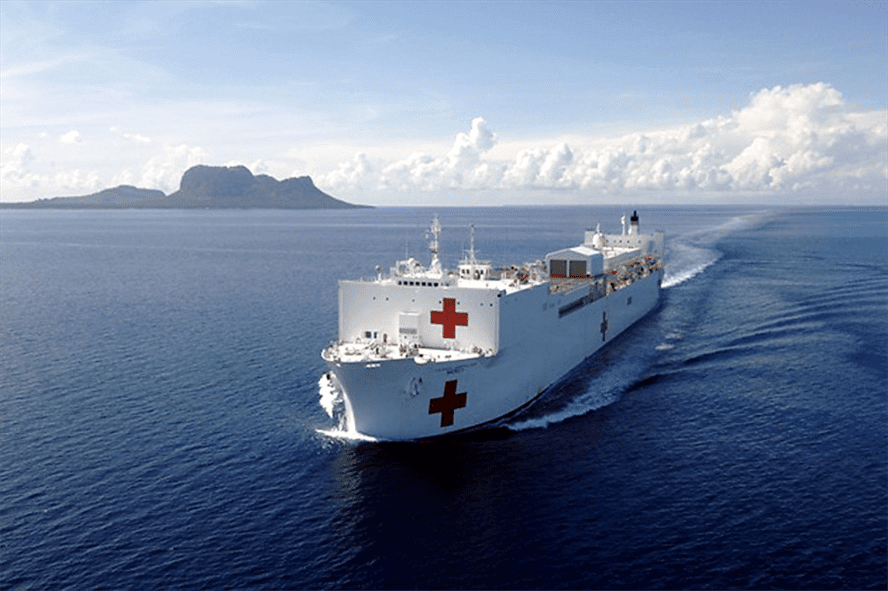
The U.S. Navy Ship Mercy is a hospital ship able to rapidly respond to a range of situations on short notice and capable of supporting medical and humanitarian assistance needs with special medical equipment and a multi-specialized medical team, providing a range of services ashore as well as onboard. (U.S. Navy photo/Petty Officer Edward Martens)
Too Much Ice and Too Little Draft: The Harsh Reality Facing a U.S. Hospital Ship Mission to Greenland
Sending the U.S. Navy’s hospital ships USNS Mercy or USNS Comfort to Greenland in late winter would face major obstacles from peak sea ice, a lack of available icebreaker escorts, and ports too shallow for the ships’ deep drafts.
President Trump’s proposal to dispatch a U.S. hospital ship to Greenland would run into a combination of environmental and logistical hurdles that make such a mission impractical in February or March, when Arctic sea ice typically reaches its maximum annual extent.
The two U.S. Navy hospital ships are converted oil tankers that lack ice strengthening. That design makes them vulnerable to damage in pack ice or even heavy drift ice, conditions common around Greenland in late winter, even along the island’s west coast which generally sees milder ice conditions compared to the east coast and around the southern tip.
Sending a non-ice-class vessel of that size into Arctic waters without escort would be risky, according to Arctic maritime analysts with sea ice and icebergs drifting south into the Labrador Sea.
“At this time of year, the ice pack is at its maximum extent. The map clearly shows the boundary of the sea ice concentration in the Labrador Sea. The Baffin Sea is inaccessible,” explains Hervé Baudu, Professor Emeritus of Maritime Education at the French Maritime Academy (ENSM).
A bit further south sea ice conditions may be more feasible, but icebergs and port infrastructure represent the next challenge.
“If a non-ice-class vessel wants to travel to Nuuk, or even Ilulissat, it will encounter little sea ice. However, it will certainly encounter icebergs from the glacier of the same name. It will then be forced to circle in the water, as docking in the port of Nuuk is complicated because the piers are short,” Baudu continued.
Any such deployment would likely require a U.S. icebreaker escort. But America’s limited polar fleet is not readily available. The heavy icebreaker USCGC Polar Star is currently deployed to Antarctica for Operation Deep Freeze, while the medium icebreaker USCGC Healy and newly acquired USCGC Storis are based in Seattle. Diverting them north on short notice would be difficult, analysts said, and would affect the Coast Guard’s Arctic presence this summer.
Even if ice navigation could be arranged, Greenland’s limited port infrastructure presents another problem. Nuuk, the capital, has harbor depths of roughly 10.5 meters, insufficient for ships drawing about 10 meters like Mercy and Comfort. Other Greenlandic ports are shallower.
That means the vessels would have to anchor offshore, adding operational complexity.
Map of the port of Nuuk with the container terminal showing a depth of 10.5 meters. (Source: Nuuk Harbor A/S)
While the southwest coast of Greenland is usually ice-free compared with the east coast, waters near Nuuk still see winter drift ice and, later in spring, icebergs moving south under the influence of currents flowing past Baffin Island and Labrador.
Anchoring a 270-meter non-ice-class ship in icy waters with strong winds and freezing spray would pose unique operational risks. Late-winter weather reports in the region frequently mention gale-force winds and severe icing conditions.
The U.S. Navy has extensive experience deploying hospital ships to tropical or temperate regions for disaster relief, but there is no record of a U.S. hospital ship operating in Arctic waters.
The ships themselves may not be available in any case. According to Military Sealift Command, Mercy is currently undergoing maintenance.
An MSC spokesperson said the ship is in Alabama Shipyard for a ballast tank casualty and was scheduled to head to Vigor on the West Coast for a regular overhaul and drydocking next month.
Even setting aside maintenance schedules, the combination of sea ice, lack of escort capacity, insufficient port depth and difficult offshore anchoring would make a winter deployment to Greenland highly impractical.
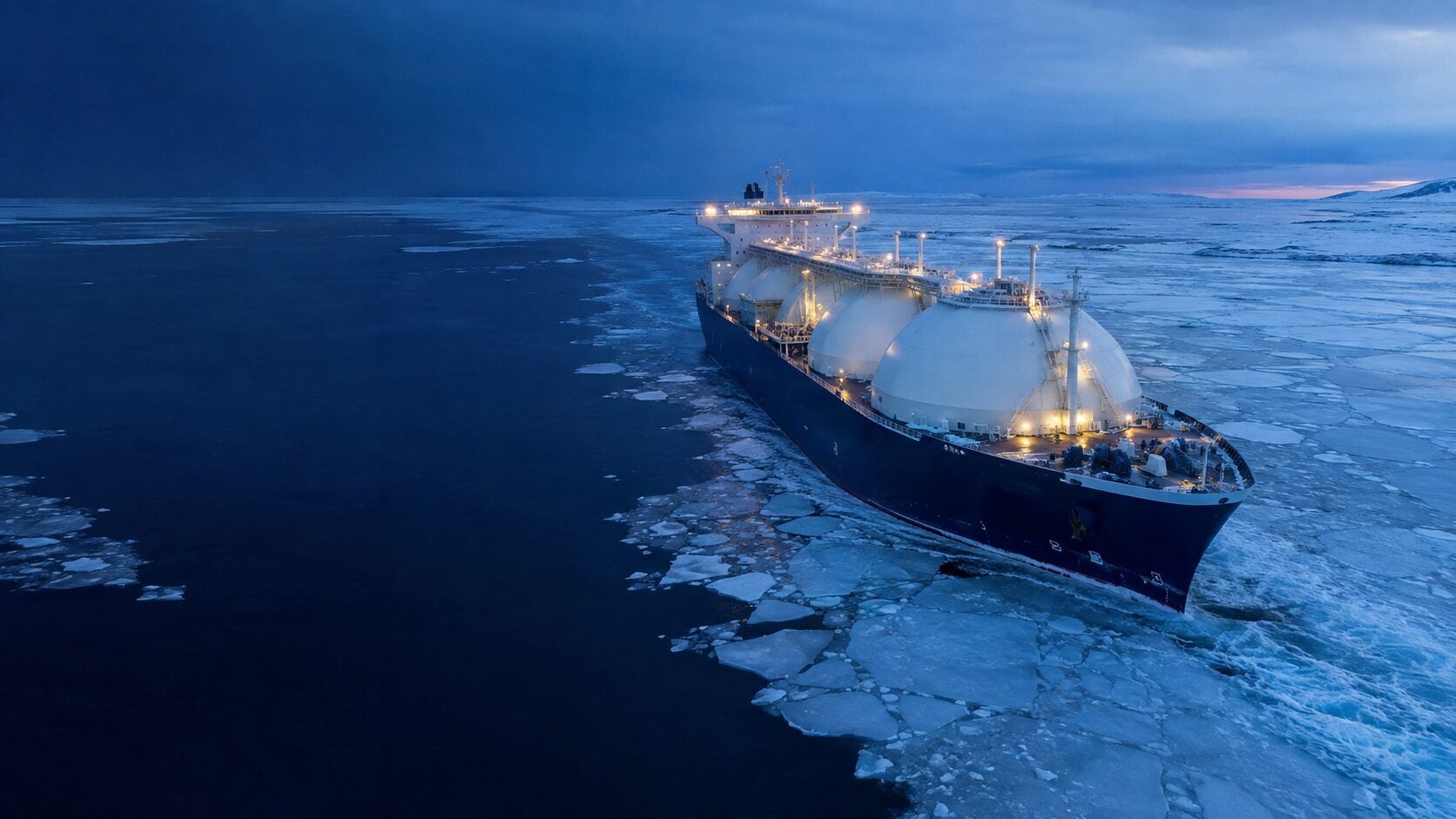
New company takes on four Arc4 LNG carriers as Seoul looks to expand Busan’s role in Arctic shipping. A newly established South Korean ship manager is emerging as a potential new player in Arctic LNG shipping, taking control of four ice-class LNG carriers while planning a rapid expansion into the specialized fleet needed to transport gas along Russia’s Northern Sea Route.
The United Kingdom has sanctioned five liquefied natural gas carriers as part of a new package of measures targeting Russia's efforts to expand a maritime "shadow fleet" for LNG exports, including three Russian-built Arc7 ice-class vessels intended to support the Arctic LNG 2 project.
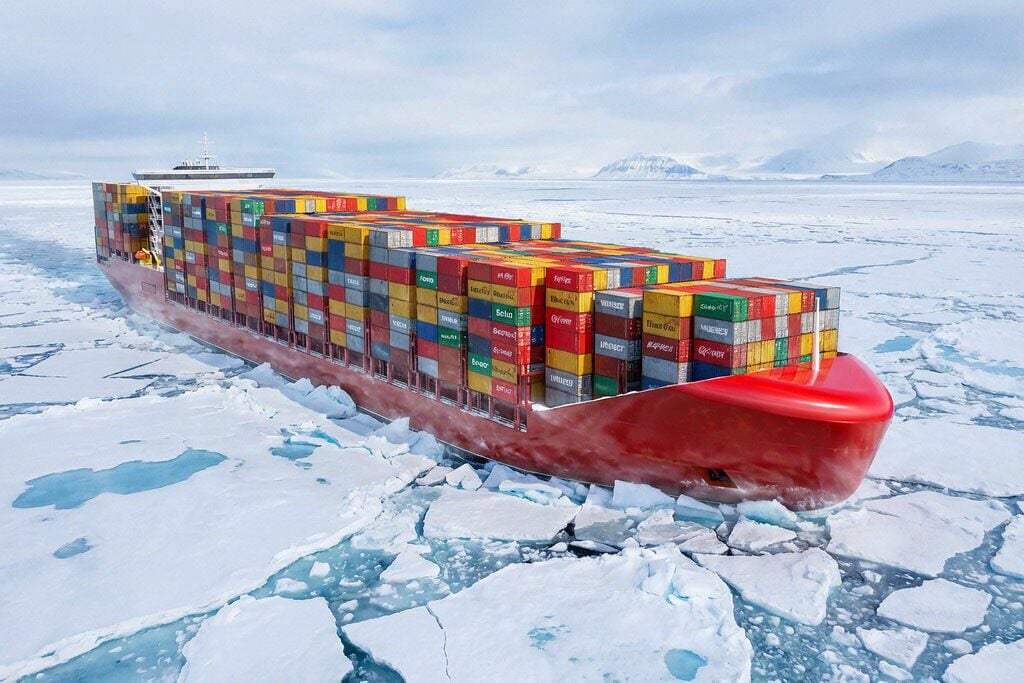
China’s NewNew Shipping Line and Russia’s state nuclear corporation Rosatom are advancing plans to build five large ice-class container ships aimed at making commercial shipping on the Northern Sea Route a year-round operation.
September 4, 2026
Total Views: 6622
Get The Industry’s Go-To News
Subscribe to gCaptain Daily and stay informed with the latest global maritime and offshore news
— just like 106,954 professionals
Secure Your Spot
on the gCaptain Crew
Stay informed with the latest maritime and offshore news, delivered daily straight to your inbox
— trusted by our 106,954 members
Your Gateway to the Maritime World!
Essential news coupled with the finest maritime content sourced from across the globe.

 Join The Club