South Korea’s HD Hyundai Heavy Industries has secured its first overseas order for a dedicated, non-commercial icebreaker, winning a contract from Sweden in a deal that signals Seoul’s growing ambitions in Arctic shipping and high-value vessel construction.
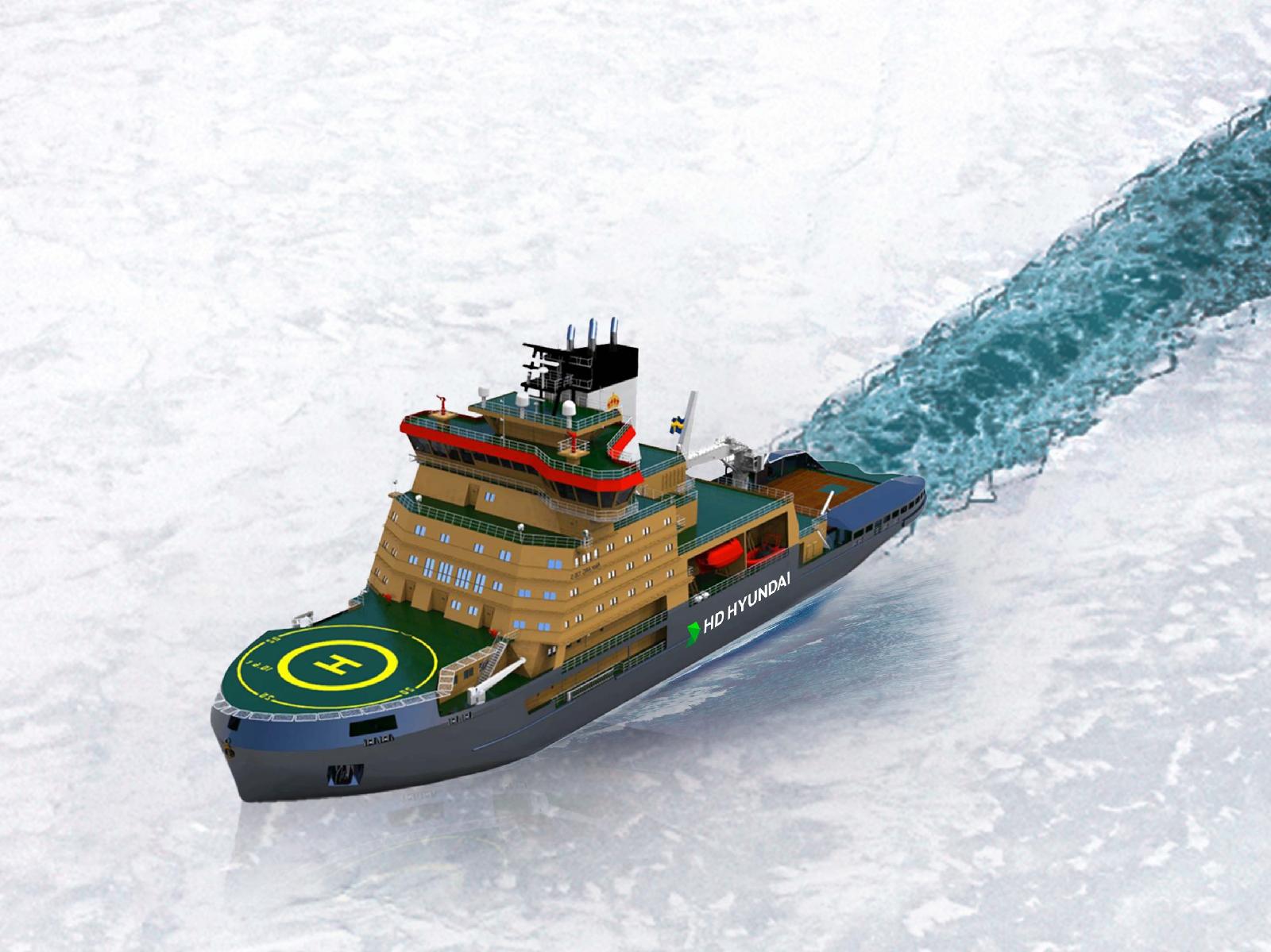
The $348.9 million contract with the Swedish Maritime Administration is for the delivery of a Polar Class 4 icebreaker by 2029. The 126-meter vessel with a displacement of around 15,000 tons will be used for icebreaking operations, convoy escort, and ice management in the Baltic Sea. The vessel will be equipped to break through up to 1.2 meters of ice.
The contract marks a milestone for South Korea’s shipbuilding industry, which has traditionally dominated in commercial vessels such as container ships and LNG carriers but has had limited presence in non-commercial ice-class ships.
The Swedish order is widely seen as a breakthrough that could position Korean yards as serious contenders in the niche but strategically important icebreaker market, long led by countries such as Finland and Russia.
Industry analysts say the deal comes at a critical time as South Korea ramps up efforts to participate more actively in Arctic shipping routes, which are expected to gain importance as climate change reduces sea ice and shortens transit times between Asia and Europe.
The government has recently intensified policy support for Arctic engagement, including legislation aimed at developing key port infrastructure and logistics capabilities tied to northern sea routes. The proposed framework, currently making its way through parliament, focuses on fostering Arctic-ready ports and integrating them into global supply chains. The initiative has received backing from President Lee Jae Myung, underscoring its strategic importance.
In parallel, Seoul has announced plans to launch a trial Arctic container shipping voyage in 2026, a move intended to test the commercial viability of the Northern Sea Route for Korean exporters. The success of such efforts will depend heavily on access to ice-class vessels and domestic shipbuilding capabilities in this segment.
South Korea is also pursuing a broader vision of transforming Busan into a major Arctic shipping hub. The country’s largest port is being positioned as a logistics gateway linking Northeast Asia with emerging polar routes, supported by investments in infrastructure and digital port systems.
HD Hyundai Heavy’s efforts to scale up icebreaker construction aligns with this national strategy. By further developing expertise in building vessels capable of operating in extreme polar conditions, Korean shipbuilders could capture a share of anticipated demand as Arctic navigation expands. South Korean firms have built more than 20 Arc7 ice-class LNG carriers for Russian Arctic gas projects.
The Swedish project is expected to serve as a reference point for future bids, potentially opening doors to additional contracts from countries seeking to modernize their icebreaking fleets.

 Join The Club