By Lori Ann LaRocco – The icebreaking season for the U.S. Coast Guard was longer this year after a series of storms ravaged the country.
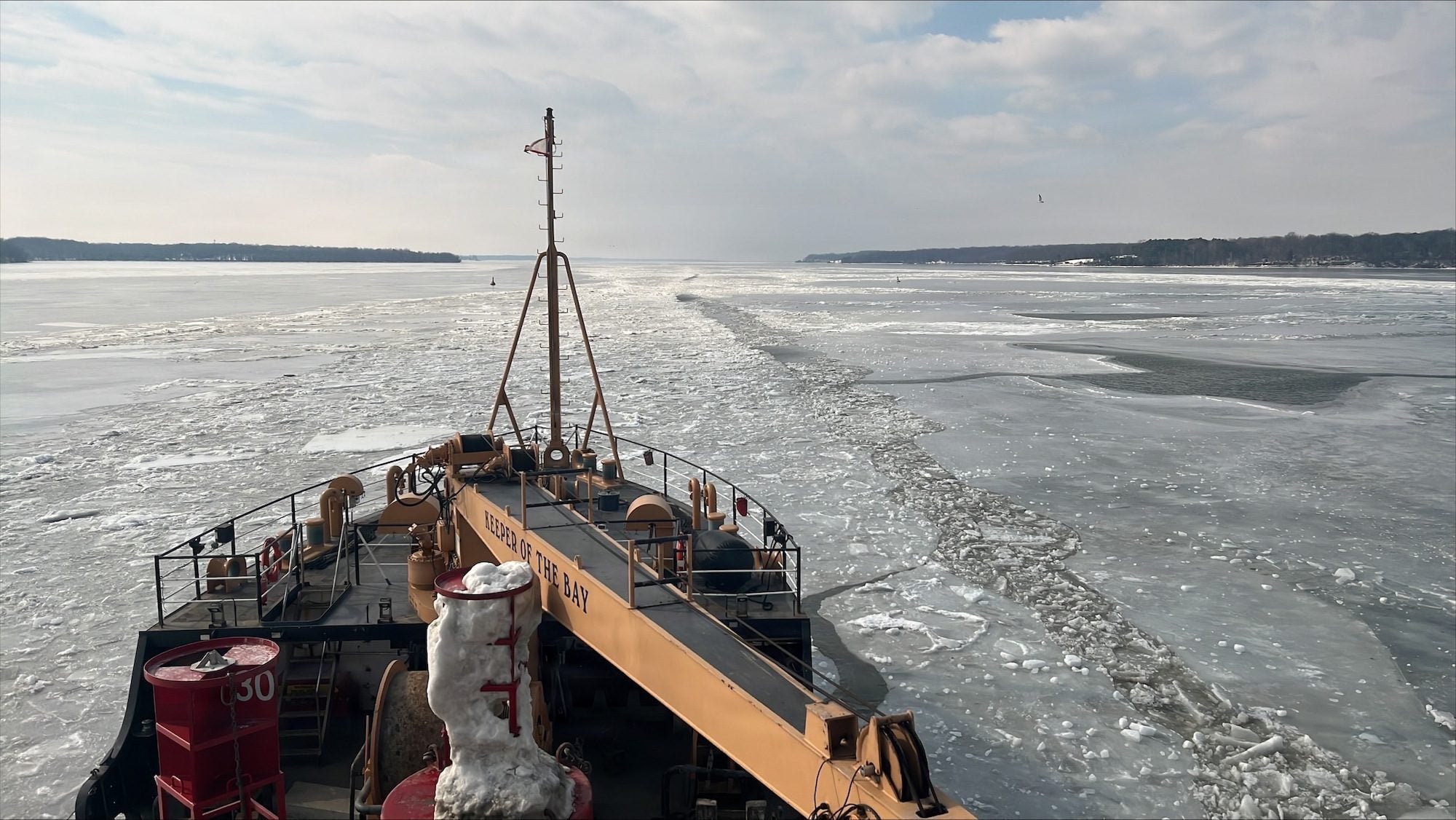
Ice conditions in the Chesapeake and Mid-Atlantic waterways were categorized as “significantly above normal” compared to recent decades. Operations wrapped up on Thursday. The USCG estimated that more than 50 million tons of ice were broken this winter, which was characterized by “historic cold temperatures and icing conditions.”
“Peak ice coverage in the Chesapeake Bay reached over 35 percent, which is the most since 2014 and greatly exceeds the seasonal average of around 10 percent,” said Lt. Cdr. Blake Bonifas, Atlantic Area Public Affairs Officer.
The icebreaker fleet included heavy, medium, and light icebreakers, tugs, and ice-capable buoy tenders.
Bonifas told gCaptain that more than 600 nautical miles were impacted by ice on the Detroit River, St. Marys River, Straits of Mackinac, Hudson River, and Chesapeake Bay.
Total ice coverage on the Great Lakes reached a seven-year high of 58 percent on February 9, exceeding the long-term average of 52 percent.
Rapid ice accumulation was also a major problem this winter.
Within two weeks, the USCG saw ice coverage expand from 5 percent on January 14 to a whopping 51 percent by January 31. Lake Erie reached 95 percent ice coverage.
“This year’s ice season lasted longer than usual because of severe cold,” said Bonifas.
More than 30 Coast Guard cutters and boats conducted 6,940 hours of icebreaking operations to support the domestic transit of 981 vessels. There were nine primary icebreaking tugs assigned to domestic service, primarily servicing the Great Lakes and Northeast waterways.
The icebreaking mission for the Great Lakes District was divided into two major operations.
Operation Coal Shovel, led by Coast Guard Sector Detroit, covered southern Lake Huron, the St. Clair-Detroit River system, Lake Erie, and Lake Ontario, including the St. Lawrence Seaway.
Operation Taconite, overseen by Coast Guard Sector Northern Great Lakes, was the largest domestic icebreaking operation and ended on Thursday. The largest trade moving on this waterway was taconite from mines at the Head of the Lakes to steel mills on Lakes Erie and Michigan.
The second regional operation, RENEW (Reliable Energy for Northeast Winters), managed icebreaking operations from Maine to New Jersey. These inland waterways transport 90 percent of the Northeast’s fuel oil.
The third operation focused on the Mid-Atlantic region. While this region normally does not require icebreaking, the harsh winter created ice conditions on the Chesapeake Bay, prompting the Coast Guard’s East District to deploy targeted icebreaking operations.
“In the face of historic cold temperatures and icing conditions, the men and women of the Coast Guard answered the call,” said Vice Admiral Nate Moore, Deputy Commandant for Operations. “From the Great Lakes to the Northeast to the Mid-Atlantic, the Coast Guard’s icebreaking operations underscored the importance of a robust, modern domestic icebreaker fleet to maintain American economic prosperity, energy security, and strategic mobility.”
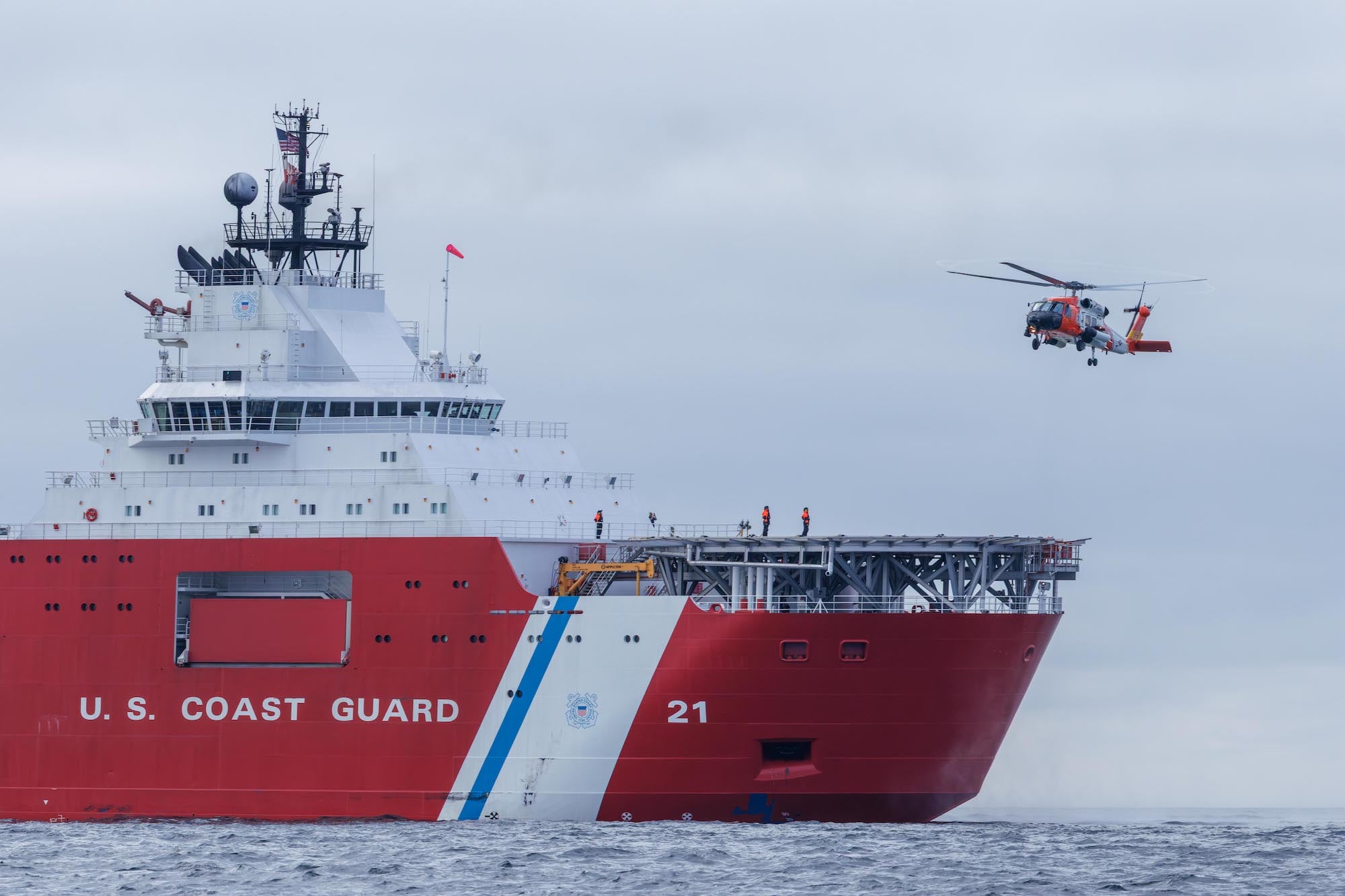
The Coast Guard recently unveiled an ambitious program to modernize its aging icebreaker fleet. The 65-foot light icebreaking tugs were commissioned between 1961 and 1967. Medium icebreakers were commissioned between 1978 and 1988. The country’s single heavy icebreaker, USCGC Mackinaw (WLBB-30), was launched on April 2, 2005, and commissioned on June 10, 2006.

 Join The Club