Don’t Miss Your Daily Briefing for the Maritime Industry
Join the leading maritime news network
— trusted by our 106,690 members
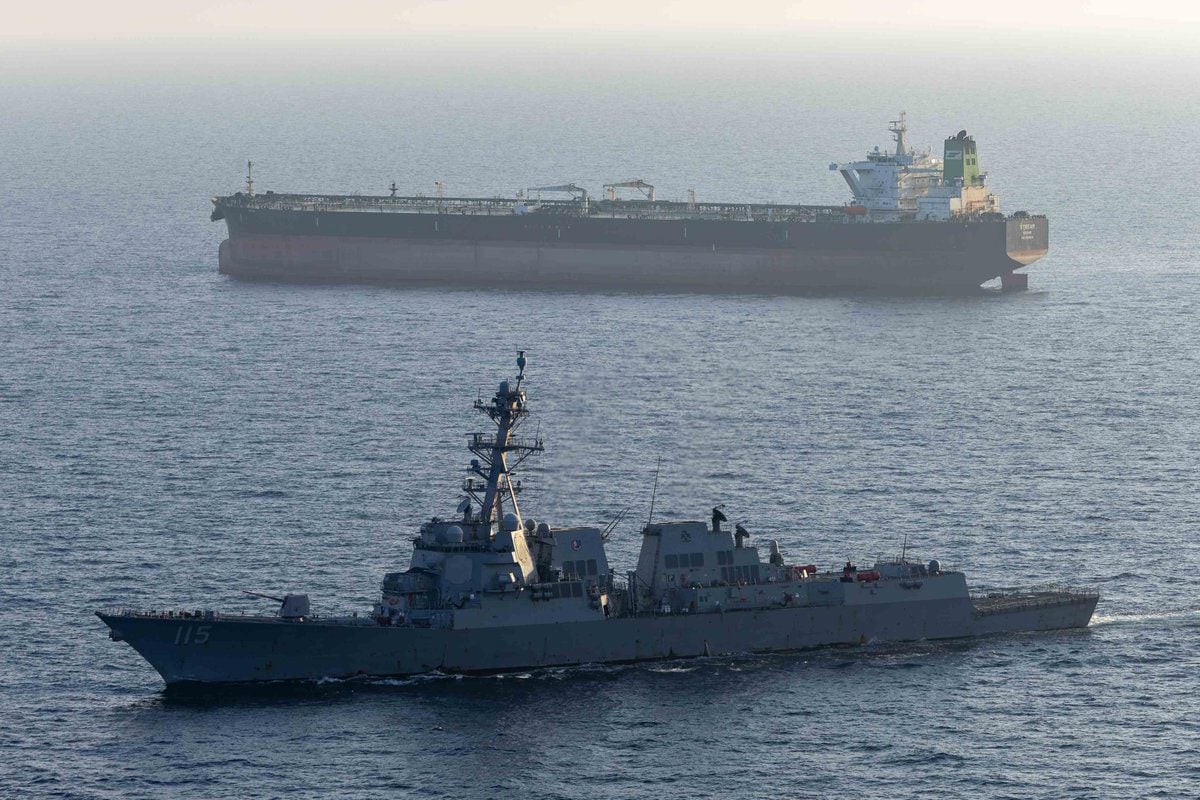
Guided-missile destroyer USS Rafael Peralta (DDG 115) enforces the U.S. blockade of Iranian ports against M/T Stream after it attempted to sail to an Iranian port, April 26, 2026. U.S. Central Command Photo
The Cathedral, The Bazaar And The Hormuz Catastrophe That Never Came
For years we have waited for artificial intelligence to unlock vast new efficiencies in global trade. When the Strait of Hormuz closed, it may finally have done so. But the savings did not lower your prices. They were soaked up by geopolitics and spent as leverage. That tells us something the markets have not priced: the question is no longer whether AI creates the efficiency, but who gets to keep it.
by Captain John Konrad (gCaptain Op-Ed) At two in the morning on March 2, a US flagged tanker called the Stena Imperative was lying in shipyard in Bahrain when the projectiles came ripping in from Iran. She caught one on deck. A yard worker was killed. She was the first American merchant ship targeted in this war and she would not be the last, and before the sun was up the war risk underwriters were cancelling cover across the Gulf by GMDSS radio. A ship that was a money making asset last week was now a liability.
Everyone you are supposed to trust… the economists, the energy experts, the geopolitical PhDs… said this was a catastrophe for the global economy. Iran had laid mines, nobody knew how many, along twenty miles of water that carries a fifth of the oil the planet burns. The Supreme Leader was dead, killed in the first hours of the American and Israeli air campaign. Return fire missiles were falling on the bases that ring the Gulf, on Bahrain and Al Udeid and Al Dhafra. The Royal Navy had given away its minehunters for a promise of drones and did not have a single warship available to send. Brent went through a hundred dollars for the first time since 2022 and kept climbing past a hundred and twenty. Traders warned of two hundred dollar oil. The UN said forty five million people might starve. Britain’s foreign secretary said we were sleepwalking into famine.
And then it didn’t happen.
Plenty did happen. Prices climbed, inflation hit a three year high, US service-members, seafarers and untold number of Iranians died. Iran’s Navy was sunk. But the famine the models promised never reached the Kroger in Ohio. There wasn’t even a run on toilet paper. By late May, with the strait still shut, Brent had given back a fifth of its peak. The shelves stayed full. Ninety days on, Hormuz is still closed and the world is still fed and fueled, and nobody in charge has been honest about why.
The catastrophe was not dodged, it was capped. And the nation that came through it best, that imports very little oil through that strait, is the United States, became the largest exporter of energy in the world. A nation, already the wealthiest on earth, in no particular hurry to reopen it.
What everybody was waiting for
Shipping is the most stubborn business on earth. It’s older than the corporation, older than the insurance contract, and it adopts nothing new until something seriously breaks. The shipping industry hauled oil in single hull tankers until enough of them split open. Fought the box, then radar, then satellite tracking, every time until the holdouts went broke. Few know that it took about a hundred years to fully transition from sail to steam.
So when the technology crowd spent three years promising that artificial intelligence would pour into trade and melt the friction out of it, cheaper freight, smart routing, instant digitalization, the response on the docks was a shrug. Then somebody put a gun to the industry’s head.
Here is the possibility I cannot shake. In the worst chokepoint emergency since the 1970s but this time, not one gas station in the United States is rationing by license plate.
But how did we avoid catastrophe?
What if the efficiency AI kept promising actually arrived, and the proof is the trauma that never came: the famine that didn’t reach you. And that is also the warning, because the efficiency never reached you. It did not show up at the pump or in the bread aisle. Nothing became cheaper or arrived sooner. What if the AI efficiencies showed up but got soaked up by the war and spent, by Washington DC, as leverage over rivals who need that waterway far more than we do. That was the argument I made in March, in a piece called The Hormuz Hypothesis, and I believe it more now.
Every single day I open X and see warnings and predictions about how AI will impact the world but nobody is asking if it already did?
And if it did… where are the riches and improvements we were promised?
They got stolen by something else.
This is bigger than one strait, and it is not really a maritime story. Nobody can say what AI will do to the economy, because almost no industry has run through a live emergency with the tool in its hands. Shipping just was. We got the stress test that every bank, hospital and power grid is still waiting for, and the result is not the one the optimists or the doomers sold. It’s more of the same: slowly rising inflation.
So if you write AI regulation or price AI stocks or lie awake wondering if AI will steal your job, the place to look is not a tech conference in California. It’s not the All In Podcast. It is a closed strait in the Persian Gulf, where the question stopped being whether the machine creates the efficiency and became the only one that matters: when it does, who keeps the spoils.
There are three answers on offer. Trump’s people say the efficiencies were well spent removing a dictator and nuclear labs.
His critics say it just hands more of the world to whoever is already strongest. That the United States is the only winner in a world of Hormuz losers.
They are both right, and under both is a cold floor. The gains flow up. They land at the top of a K shaped economy, with the richest firms and the strongest states, and skip the grocery bill and the poor world entirely. The whole of it fits in one sentence: AI HAS delivered the efficiencies it promised this year, and the war and the men who own the machines spent it before it reached corporations and long before it reached you. There are three things we ought to do about that, and I will name them at the end. First, how it happened.
Two trades, one ocean
A programmer named Eric Raymond once split the software world into the cathedral and the bazaar: the well funded priesthood of experts building enormous structures over time, against the loud haggling crowd that somehow out builds them. He was writing about open source code. He was writing about how a large gaggle of programers could create an operating system that would, someday (today) be installed on many more machines than Microsoft’s cathedral.
The same split runs through my trade, and it is the key to the whole thing.
The cathedral is the container lines. Maersk, MSC, the French house CMA CGM, the biggest ten of them moving most of the world’s boxes on fixed schedules like a railway with set stops. Each of those shipping lines employ floors of analysts and experts who turn the world into a plan. When Hormuz shut, Copenhagen ran the numbers, made one call, and the whole Maersk fleet turned on the order, and passed the costs and delays down the line to customers. One brain, one good decision, executed across an ocean. But the box lines carry the world’s sneakers. They do not carry its crude.
The crude… and the bulkers that carry grain and fertilizer… rides the bazaar, and the bazaar is a flea market. A few thousand tanker owners, a heavy share of them Greek, plenty of them running three ships out of small family run offices in Piraeus you have never heard of. They do not coordinate. They distrust each other on principle and chisel each other on the charter party, and when the strait closed they did not hold a meeting. Every one of them, alone, went hunting for a way to keep his free steel earning money while some of the fleet remained locked in the Persian Gulf.
A thousand small bets
A cathedral sees a problem one way, because it has one head. The flea market saw the closed strait a few thousand ways at once. One owner gambled on ship to ship transfers out in the Gulf of Oman. One sent his oldest tanker the long way around Africa and pocketed a spread he would remember the rest of his life. A few ran the strait. Refiners in Asia quietly rewrote which grades they would take and ships turned around mid-ocean. A dozen owners reflagged overnight and ran dark.
Markets have always rerouted around a closed chokepoint. They did it around Suez in 1956 and around the Gulf in the tanker war of the 1980s, with telex and a telephone but the inefficiencies and lack of information made it a gamble. They didn’t have satellite to see what the competition was doing.
What was new this spring is that a man with three ships now had a machine that contained a full research department that used to belong only to the major and the trading house. The machine, by which I mean AI.
Only one problem, the machine didn’t hand him an answer. At least not one he trusted.
“Claude, here are documents if information about all our vessels, customers and profits. Please reroute them to maximize profits. Make no mistakes.”
Sure, many ship owners put that query into LLMs but then laughed off the results.
So how did AI help reroute the world’s energy?
The honest 2026 version is sharper than that. The research itself, the part that used to take a desk of analysts a week, collapsed to a few hours at a laptop. The agent pulled live ship tracks and live prices, tested a route the owner had never run, priced a hypothetical voyage he had never considered, and pulled apart rules of thumb he had trusted for thirty years, while he drank his coffee.
He curiously played with the results until he had a few solid ideas to start making phone calls with. Or, if not the owner, his intern or junior analyst or son.
What was left for the human was not the analysis. It was the judgment, and the liability, because somebody has to own the risk when the AI confidently routes it onto a mine that was not on any chart. Hold onto that word, judgment, because the machine has a solution for that too.
I will not pretend the bazaar did this alone. The big consumers opened their reserves; the IEA’s members put four hundred million barrels on the market and Washington drew down more than a hundred million of its own. Bypass pipelines carried what they could handle. Demand, already soft, softened more as the price bit. All of it mattered. But reserves empty and pipelines top out, and the thing that kept working voyage after voyage was the leaderless scramble of a few thousand owners with a research desk apiece. Nobody credits it, because there is no press office for four thousand Greeks.
And the AI didn’t just handle the research. It sparked curiosity. Suggested alternative questions to ask. Played with the results.
There is a darker side to that gift. The same machine used a lot of energy… so did the people typing into the machine’s keyboard.
In a recent video VC legend Marc Andreessen said that AI is not replacing coders, it’s turning them into vampires. They are staying up all night working on new ideas. I suspect the same’s been happening the last few months in shipping offices around the world.
AI did not free the operator. It spiked sales in Red Bull. The efficiency that climbs the K shaped economy and prevented famine was paid for, in part, out of the operator’s exhaustion.
And the old information edge, the one that made the Vitols and Trafiguras rich because they knew things you didn’t: where the oil was. That edge did not move to the phone call. It moved to the data the machine cannot see unless you feed it: your own fleet’s track record, your private fixtures, who actually paid last time the market turned. And it sucked down information Anthropic didn’t pay for too… gCaptain articles, What’s going on in Shipping episodes, every edition of Martin Stopford’s maritime economics textbooks… Ira Breskin’s too… centuries of Lloyds Lists reports.
## The code that kept the crews home
The flea market is not only a swarm chasing the best rate. It runs on ethical codes that moves through the trade by word of mouth and shame, and this spring the code was set early: we are not going to get seafarers killed over this one.
The owners of my grandfather’s generation spent crews like coal. It was a dangerous profession and little concern was paid to the death of crew. In fact, many shipowners made fortunes putting seafarers in harm’s way.
What changed is partly that the sea is no longer private. A dead sailor used to be a line in a casualty report. Now he is a video, his shipmates in bloody coveralls with the company logo visible by all. Transmitted via starlink to X by nightfall and that image is never coming down. No owner wants that to be his ship. (It may also be that the machines themselves refuse to plan a voyage whose payoff is a funeral, that a bias toward living crews got quietly wired into the trade’s judgment. I cannot prove it. I only note that safety guidelines within AI likely prohibit it.) The Lloyd’s Market Association said it straight: it was fear for crews, not the price of insurance, that kept ships home. The protection clubs that cover nine in ten of the world’s hulls pulled their Protection and Indemnity insurance and the ships stayed put.
It held for most, not all. A profit hungry minority sailed anyway, for rates nobody had seen in a lifetime. But the choice that held across most independents, across the box line cathedrals who pulled their own ships, and across the US Navy, which had its own version of the vow, bring our people home, was the same one.
The machine that asks better questions
But something was different this time, and it is the reason the bazaar moved faster than any catastrophe in history. This time, every operator in the bazaar had a machine.
I want to be precise about what the machine did, because the hype gets it wrong in both directions. It did not replace the broker or the owner or the master. And it did not hand anyone a finished answer. What it did was subtler and probably a lot more important: it helped people ask better questions.
Picture a chartering analyst… call her Eleni, twenty-nine, three years out of the academy, working for an owner with eleven ships and no time. Three years ago, finding a cargo that made the long way around Africa pay would have meant the phones: broker after broker, favor after favor, the slow accretion of who-knows-what that made the old oil traders rich for a century. She doesn’t have a key to the smoke filled rooms in London. Their entire edge, going back to the men who built Vitol and Trafigura, was that they knew things you didn’t, where the oil was, who needed it, what the detour cost. An information edge.
Eleni didn’t work the phones first. She opened a chat window and asked it where the cargo was. And the machine.. which had swallowed twenty years of gCaptain’s archives, the standard texts of maritime economics textbooks, the geopolitical forecasts, every fixture report and satellite ship-track it could reach, dozens of lectures on YouTube and elsewhere.. most of which it consumed without permission… answered with the question she hadn’t thought to ask: not where is the cargo, but where is the energy that will have to be replaced, and who is too busy panicking to go get it? A West African grade an Asian refiner could take instead of its lost Gulf barrels. A high-mileage lane no one was watching but emerged because she asked AI a question nobody else considered. A broker in Singapore who owed nobody a favor.
Multiply Eleni by a thousand. That is what happened in March. The machine didn’t connect them, it didn’t make the bazaar into a cathedral with a central brain. It did the opposite. It made each independent node sharper, faster, better at scratching its own itch. Thousands of independent people making independent decisions based on independent questions they asked AI. And here is the part the technology evangelists never say: this is not the home run they promised. AI didn’t automate the bazaar away. It hit ten thousand singles and doubles, for ten thousand different people, and the sum of those singles was the rescue.
That commoditized the old traders’ edge, by the way. An information advantage is only an advantage until everyone has the information. The men who got rich knowing what others didn’t are about to learn what that feels like from the other side.
The ethos the price can’t explain
If the bazaar were only a swarm of selfish agents chasing the best rates then the story would be less interesting. But it isn’t. The bazaar runs on more than price. It runs on a shared ethos, enforced less by law than by shame, reputation, and everyone watching everyone across a digitally interconnected world.
Open-source people know this. The best projects have a code (e.g. we do not ship this, we do not break that, we do not betray the user, etc). Nobody has to enforce it from the top because the community enforces it from below. Maritime worked the same way this spring. Maybe because of AIS, social media, cameras, Starlink, lawyers, unions, insurers, and a vibrant trade press. Maybe because everyone knew video of the first dead crew would be everywhere by nightfall. But the code hardened early and held:
We are not getting seafarers killed for this one.
That decision was not made in a boardroom of a company or NGO. It moved owner to owner, broker to broker, underwriter to underwriter, until no respectable operator wanted to be the one who crossed it.
And it jumped the firebreak. The independents held it. Maersk and CMA CGM held it. Even the United States military, after losing thirteen early, moved with the same restraint. Hegseth and Cooper put American lives ahead of the clock.
That’s a key part of this puzzle. The AI efficiencies could have been net positive but they were slow walked by caution on all sides (except Iran).
That moral conviction slowed everything down. It not only made reopening the strait harder. But it also shaped the crisis more than any model priced in. It made predictions very difficult because economists and experts, whose years of texts are all captured by the machine, did not foresee this much caution.
The Navy is a cathedral too
The United States Navy is the most powerful cathedral ever built, and in the first week it performed like one. A cathedral is made for the planned, overwhelming blow against a target that holds still. American and Israeli airpower took Iran’s conventional military apart: air defenses, launchers, command posts, ships, even a warship sunk by a torpedo from a nuclear-powered submarine. Cathedral against cathedral, it was not a contest.
Then it ran into the bazaar and stalled.
Iran’s sea force was built to have no center: mines, fast boats, missiles on trucks, drones, small craft, and men who do not need a clean order of battle to make a strait unsafe. Kill the commander and the problem remains. Sink the fleet and the mines remain. A cathedral cannot simply decapitate a bazaar. It has to climb down into the muck and fight it node by node.
We were supposed to have the tool for this. The Littoral Combat Ship was sold as a fast modular answer for exactly this kind of fight, a fight against Iran, with a mine-warfare package that could clear the way. Instead, it became a disgrace, a warning label that not only failed to make a difference in Hormuz, but was also not deployed against the less capable Houthis in the Red Sea. Late modules, thin defenses, short service lives, and hulls paid off barely a decade into what was supposed to be a thirty-year career. When the Navy tried to pass some of them to Greece, Defense Minister Nikos Dendias gave the only review that mattered: no, a thousand times no.
So the richest Navy on earth found itself facing the oldest problem at sea: cheap mines, small boats, and a chokepoint the enemy does not need to win, only keep dangerous.
The institutions whose whole job was to find solutions and bring the free world together, produced little more than paper. The International Maritime Organization condemned the attacks, counted the stranded, twenty thousand seafarers on two thousand ships, and asked all sides to stand down. They were mostly ignored despite increased rhetoric by the Secretary General Arsenio Dominguez. The organization that brokered the Black Sea grain deal after the start of the Ukraine war, turned from deal making to condemning the United States over blocking a UN Carbon Tax.
America’s strongest European allies did not rush to the sound of the guns. Britain had sovereign territory under threat in Cyprus and still struggled to get a single destroyer on station for months. France had the continent’s only serious carrier, but Charles de Gaulle had to be yanked from the Baltic after a North Atlantic deployment to, wait for it, protect Greenland from the United States. Europe quietly rehearsing for the possibility that Washington itself had become the problem.
That is the alliance now: America brings steel. Europe brings caveats, timelines, and communiqués.
The UN Security Council passed a condemnation, then watched Russia and China veto the one resolution with teeth. The European Union extended a legal framework and sanctioned a Revolutionary Guard command and two men, while its foreign policy chief admitted there was no appetite to send a ship. Nearly every NATO Navy besides the United States ran into difficulty deploying assets. Strongly worded letters do not clear mines. They do not move a barrel of oil. The flea market fired drones while the International bodies drafted communiqués.
Where the winnings went
So the bazaar of low and mid-level shipping analysts and traders saved us, machine in hand. Then why is everything still costing you more?
Physics. The world did not need more oil in March. Shipping is measured in ton miles, barrels times distance, and when every barrel sails farther the same fleet makes fewer trips. The supply of ships shrinks without a single ship sinking. Rates jump. The fleet burns more fuel and more men’s nights away from home to move the same oil, or less. The shipping industry ran harder to stay in place.
For thirty years we worshipped the lean system, just in time, every ounce of slack squeezed out in the name of efficiency. A system with no slack has nothing to give when it gets hit. The efficiency we prayed to was the brittleness that nearly killed us, and the flea market’s wasteful redundancy, all those extra owners and idle hulls, was the shock absorber that saved us. It is a lesson for every supply chain we have pared to the bone, and for every Navy and every stockpile of munitions we have done the same to.
And when AI was finally used to help sort out the problem, the efficiency the machine unlocked didn’t come back to you as cheaper fuel. It paid for the friction, it paid for the war, and the slack left over got captured by geopolitics. The states grabbed it first, turning a working market into a lever. The largest firms grabbed the rest.
AI is a force for lower prices, because it keeps cutting the cost of thinking and making. It investigates business plans, trade routes, competition and suggests better questions that can lead to better answers. Fragmentation is a force for higher ones, and a world breaking into armed camps is nothing but friction. This spring the machine’s discount was swallowed by the war before it reached your pump. AI did not raise your cost of living. It failed to lower it because it was fighting enormous friction.
And what about the builders of the machines?
They did not exactly rush to the pier.
The AI companies can write manifestos about humanity, democracy, alignment, safety, and the future of intelligence. But when the question was whether the ships would sail, whether poor countries would get fuel and fertilizer, whether the bazaar had the tools to keep famine off the board, maritime suddenly became someone else’s problem.
NVIDIA understood the game. Jensen Huang wanted Chairman Xi and Howard Lutnick to remove two way restrictions selling into China. Beijing wanted Washington to ease off the maritime pressure: USTR penalties on Chinese-built and Chinese-operated ships, and the fight over Hong Kong-controlled ports at the Panama Canal.
So maritime leverage became a bargaining chip. The machine company got a path back into China. Beijing got pressure taken off the shipping file. The tech giants won and the security of choke points lost.
When poor countries needed fuel, fertilizer, and grain moved by sea, maritime was somebody else’s problem. When AI chips, Chinese shipyards, and Panama ports were on the table, nearly everyone in the United States was willing to cash in those chips for AI chips.
Why did @howardlutnick sink France’s offer to build ships in America?
Why did we pause USTR tariffs banning ships built in China from entering US ports?
Why are we letting Amazon lie about customs declarations from China?
And what about the AI companies themselves? Anthropic threw a conniption fit against the Department of War and drew its moral line around fully autonomous weapons and mass surveillance. Fine. Those are real lines. But there was no equal crusade by Dario for the humans at the other end of the supply chain: the seafarers, the port workers, the importers, the people whose food and fuel depend on ships moving through danger.
That is the revealing silence. The machine builders want veto power over how states use AI in war, a royalty stream when rivals buy the chips, and moral credit when they say no. But when the world’s poorest people need the sea lanes kept open, but hardly anyone in San Francisco understands or cares about shipping.
And it does not stop at oil and equities. AI can keep a box score on every forecaster alive, who called the closure, who cried two hundred dollar oil, who said the flea market would hold. That sounds like merit, the way an open source project lifts the coder whose work survived. But the company that owns the machine owns the scoreboard, and decides whose score surfaces and whose sinks, and a record loud enough and tested enough can become the thing decision makers feel they are only confirming.
But the AI companies only weight the differences between analysts at gCaptain vs Tradewinds or Lloyds List or BIMCO internally. They don’t show you the score externally so social media users and traditional media can pick and choose who they want to listen to and promote. This resulted in a lot of fake news.
What keeps the machine itself honest?
There is one thing the bazaar cannot do, and it’s the thing that will decide whether any of this holds the next time. The machine that made Eleni sharper is a mirror, and a mirror left alone will confidently show you a route that doesn’t exist and a cargo that was never there. What keeps it honest is the human commons of maritime truth — the unglamorous, verified, who-actually-fixed-what reporting the trade has always run on. Lloyd’s List has done it since the coffeehouses of 1734. TradeWinds does it. Splash 24/7 does it. Sal Mercogliano breaks down the week for half a million people on a channel calledWhat’s Going on With Shipping? These are the people at the top of the funnel who feed the machine its ground truth and call out its mistakes when it lies.
I have skin in this, and I’ll say it plainly: this is the work we do at gCaptain, and it has never mattered more. The machine is only as good as the commons it learns from. Starve that commons, let the machine eat the reporting and give nothing back, and the bazaar goes blind in the exact hour it needs to see. The human element didn’t shrink in this crisis. It grew, and it grew exhausted, every broker and master and underwriter working harder and later than their fathers ever did, chasing an edge the machine kept dangling just out of reach. We did not automate the people out of the sea. We made them indispensable and ran them ragged.
The decision
None of this leaves a decision maker with nothing to do, so here are the three things. Stop betting a chokepoint on a handful of exquisite hulls, and build the cheap, the many, the unmanned, the forward: a mine countermeasures force that fails the way the bazaar fails, in a thousand small places that do not bring down the whole. Resource the mine warfare command we let wither, Task Force 52 in Bahrain, with a real unmanned sweeping fleet, and stop funding it like a rounding error. Pass the SHIPS Act, which has sat in committee for more than a year, or admit we are not serious about sea power. Turn the Maritime Action Plan into law. And write the next Earnest Will before the next strait closes. In 1987 we put American flags on Kuwaiti tankers and escorted them through these same waters, private nerve married to national interest, and it worked. A standing compact to flag and escort independent tonnage in a crisis would do on purpose what we improvised this spring under fire, while two ships limped out in forty eight hours… but the sad truth is we can’t even cash in on CMA CGM CEO Rodolphe Saade’s promise to invest $20 Billion in US flag shipping. Instead we issue the longest Jones Act waiver ever because chips, not ships, remain the priority.
Open water
So who kept the lights on. Not the cathedral, though it fought like hell that first week. Not the Navy, still working toward a strait it has not reopened, which tells you how hard mines are. Not the talkers, who met and condemned and met again. Not even the machine, which only sharpened the question and checked whether you were lying. Here’s the key: nobody said “Claude, here are documents if information about all our vessels, customers and profits. Please reroute them to maximize profits. Make no mistakes.”
It was the flea market, the Greeks and the family owners and a few dark fleet operators I would not trust to park my car, who asked AI a litany of questions and fed it unknown amounts of proprietary data that got the oil around a strait one country had bolted shut, because there were too many of them trying too many things for any government to stop them all.
It is not a comfort. The system that saved us is the one nobody governs, and the efficiency it threw off did not land in your pocket. It got captured, by states that turned it into leverage and by the few firms that own the machines now doing the thinking. Washington still believes resilience comes down from the top, from the carrier and the cathedral, and that the machine will hand us cheap plenty for free. It comes up from the bottom. The owners who sent their ships the long way around Africa this spring made fortunes, four times last year’s rate, and the world got poorer paying them to do it. That is the whole story in one hull.
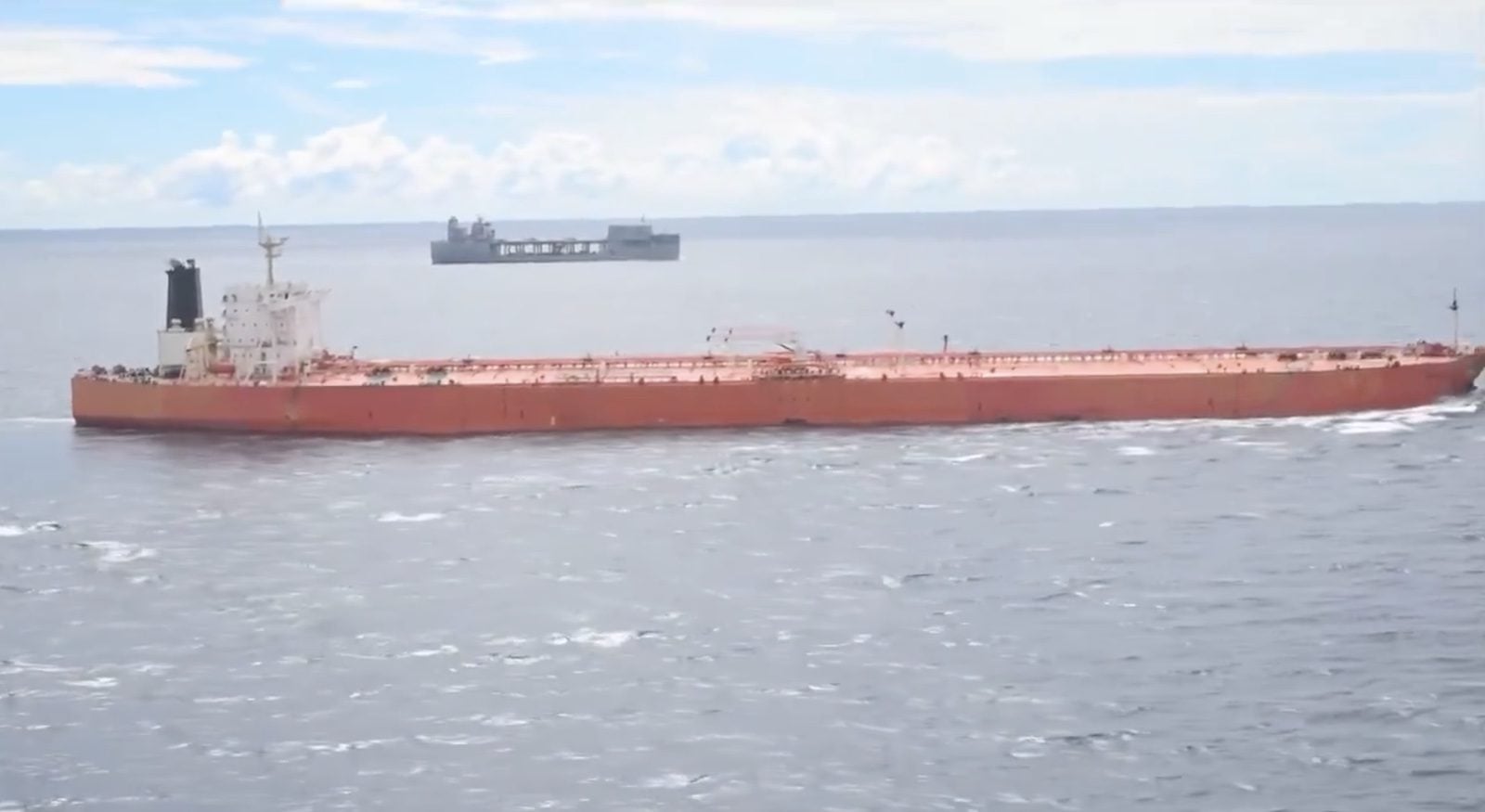
Two of the Iran-linked oil supertankers interdicted by American naval forces early in the war are just weeks away from reaching the US, where authorities have pledged to seize the vessels and millions of dollars worth of crude that they’re transporting.
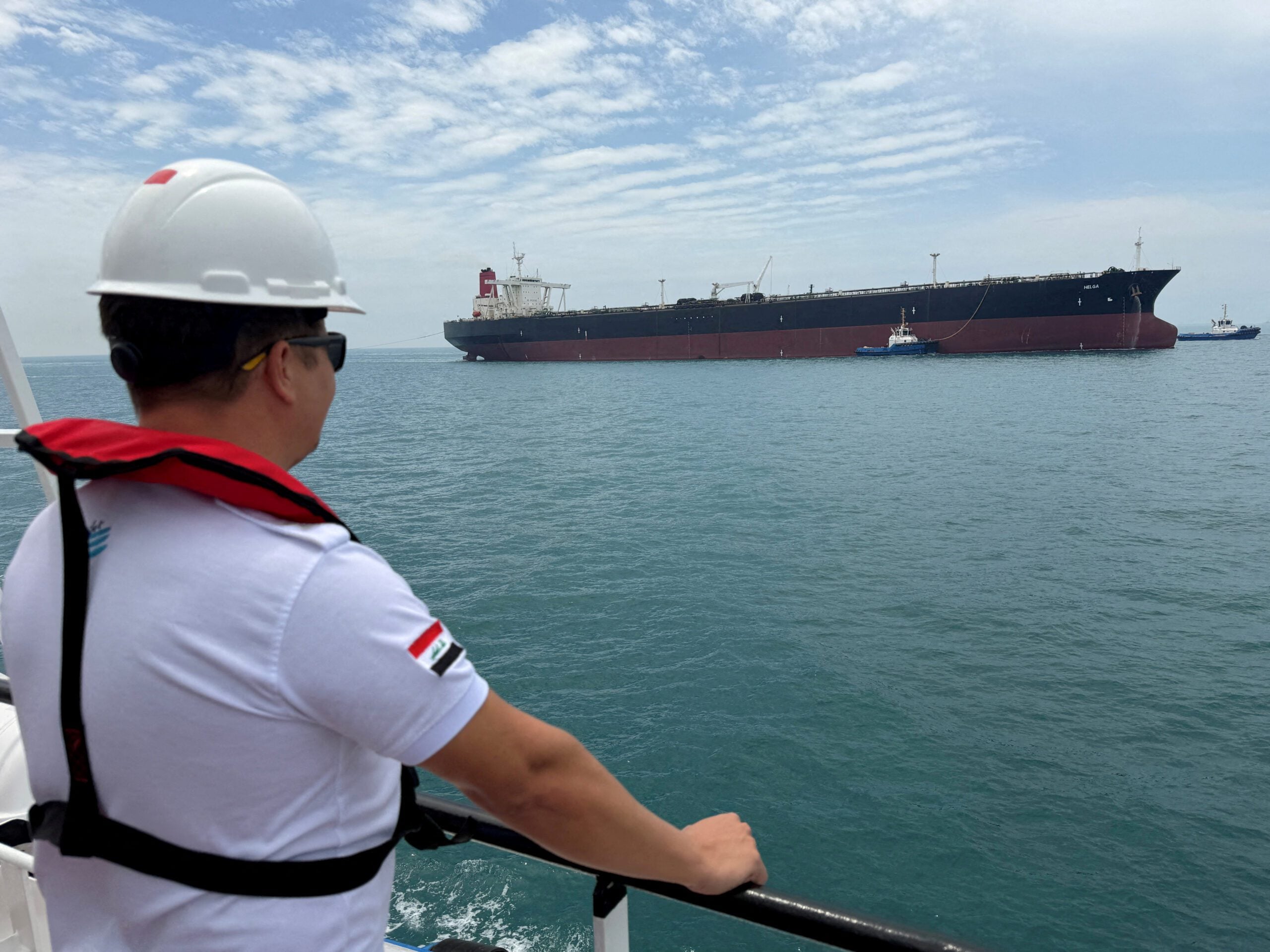
A Bahrain-led group backed by 80 countries has called for the immediate reopening of the Strait of Hormuz, demanding safe and unimpeded passage for commercial ships without tolls, conditions or...
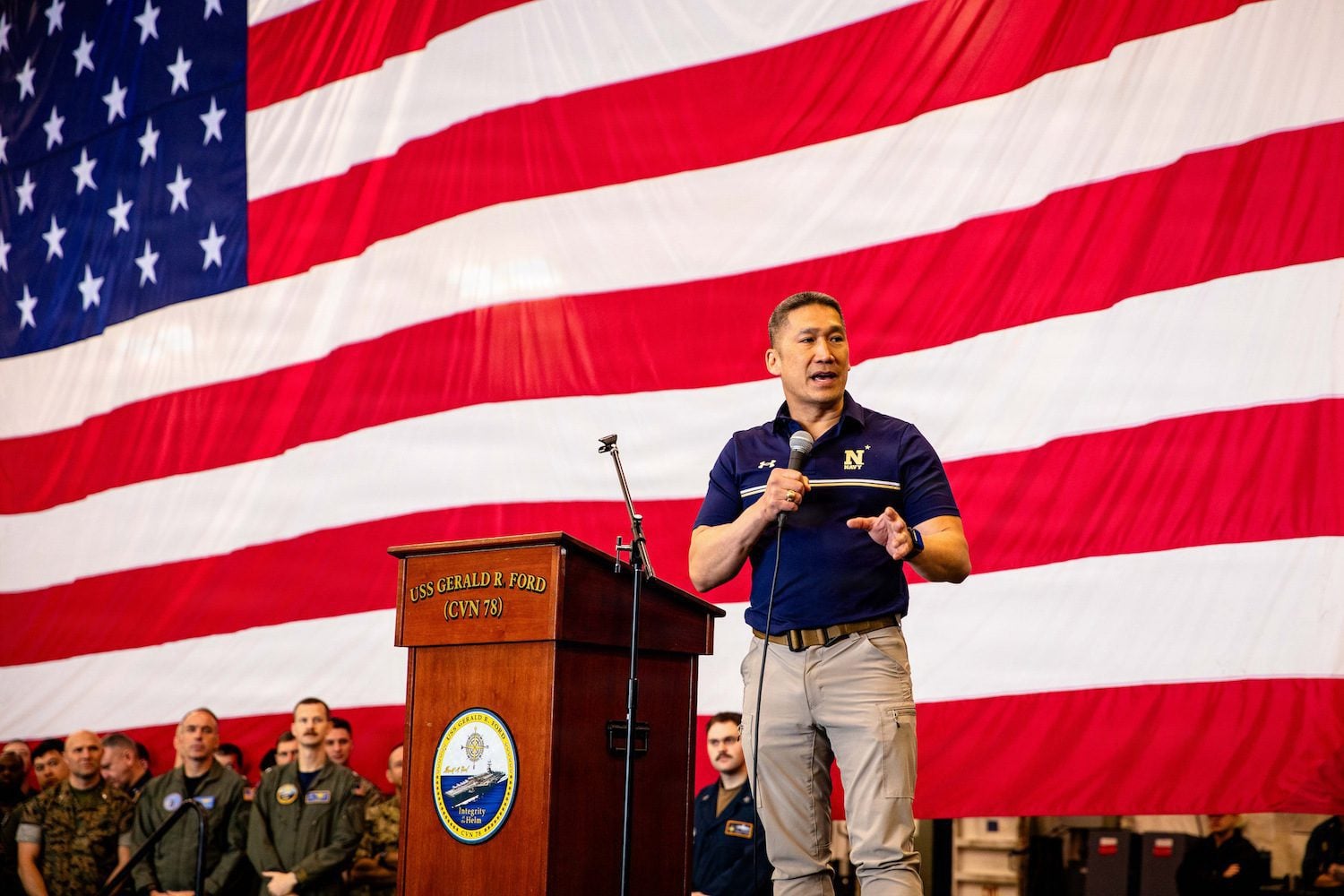
What (Acting) Secretary Hung Cao’s First Five Months Tell Us About the Job Ahead By Bruce Kimbrell (Policy Op-Ed) President Trump has nominated the Honorable Hung Cao to become the...
September 22, 2026
Total Views: 3697
Get The Industry’s Go-To News
Subscribe to gCaptain Daily and stay informed with the latest global maritime and offshore news
— just like 106,690 professionals
Secure Your Spot
on the gCaptain Crew
Stay informed with the latest maritime and offshore news, delivered daily straight to your inbox
— trusted by our 106,690 members
Your Gateway to the Maritime World!
Essential news coupled with the finest maritime content sourced from across the globe.

 Join The Club