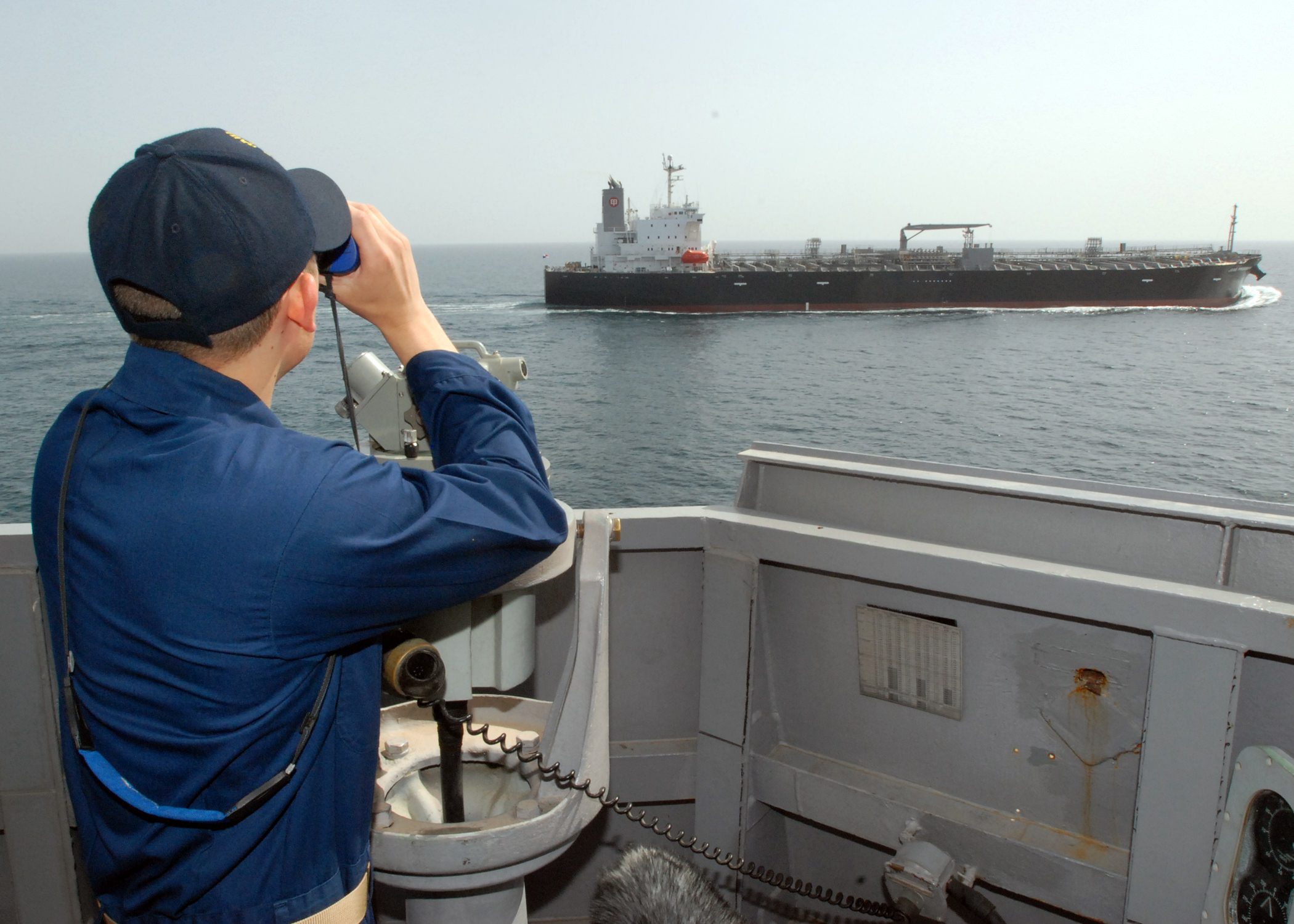
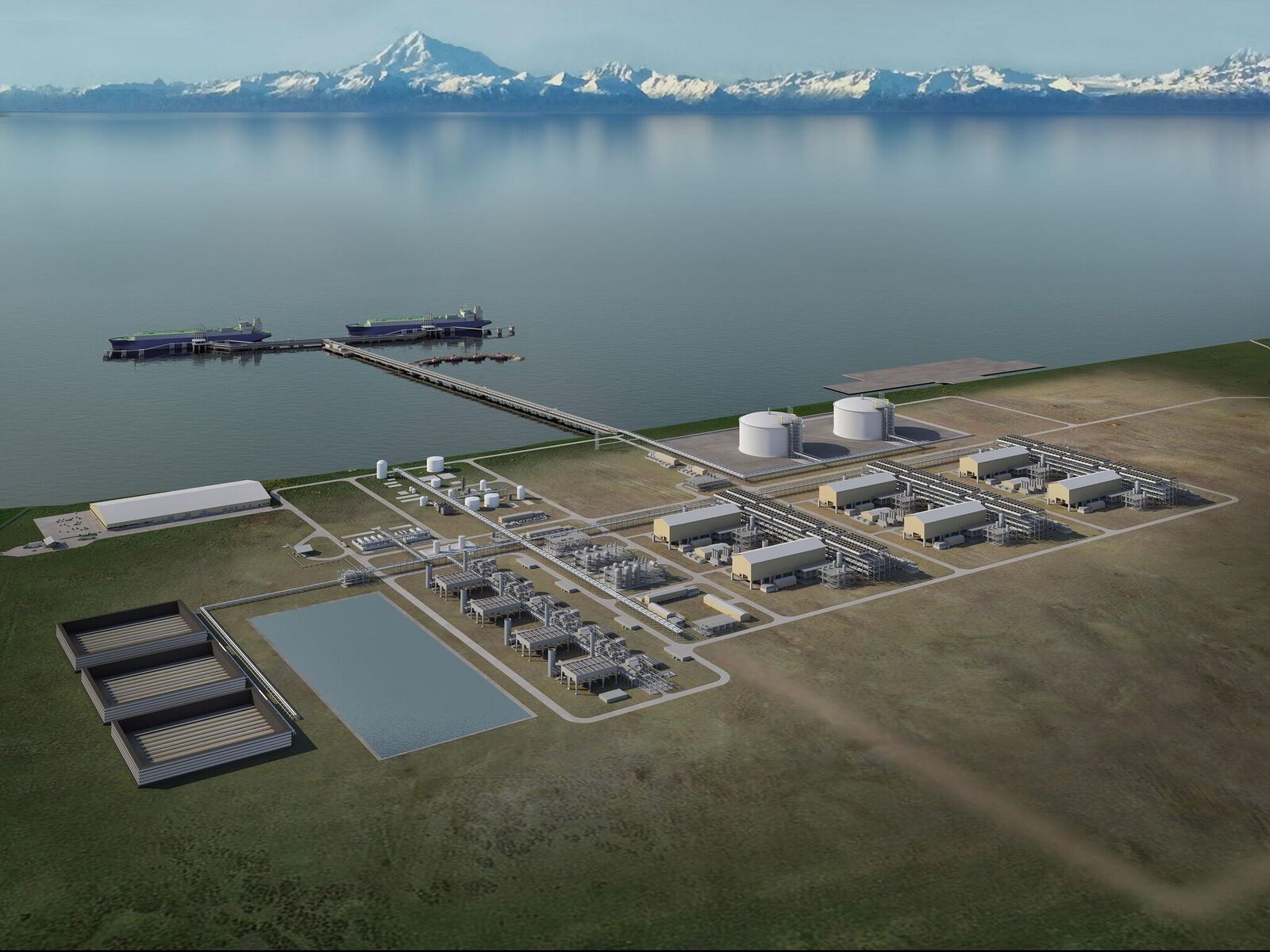
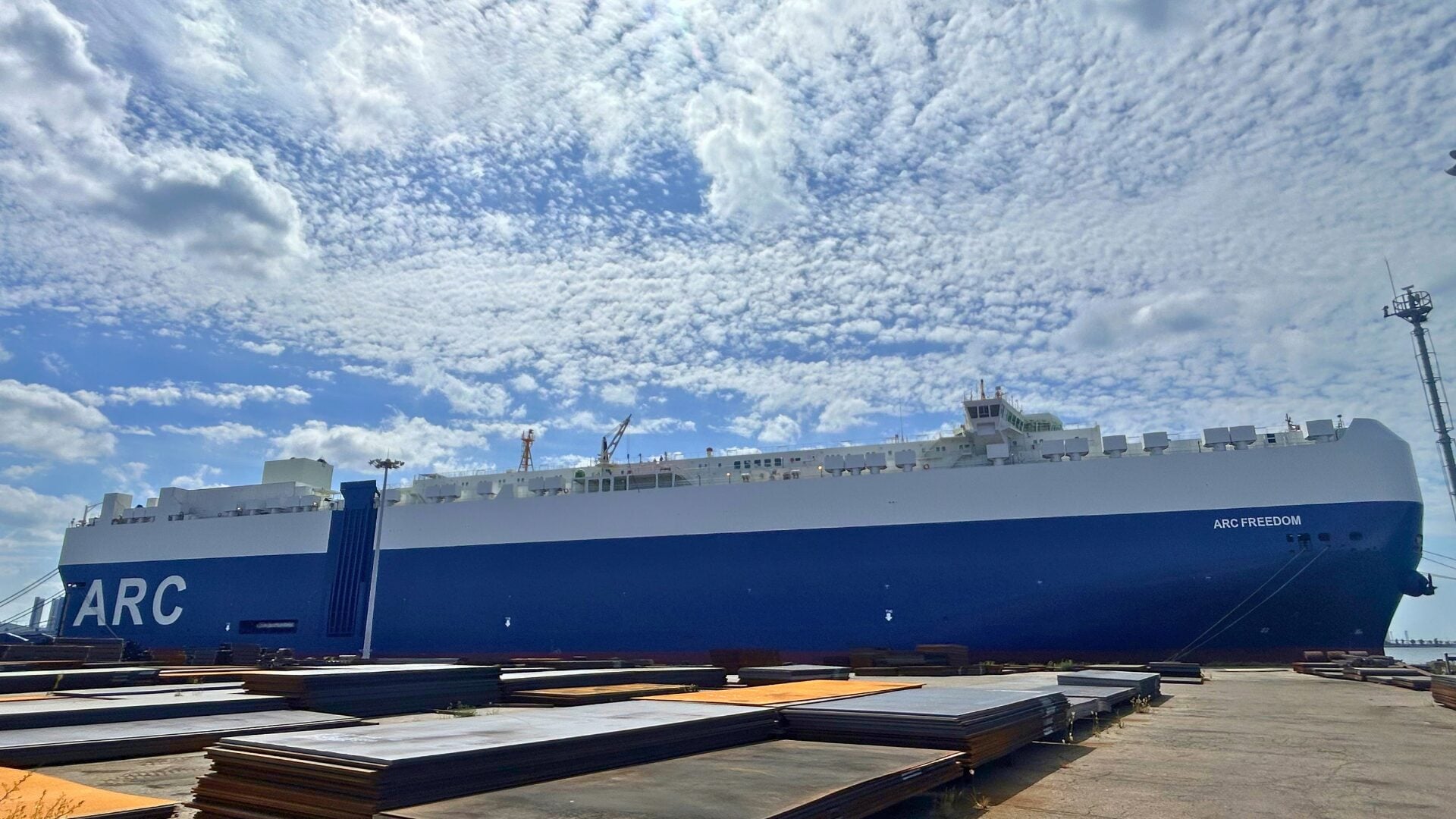
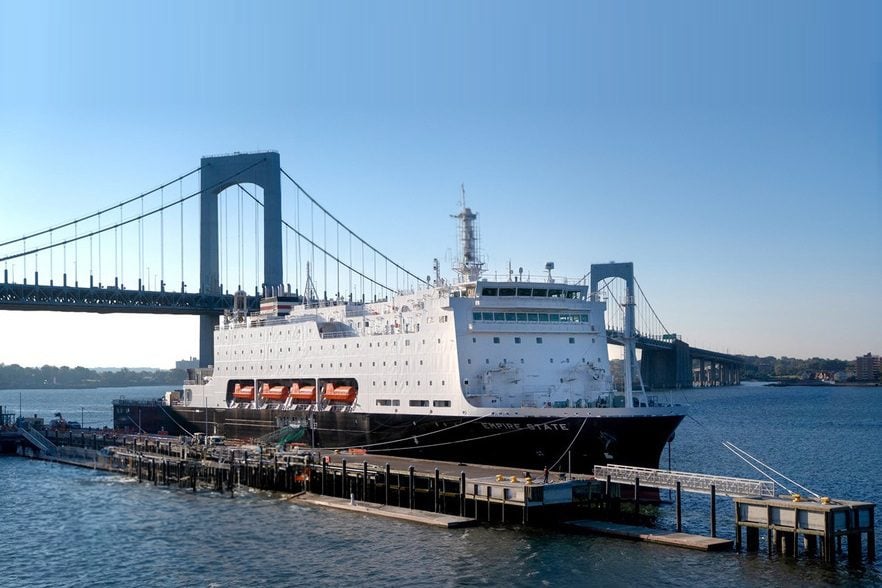
The Trump administration’s push to rebuild America’s maritime industry moved back into the spotlight Wednesday as lawmakers reviewed fiscal year 2027 budget requests from the Maritime Administration (MARAD) and Federal Maritime Commission (FMC), with officials outlining plans to expand the U.S.-flag fleet, modernize shipyards, strengthen sealift capacity, and bolster oversight of global shipping markets.
The hearing before the House Coast Guard and Maritime Transportation Subcommittee comes as maritime policy has emerged as a rare bipartisan priority in Washington, driven by concerns over supply chain disruptions, military sealift readiness, and China’s dominance in global shipbuilding.
“World events are once again reminding us that American companies and consumers are woven into global supply chains,” Subcommittee Chairman Mike Ezell (R-Miss.) said in opening remarks. “These supply chains are susceptible to disruption, and disrupted supply chains become expensive supply chains.”
Ezell pointed to the Trump administration’s Maritime Action Plan and the bipartisan Ships for America Act as evidence that momentum is building behind efforts to revive the U.S. maritime industrial base.
“The stars have aligned to create a broad consensus that now is the time to address that neglect,” Ezell said. “We must not waste this moment or opportunity.”
MARAD Seeks $2.6 Billion
MARAD Administrator Stephen Carmel told lawmakers the administration is requesting a combined $2.6 billion for the agency in FY 2027, including $1.2 billion in discretionary funding and $1.4 billion from a proposed Maritime Security Trust Fund created under President Trump’s “Restoring America’s Maritime Dominance” executive order.
Carmel described the Maritime Action Plan as the administration’s roadmap for rebuilding the nation’s maritime industrial base and reversing decades of decline.
Among the largest requests are:
- $400.5 million for the Maritime Security Program (MSP), supporting up to 60 U.S.-flag commercial vessels.
- $167.6 million for the Tanker Security Program, which would double the program from 10 to 20 U.S.-flag product tankers.
- $500 million for the Port Infrastructure Development Program through a combination of discretionary and trust fund resources.
- $105 million for the Small Shipyard Grant Program.
- $550 million for modernization efforts at the U.S. Merchant Marine Academy.
Carmel warned that both the Maritime Security Program and Tanker Security Program face growing challenges from declining cargo volumes and insufficient cargo preference enforcement.
“As the preference cargo leg declines, the program becomes unstable,” Carmel said of the MSP, arguing that weak enforcement and fragmented government cargo policies threaten the long-term viability of the fleet.
He also suggested that military fuel shipments should receive treatment similar to dry cargo under domestic sourcing requirements, arguing that tanker operators currently lack the cargo base needed to sustain a larger fleet and that stronger cargo support will be necessary if the administration hopes to expand the U.S.-flag tanker fleet.
One of the hearing’s more revealing exchanges came when Rep. Rick Larsen (D-Wash.) pressed officials on the administration’s decision to issue a temporary Jones Act waiver during the Strait of Hormuz crisis. Larsen argued the waiver undermined the administration’s broader effort to rebuild the U.S.-flag fleet and domestic shipbuilding sector, describing it as “kicking out one of the legs from under the table.”
Carmel responded that MARAD was neither consulted nor involved in the decision-making process.
“The Jones Act waiver was done by the Department of War and Homeland Security,” Carmel said. “We were not advised until the end that it was going to happen and we were not consulted.”
Carmel said waivers issued under Section 501(a) are requested by the Department of War and processed by the Department of Homeland Security, with MARAD not formally notified until after the voyage has concluded.
The exchange highlighted what many maritime industry stakeholders view as a contradiction within the administration’s broader push to restore American maritime dominance.
FMC Highlights Enforcement Push
Federal Maritime Commission Chairman Laura DiBella, appearing before the subcommittee for the first time, highlighted the agency’s growing enforcement role and requested $40 million for FY 2027.
DiBella said the FMC’s mission remains focused on protecting U.S. shippers, promoting competition, and preventing unfair practices in international ocean transportation.
The chairman highlighted several ongoing investigations, including probes into:
- Flags of convenience registries.
- Global maritime chokepoints, including the Panama Canal, Suez Canal, Singapore Strait, and Northern Sea Route.
- Spain’s restrictions on certain U.S.-flag vessels participating in MARAD’s Maritime Security Program.
- Canadian ballast water regulations that could disproportionately impact U.S.-flag vessels.
DiBella also pointed to recent enforcement victories, including a $22.67 million penalty against Mediterranean Shipping Company over deceptive billing practices, which was paid to the U.S. Treasury earlier this year.
The FMC has also become increasingly active in disputes stemming from the Ocean Shipping Reform Act of 2022. DiBella noted that the agency successfully defended multiple major regulations in federal court, including rules governing export refusals and detention and demurrage practices.
Hormuz Surcharge Rejections
One of the more notable revelations from DiBella’s testimony involved the FMC’s response to carrier surcharge requests during the Strait of Hormuz crisis.
According to DiBella, several ocean carriers sought permission shortly after the launch of Operation Epic Fury against Iran to impose war-risk and bunker surcharges on less than 30 days’ notice due to increased costs associated with operating near the Strait of Hormuz. The FMC rejected those requests, concluding carriers had failed to demonstrate sufficient justification for bypassing normal notice requirements.
U.S. Maritime Commission Warns Shipping Lines Over Hormuz Crisis Surcharges
“The FMC’s rejection of these special permission requests protected U.S. shippers from sudden price spikes,” DiBella said, adding that American shippers were “the only shippers globally that benefitted from this market stability and protection.”
The hearing underscored the growing political consensus around maritime policy, with lawmakers from both parties increasingly viewing shipping, shipbuilding, and maritime workforce development as essential components of economic security and national defense.
As Congress weighs both the Ships for America Act and implementation of the Maritime Action Plan, lawmakers signaled that maritime issues—which for decades received limited attention in Washington—have moved closer to the center of U.S. industrial and national security policy.

 Join The Club