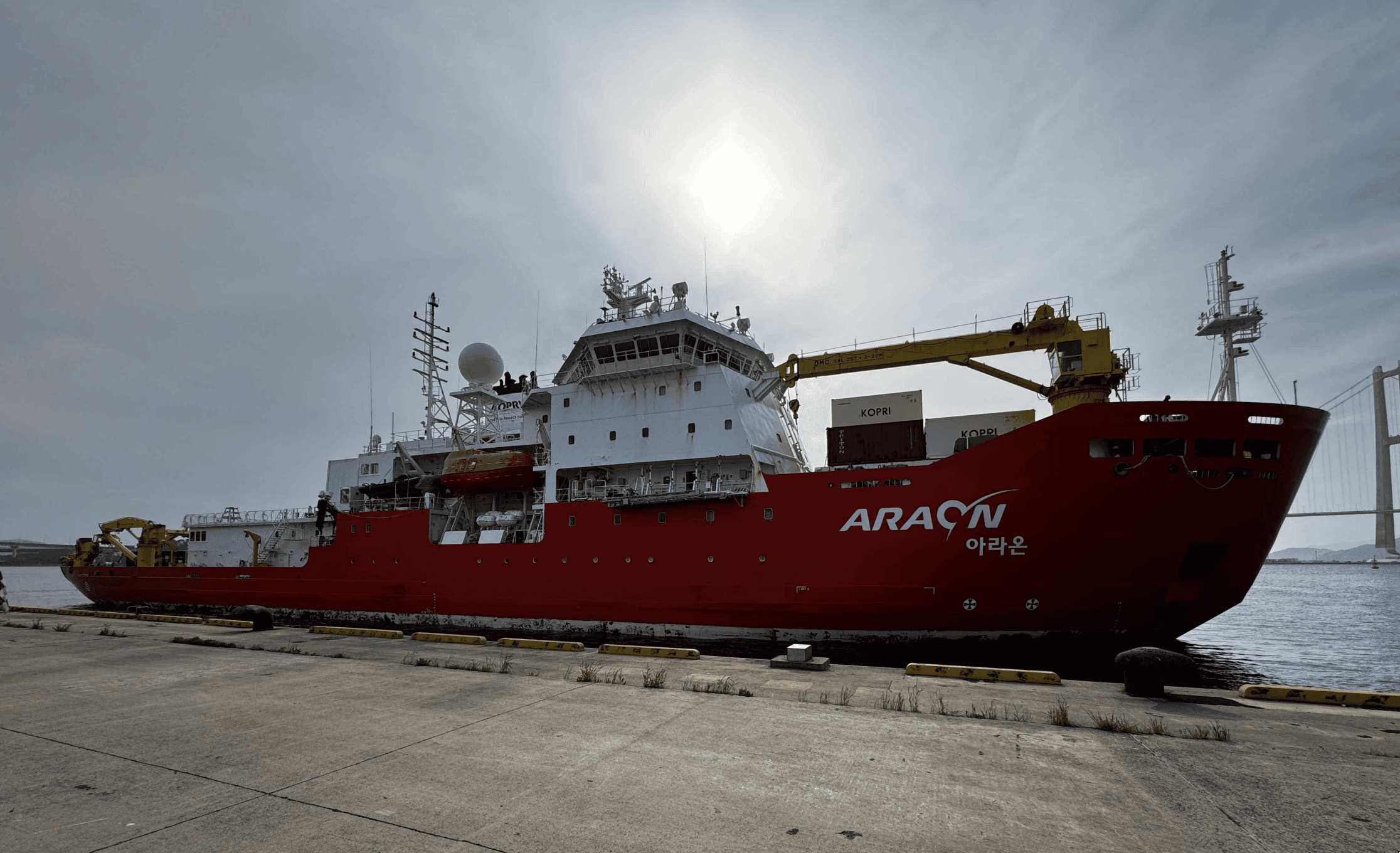
South Korea’s Korea Polar Research Institute (KOPRI) has dispatched its research icebreaker Araon on the country’s 17th Arctic expedition, with this year’s mission placing renewed emphasis on gathering scientific data that could support the future development of Arctic shipping routes as Seoul steps up preparations to capitalize on emerging northern sea lanes.
The 7,500-ton Araon departed Incheon on Friday for a roughly three-month expedition that will conduct climate, oceanographic and ecosystem research across the Arctic while expanding observations of sea ice and navigation conditions relevant to commercial shipping, according to KOPRI.
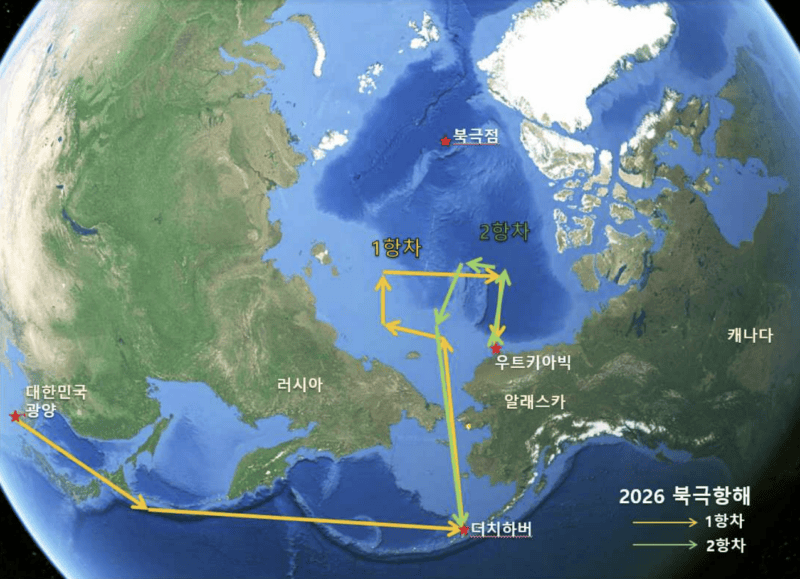
The institute said researchers will collect data from waters around Alaska and the Chukchi and Beaufort seas, deploying autonomous observation equipment and carrying out studies on changing sea ice conditions, marine ecosystems, and the impacts of climate change. The expedition also includes work aimed at improving understanding of Arctic marine environments as shipping activity gradually expands during increasingly longer ice-free seasons.
Intended route of icebreaker Araon during summer 2026. (Source: KOPRI)
“This expedition is a meaningful one that documents the Arctic, the front line of climate change, while simultaneously preparing for the era of the Arctic shipping route,” KOPRI President Shin Hyeong-cheol said in a statement.
“I hope that the field data secured by the Araon will serve as a solid foundation to enhance Korea’s Arctic scientific capabilities and utilization value.”
The voyage comes as South Korea increasingly frames polar research alongside broader economic and maritime ambitions. The government is preparing to dispatch the country’s first trial container shipping voyage between South Korea and Europe via the Arctic later this summer, part of a wider strategy to evaluate whether the Northern Sea Route could eventually shorten transit times between Northeast Asia and European markets during seasonal navigation windows.
Seoul sees growing strategic value in developing the scientific expertise needed to support future navigation, even as Arctic routes remain constrained by unpredictable ice conditions, limited infrastructure, high insurance costs and geopolitical tensions.
South Korea is also positioning its globally competitive shipbuilding industry to benefit from rising demand for ice-class vessels as Arctic activity expands. In April, HD Hyundai Heavy Industries secured a $348.9 million contract to build Sweden’s next-generation icebreaker, marking the first overseas icebreaker order won by a South Korean shipbuilder. The vessel is scheduled for delivery in 2029.
At home, South Korea is pressing ahead with construction of its own next-generation heavy icebreaking research vessel. Hanwha Ocean was awarded the contract in 2025, with the new ship expected to enter service around 2030, substantially expanding the country’s polar research capabilities beyond those of the Araon, which entered service in 2009. The project forms part of Seoul’s long-term strategy to strengthen Arctic science while supporting future shipping, resource and industrial opportunities in the polar regions.
South Korea’s political leadership aims to combine scientific research, advanced shipbuilding expertise and maritime logistics into a broader strategy aimed at establishing itself as a leading hub for the emerging Arctic shipping economy.
The European Union unveiled a new Arctic strategy Tuesday aimed at strengthening maritime security, expanding icebreaker capacity and protecting critical infrastructure as melting sea ice opens new shipping routes and...
The number of commercial transit voyages through Russia’s Northern Sea Route (NSR) had already surpassed the full-year 2025 total by the end of September, putting Arctic shipping on course for another record season as cargo volumes rise and more vessels test the route between Asia and Europe.
New company takes on four Arc4 LNG carriers as Seoul looks to expand Busan’s role in Arctic shipping. A newly established South Korean ship manager is emerging as a potential new player in Arctic LNG shipping, taking control of four ice-class LNG carriers while planning a rapid expansion into the specialized fleet needed to transport gas along Russia’s Northern Sea Route.
October 6, 2026
Total Views: 2881
Get The Industry’s Go-To News
Subscribe to gCaptain Daily and stay informed with the latest global maritime and offshore news
— just like 106,406 professionals
Secure Your Spot
on the gCaptain Crew
Stay informed with the latest maritime and offshore news, delivered daily straight to your inbox
— trusted by our 106,406 members
Your Gateway to the Maritime World!
Essential news coupled with the finest maritime content sourced from across the globe.

 Join The Club