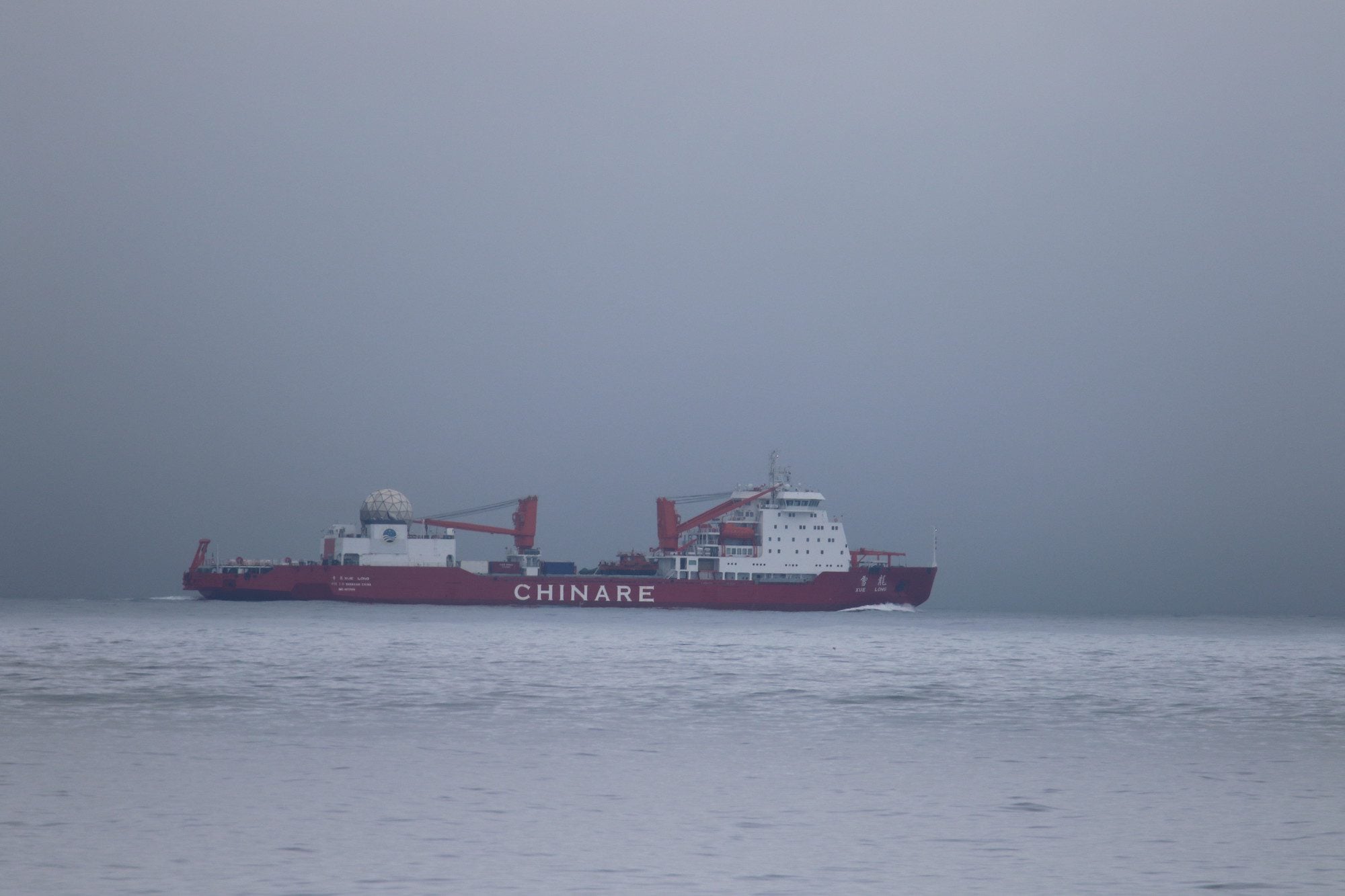
The U.S. Coast Guard says it is monitoring two Chinese research icebreakers as they transit north through the Bering Sea toward the Arctic, marking the first Chinese vessel movements through the U.S. exclusive economic zone (EEZ) and extended continental shelf this year.
The Coast Guard said Friday that the Chinese research vessel Xue Long transited through the U.S. EEZ and over the U.S. extended continental shelf in the Bering Sea en route to the Arctic. A second Chinese icebreaker, Xue Long 2, is also heading north.
The Coast Guard Cutter Munro (WMSL-755) was deployed under Operation Frontier Sentinel to monitor the vessels during their transit.
The operation is intended to safeguard U.S. sovereign rights, ensure foreign vessels comply with international law, and enable the Coast Guard to respond quickly if it detects suspicious or unauthorized activity.
Although foreign vessels are permitted to transit the U.S. EEZ under international law, the Coast Guard noted that conducting marine scientific research within the EEZ or on the U.S. extended continental shelf requires prior U.S. authorization and the sharing of collected scientific data.
“In recent years, the Coast Guard has observed heightened activity in the U.S. Arctic and anticipates continued and increased presence in the region this summer,” the service said.
“Alongside the Department of War, the Department of State, and our international partners, we are actively responding to competitor activities across an increasingly contested Arctic,” said Rear Adm. Bob Little, commander of the U.S. Coast Guard Arctic District.
The latest deployment follows a sharp increase in Chinese Arctic operations over the past two years.
In 2025, the Department of Homeland Security described China’s Arctic activity as “unprecedented,” citing a significant rise in Chinese research and military-capable vessels operating in or near U.S. Arctic waters. The report said multiple Chinese vessels spent extended periods over the U.S. extended continental shelf and conducted dozens of manned submersible dives across the Arctic Ocean.
The Coast Guard responded last year by expanding surveillance operations and deploying multiple icebreakers and cutters to monitor Chinese vessels operating north of Alaska. For the first time in more than a decade, the service operated two icebreakers simultaneously in the High North following the commissioning of the commercial icebreaker Storis, while Healy and National Security Cutter Waesche tracked several Chinese research vessels, including Ji Di, Tan Suo San Hao, Shen Hai Yi Hao, Zhong Shan Da Xue Ji Di, and Xue Long 2.
The renewed activity comes as competition in the Arctic intensifies amid shrinking sea ice, growing interest in natural resources, and the emergence of shorter shipping routes linking Asia and Europe. U.S. officials have increasingly argued that expanding the Coast Guard’s icebreaker fleet and Arctic presence is critical to maintaining American sovereignty and monitoring foreign activity in the region.

 Join The Club