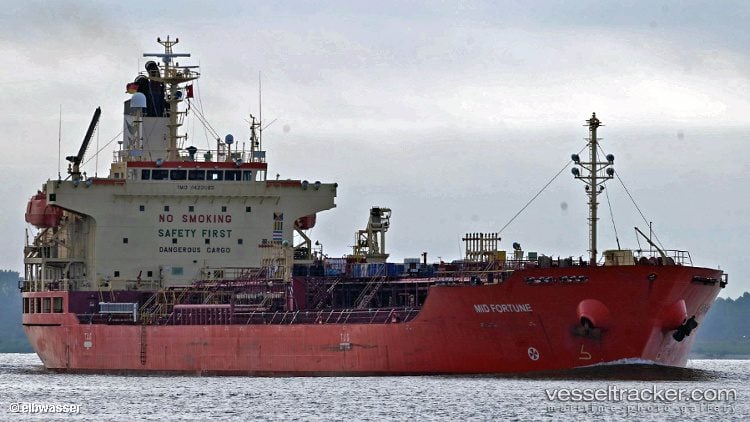
Russia has dispatched an unprecedented convoy of sanctioned oil tankers to within 500 nautical miles of the North Pole sending the fleet onto one of the most northerly commercial shipping routes ever attempted in the Arctic.
At the fleet’s current position, only four vessels are operating farther north: the Swedish icebreaker Oden, China’s polar icebreaker Xue Long, Norway’s research icebreaker Kronprins Haakon, and the ice-class expedition vessel Virgo, according to ship-tracking data.
The routing places Russia’s Arctic oil fleet among the northernmost commercial vessels ever recorded. The route passes north of 81 degrees north, roughly 10 degrees farther north than Utqiagvik, Alaska, which sits at about 71 degrees north latitude.
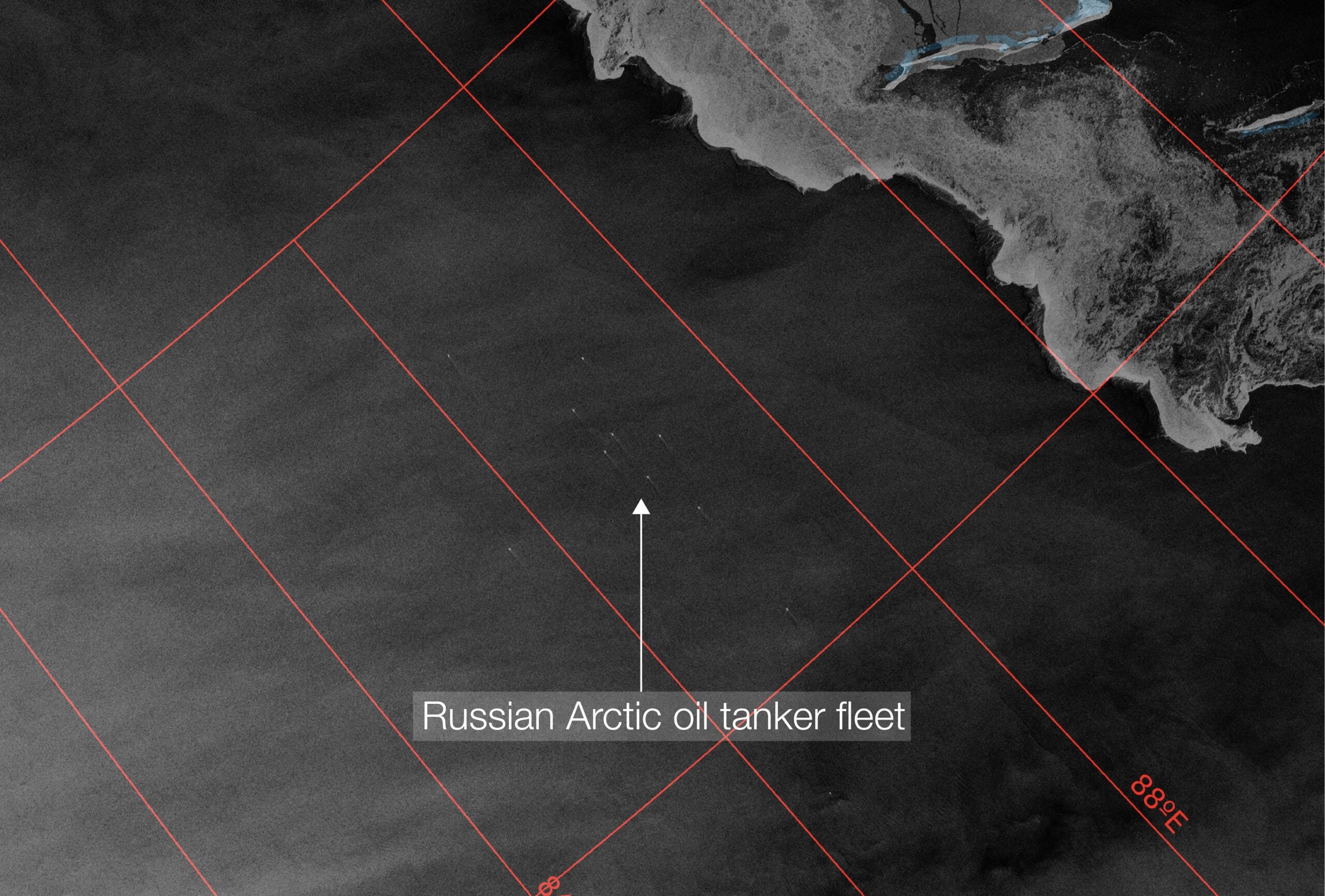
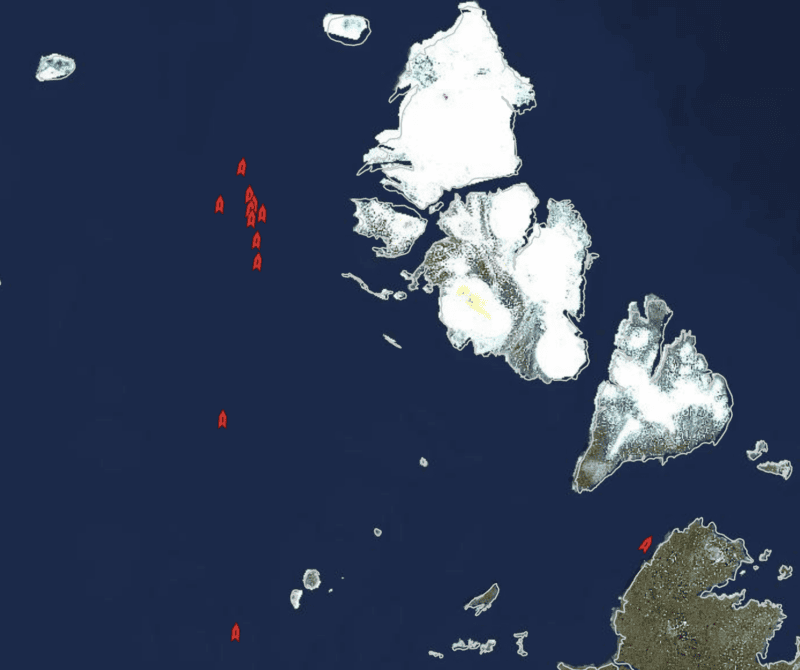
Satellite images caught part of the fleet steaming north on August 5.
AIS screen grab of Russian Arctic fleet steaming north on August 5, 2026. (Source: MagicPort Maritime Intelligence)
Instead of using the Vilkitsky Strait, the traditional gateway between the Kara and Laptev Seas south of the Severnaya Zemlya archipelago, nearly twenty tankers have been routed north of the islands through waters exceeding 81 degrees north latitude. Arctic shipping experts say they cannot recall commercial traffic of this scale using the route, making the operation unprecedented despite isolated Soviet-era voyages several decades ago.
The convoy includes the Suezmax tanker Dinasty, which industry observers say may become the highest-latitude commercial Suezmax tanker ever to operate. Suezmax vessels, among the largest tankers routinely engaged in international crude oil trade, are rarely seen operating in the high Arctic because of their size and the challenging ice environment.
The unusually northerly routing reflects this summer’s uneven sea ice conditions. While ice concentrations north of Severnaya Zemlya and across much of the Laptev Sea have already opened up, more difficult ice has persisted in the Vilkitsky Strait, prompting authorities to direct commercial traffic around the northern side of the archipelago instead.
Farther east, however, the voyage remains challenging. Significant sea ice continues to cover parts of the East Siberian Sea. Three Russian nuclear icebreakers are currently deployed to escort commercial shipping along the Northern Sea Route.
The difficulties became apparent last week when the tanker Aria reversed course in the East Siberian Sea on July 31, possibly prompted by heavy ice conditions ahead.
The scale of this summer’s Arctic oil traffic also stands in sharp contrast with previous navigation seasons. During all of last year’s four-month Arctic shipping season, approximately 13.1 million barrels of crude oil were transported eastward from Russia’s Arctic ports. This year, a comparable volume has already departed during the opening weeks of the navigation window, underscoring Moscow’s accelerating use of the Northern Sea Route despite Western sanctions and continued geopolitical tensions.
Russia has steadily expanded eastbound Arctic crude exports in recent years as it redirects energy shipments toward Asia following sanctions imposed after the invasion of Ukraine. The route reduces sailing distances between northern Russia and China by thousands of nautical miles compared with voyages through the Suez Canal, although navigation remains dependent on favorable ice conditions and support from Russia’s fleet of nuclear-powered icebreakers.
This week’s convoy nevertheless represents a new milestone in commercial Arctic navigation. While individual ships are known to have transited north of Severnaya Zemlya during the Soviet era in the 1970s and 1980s, Arctic shipping specialists say they cannot recall a commercial fleet of nearly twenty oil tankers using the extreme northern passage in a single season.
A bipartisan group of U.S. lawmakers is warning major banks and port authorities against facilitating Russian diesel shipments under President Donald Trump’s controversial agreement with Vladimir Putin, raising the prospect...
MOSCOW, Oct 23 (Reuters) – Latvia, a member of the European Union and NATO, has emerged as one of the top five countries used to ship Russian grain this marketing season despite strained political...
A tanker carrying Russian diesel is expected to arrive in Norfolk, Virginia, on November 2, potentially becoming the first such shipment to reach the United States in more than three...
October 23, 2026
Total Views: 8440
Get The Industry’s Go-To News
Subscribe to gCaptain Daily and stay informed with the latest global maritime and offshore news
— just like 106,374 professionals
Secure Your Spot
on the gCaptain Crew
Stay informed with the latest maritime and offshore news, delivered daily straight to your inbox
— trusted by our 106,374 members
Your Gateway to the Maritime World!
Essential news coupled with the finest maritime content sourced from across the globe.

 Join The Club