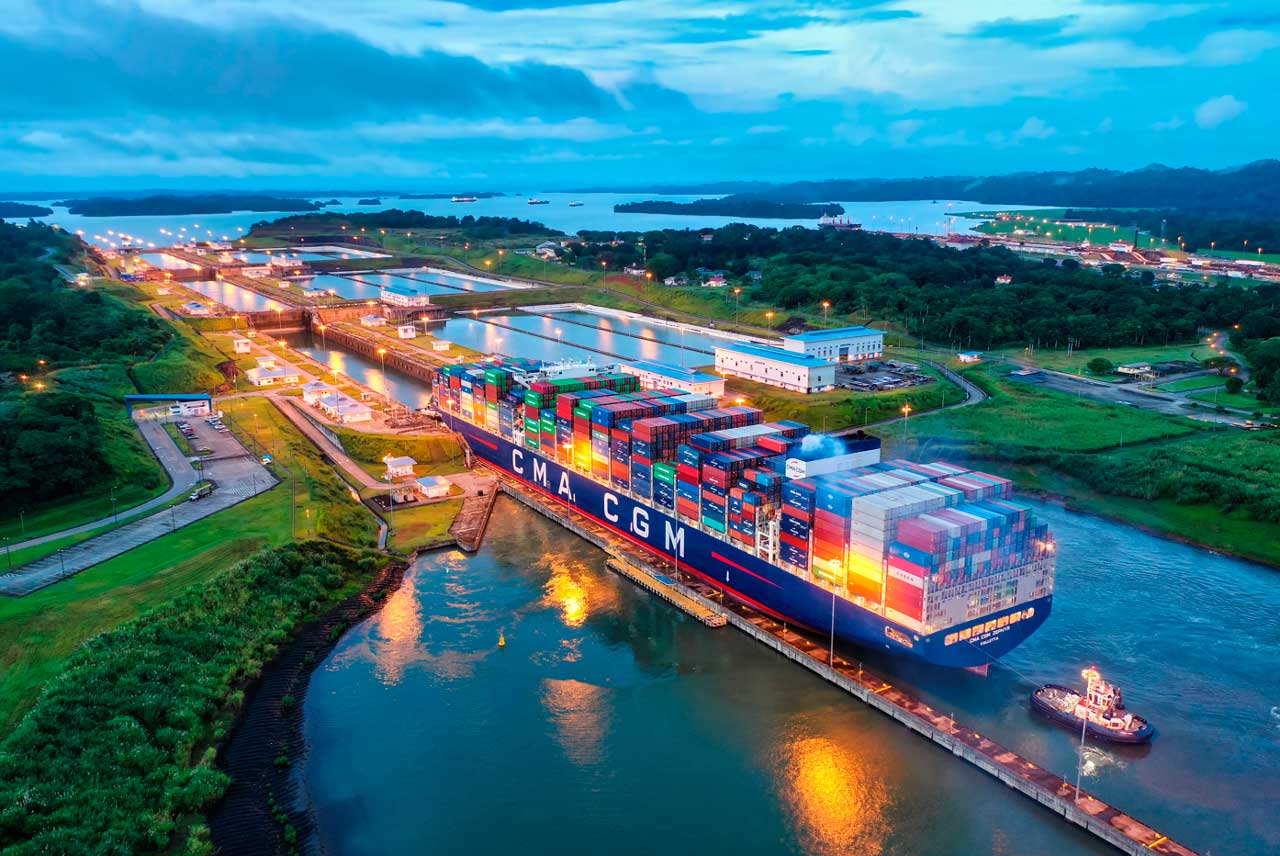
The Panama Canal is pushing back against renewed concerns over congestion, telling the maritime industry it is handling rising traffic volumes efficiently even as geopolitical disruption and stronger demand drive up competition for transit slots.
In a market update hosted by Bank of America Merrill Lynch, Panama Canal Authority officials said the waterway saw higher transits and tonnage during the first half of fiscal year 2026 while continuing to operate without queues, underscoring what officials described as a return to stable and predictable operations.
During the October 2025–March 2026 period, the canal handled 6,288 transits, up 224 from the same period a year earlier, while cargo volumes climbed roughly 5% to 254 million PC/UMS tons. Performance strengthened in recent months, with daily averages reaching 34 vessels in January and 37 in March, while peak days recently exceeded 40 transits.
“The Panama Canal is open and fully operational,” Administrator Ricaurte Vásquez Morales said during the briefing, adding that the waterway remains “open and reliable” despite geopolitical disruptions reshaping global trade.
Container shipping and liquefied petroleum gas were singled out as particularly strong growth segments, with energy cargoes playing an increasingly important role in canal volumes.
The update comes as vessel operators have closely watched signs of mounting pressure on the canal’s reservation system amid disruptions tied to the Middle East conflict, which has pushed some ships to seek alternate routings or priority passage.
That pressure has shown up most visibly in auction prices for last-minute transit slots. Vice President of Finance Víctor Vial said average auction prices, which ran around $135,000 to $140,000 before the conflict, climbed to about $385,000 between March and April, with some individual bids exceeding $1 million.
But Vial stressed those figures reflect temporary demand spikes rather than systemic strain.
“This does not mean there is a queue,” was the message from canal officials, who emphasized most ships transit under advance booking systems such as the Long-Term Slot Allocation program and dedicated LNG reservations. The auction mechanism, they said, uses a limited number of built-in slots and does not disrupt the order or timing of confirmed transits.
For shipping markets, that distinction matters. Canal officials were keen to separate today’s elevated auction prices from the drought-era disruptions of 2023 and 2024, when transit cuts and draft restrictions drove up costs and forced rerouting across global supply chains.
The canal’s water outlook has also shifted dramatically since then. Deputy Administrator Ilya Espino de Marotta said unusually heavy dry-season rainfall has kept Gatún and Alhajuela lakes at maximum levels, positioning the canal to manage a possible El Niño later this year while maintaining normal operations.
“We don’t anticipate anything significant between now and December, but we continue to monitor the situation closely. We want to keep the lakes as high as possible heading into the next dry season, so we can continue delivering a high-quality service,” said Espino de Marotta.
That reassurance comes as a recent NOAA El Niño Watch has put drought risk back on the industry’s radar. But unlike two years ago, officials say the canal enters this period in a better position, with full 50-foot Neopanamax draft restored, transit capacity normalized, and no significant disruptions expected through year-end.
Even so, the weather risk remains a reminder that resilience at Panama is now watched as closely as capacity. For a maritime industry still sensitive to shocks at chokepoints from Hormuz to the Red Sea, Panama is making a clear case that one of global trade’s most important arteries is moving smoothly.

 Join The Club