Hello Club Members! Here is your weekly Dispatch with all the maritime news you need to know to end your week.
Ship Photo of The Week
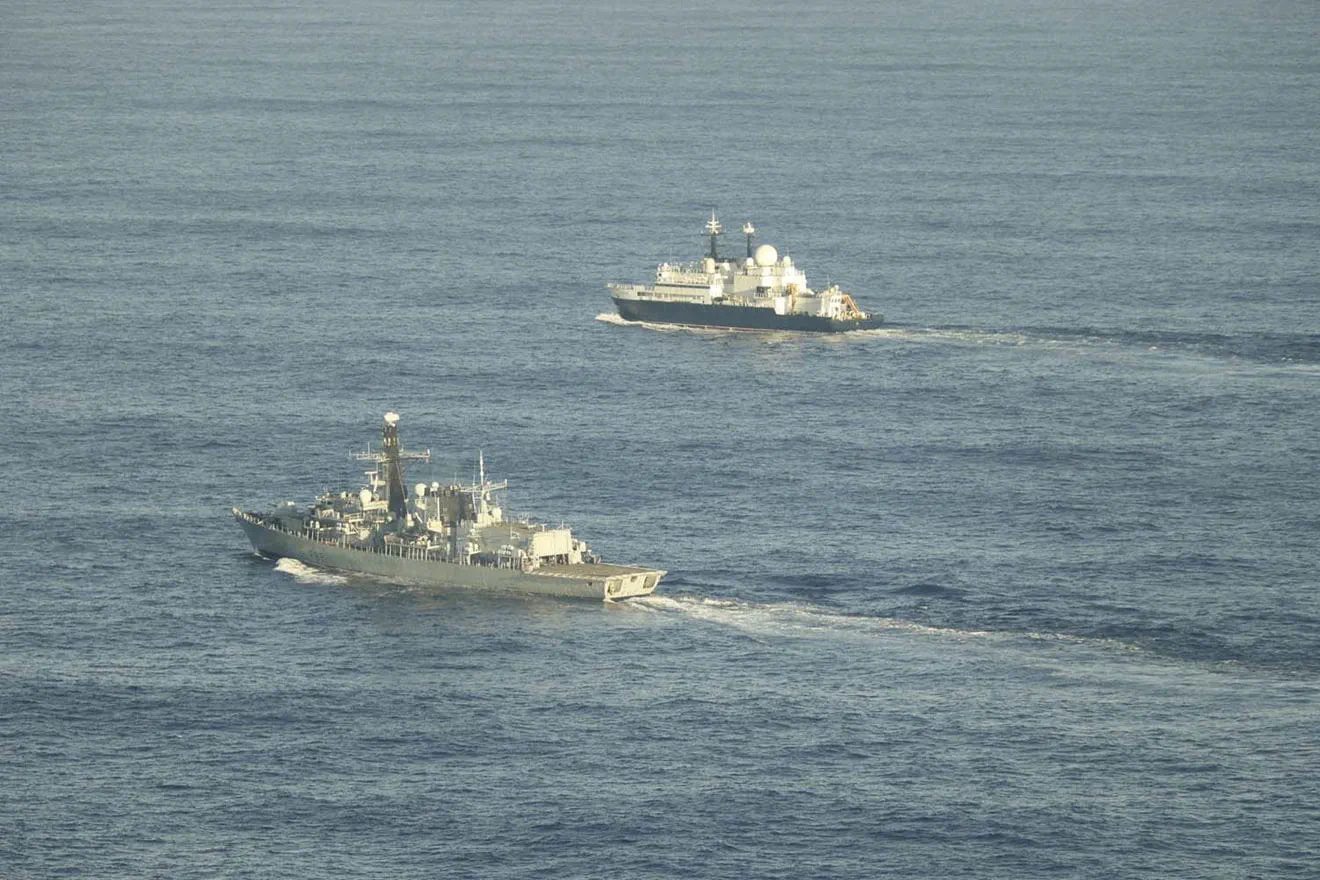
HMS Somerset tracks a suspected Russian spy ship, Yantar, as it sails through waters close to the UK. Royal Navy Photo
Top Stories
Trump’s First Week
President Donald Trump launched his second term with a whirlwind of executive actions, bold promises, and controversial moves that sent shockwaves through Washington and the maritime world.
In his inauguration speech, Trump doubled down on his pledge to “take back the Panama Canal,” claiming Panama had breached the 1999 treaty by ceding control to China. His refusal to rule out military action has sparked international alarm, with experts warning of heightened tensions.
On trade policy, Trump signed a memorandum to review U.S. trade relationships with international partners. While he held off on immediate tariffs on China, Mexico, and Canada, he suggested implementing up to 25% duties on Mexican and Canadian imports potentially starting February 1st. Supply chain experts warn this uncertainty could disrupt shipping and drive up freight rates.
In a stark energy policy shift, Trump suspended all federal offshore wind leasing, jeopardizing billions in investments and maritime jobs. This reversal contradicts the previous administration’s goals of 30 gigawatts of offshore wind capacity by 2030 and 15 gigawatts of floating offshore wind by 2035. Though existing lease rights remain intact, current wind energy leases face mandatory review for possible termination or amendment.
Trump kicked off his presidency with the dismissal of Admiral Linda Lee Fagan, the first woman to lead a U.S. Armed Forces branch, citing her emphasis on diversity, equity, and inclusion (DEI) initiatives over border security. In response, Acting Commandant Admiral Kevin Lunday immediately ordered increased maritime border protection, deploying additional cutters, aircraft, boats, and specialized forces across strategic locations.
Further stirring controversy, Trump ordered the Gulf of Mexico to the “Gulf of America” to celebrate “American greatness”—a move likely to face international resistance given the waterway’s shared borders.
As the maritime industry confronts trade uncertainty, disrupted routes, and stalled energy projects, stakeholders brace for turbulent times ahead.
Galaxy Leader Crew’s 430-Day Odyssey Comes to an End
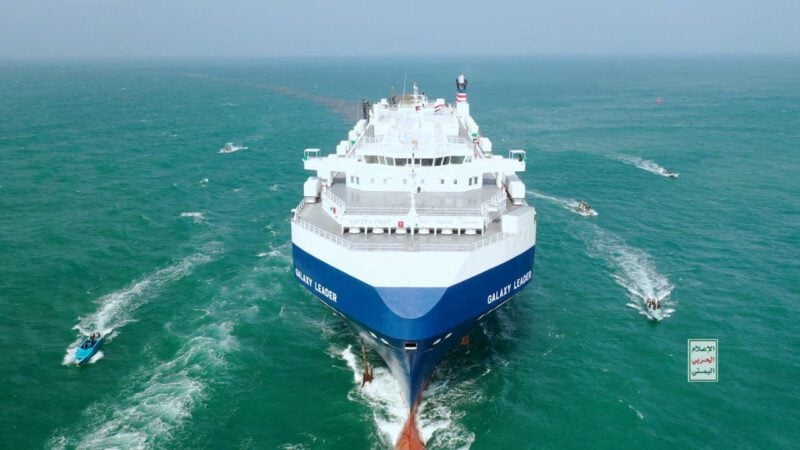
The Galaxy Leader cargo ship is escorted by Houthi boats in the Red Sea in this photo released November 20, 2023. Houthi Military Media/Handout via REUTERS
The release of 25 crew members from the Galaxy Leader after 430 days of Houthi captivity brings hope to global shipping, despite ongoing risks in the Red Sea. Captured in November 2023, the vessel became a stark symbol of the Houthis’ maritime campaign that has disrupted global trade and claimed four seafarers’ lives.
The crew—from Bulgaria, Mexico, Romania, Ukraine, and the Philippines—gained freedom under a fragile Israel-Hamas ceasefire now in its first phase. Houthi representatives agreed to pause attacks on non-Israeli-linked vessels, though their leaders maintain a stance of retaliation if tensions escalate. The initial ceasefire period spans 42 days, with negotiations to follow.
As maritime traffic through the Suez Canal begins to rebound, security analysts caution about persistent risks to vessels with Israeli, U.S., or U.K. connections. Meanwhile, President Trump’s designation of the Houthis as a Foreign Terrorist Organization adds another layer of complexity to the situation.
Shipping companies’ vessel rerouting has inflated freight rates and complicated supply chains. Drewry analysts predict a gradual return to Suez routes over several months, potentially leading to sharp rate drops as overcapacity emerges. Maritime stakeholders maintain careful optimism while preparing for possible instability.
Spy Games in the English Channel
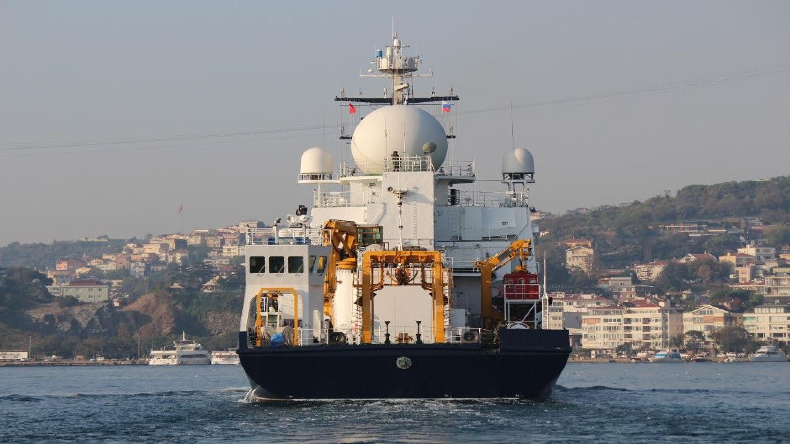
The Royal Navy intercepted the Russian spy ship Yantar this week during its passage through the English Channel. HMS Somerset and HMS Tyne, backed by a stealthy Merlin helicopter, tracked Yantar from France’s Ushant traffic separation scheme through the Strait of Dover. Commander Matthew Teare of HMS Somerset described the operation as “routine but vital” for UK security.
This marks another controversial appearance by Yantar. In November, it lingered near critical undersea infrastructure in UK waters, withdrawing only after a Royal Navy submarine revealed its presence. With increasing hybrid threats to undersea cables, pipelines, and power lines, the UK and NATO have enhanced security through advanced technology, including AI-driven Nordic Warden and maritime drones.
While Russia rejects allegations of sabotage, the stakes remain high. As Commander Hugo Floyer of HMS Tyne emphasized, protecting these vital underwater networks is essential for national security—and the Royal Navy remains vigilant.
As always, we’d love to hear your feedback. Email [email protected] with any questions, comments, tips, or concerns. Don’t forget to check out the Club Discord and gCaptain.com for the latest maritime news.
2025 Unofficial Networks LLC
Tags:
Subscribe for Daily Maritime Insights
Sign up for gCaptain’s newsletter and never miss an update
A new crude oil pipeline that bypasses the Strait of Hormuz and which the United Arab Emirates began building last year is now 50% complete, the CEO of state oil giant ADNOC, Sultan Al Jaber, said on Wednesday.
Damen Shipyards Group has received class and flag state approval for its ASD Tug 2713 Fuel Flexible (FF) to operate on methanol fuel. The approval was issued by Bureau Veritas...
South Korea has preliminarily selected shipping company Panstar Line to operate the country’s first trial container voyage along Russia’s Northern Sea Route (NSR), marking a significant step in Seoul’s ambitions to expand its role in Arctic shipping and develop alternative trade corridors between Asia and Europe.
7 hours ago
Total Views: 401
Get The Industry’s Go-To News
Subscribe to gCaptain Daily and stay informed with the latest global maritime and offshore news
— just like 105,866 professionals
Secure Your Spot
on the gCaptain Crew
Stay informed with the latest maritime and offshore news, delivered daily straight to your inbox
— trusted by our 105,866 members
Your Gateway to the Maritime World!
Essential news coupled with the finest maritime content sourced from across the globe.

 Join The Club