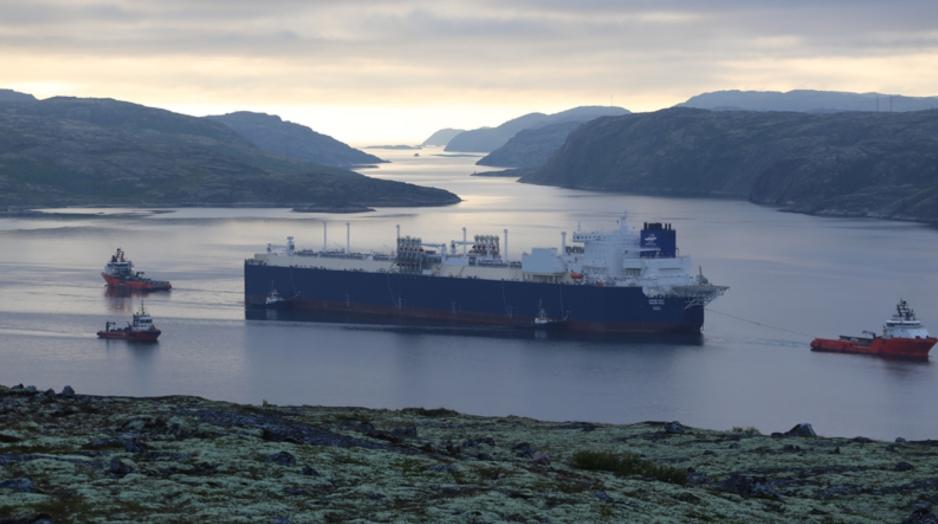
Russia’s Arctic shadow fleet logistics chain shows momentum with a rare, simultaneous ship-to-ship (STS) loading and unloading operation at the Saam floating storage unit (FSU) near Murmansk. The transfer underscores Moscow’s ability to keep sanctioned Arctic LNG flows moving despite Western restrictions.
In the operation, the Arc7 ice-class LNG carrier Christophe de Margerie delivered a cargo of liquefied natural gas produced at Arctic LNG 2 to the Saam FSU, while at the same time a conventional LNG carrier, Arctic Pioneer, docked at the storage barge to load cargo for onward delivery. Satellite images confirm two large vessels alongside Saam FSU on January 9.
Market participants said it marked the first known instance of a simultaneous winter STS operation involving Arctic LNG 2 volumes, with gas arriving from the project and then being directly transferred to another vessel for export to China’s Beihai LNG receiving terminal.
Satellite images showing Saam FSU and LNG carriers on January 9 and Saam FSU January 10. (Source: Sentinel)
The manoeuvre highlights how Russia has continued to adapt its Arctic export logistics since Western sanctions were imposed following Moscow’s invasion of Ukraine. While flows remain below the levels originally envisioned for Arctic LNG 2, the use of floating storage units and STS transfers has allowed sanctioned cargoes to keep moving, particularly to Asian buyers.
The Saam FSU, located at Russia’s western Arctic transshipment hub near Murmansk, is operated by Arctic LNG 2’s majority owner Novatek. The company also operates the Koryak FSU at the eastern end of the Arctic route off Kamchatka, designed to serve as the Pacific gateway for shipments along the Northern Sea Route.
Both the Saam and Koryak FSUs are the largest floating LNG storage barges of their kind globally and were built by South Korea’s Hanwha Ocean, formerly known as Daewoo Shipbuilding & Marine Engineering (DSME), before sanctions halted new Western-linked construction for Russian Arctic projects.
Additional support for Arctic LNG 2 logistics may arrive in the coming weeks. The newly built Arc7 LNG carrier Alexey Kosygin is en route north to begin ice trials. After a stop at the Koryak FSU, likely for docking and STS training, the vessel is expected to enter sea ice for the first time as it passes through the Bering Sea.
Russia’s nuclear-powered icebreaker Arktika is currently sailing toward the Chukchi Sea and is likely to provide escort and support for Alexey Kosygin during its trials and initial transit along the Northern Sea Route, according to industry sources. Based on permit information from the Northern Sea Route Administration Office, the vessel is expected to enter commercial service at Arctic LNG 2 in February.
Despite sanctions imposed by the United States and its allies, Russia has continued exporting Arctic oil and LNG by relying on domestic infrastructure, ice-class vessels, and complex transshipment chains. While the pace is slower than originally planned, analysts note that enforcement has weakened over time.
The Trump administration has not introduced direct sanctions against LNG projects or vessels, and unlike actions taken against Venezuela’s oil tanker fleet, there have been no comparable measures targeting Russian LNG shipping. As a result, the impact of policies introduced during the Biden administration has continued to fade, allowing Moscow to gradually refine its Arctic export playbook.
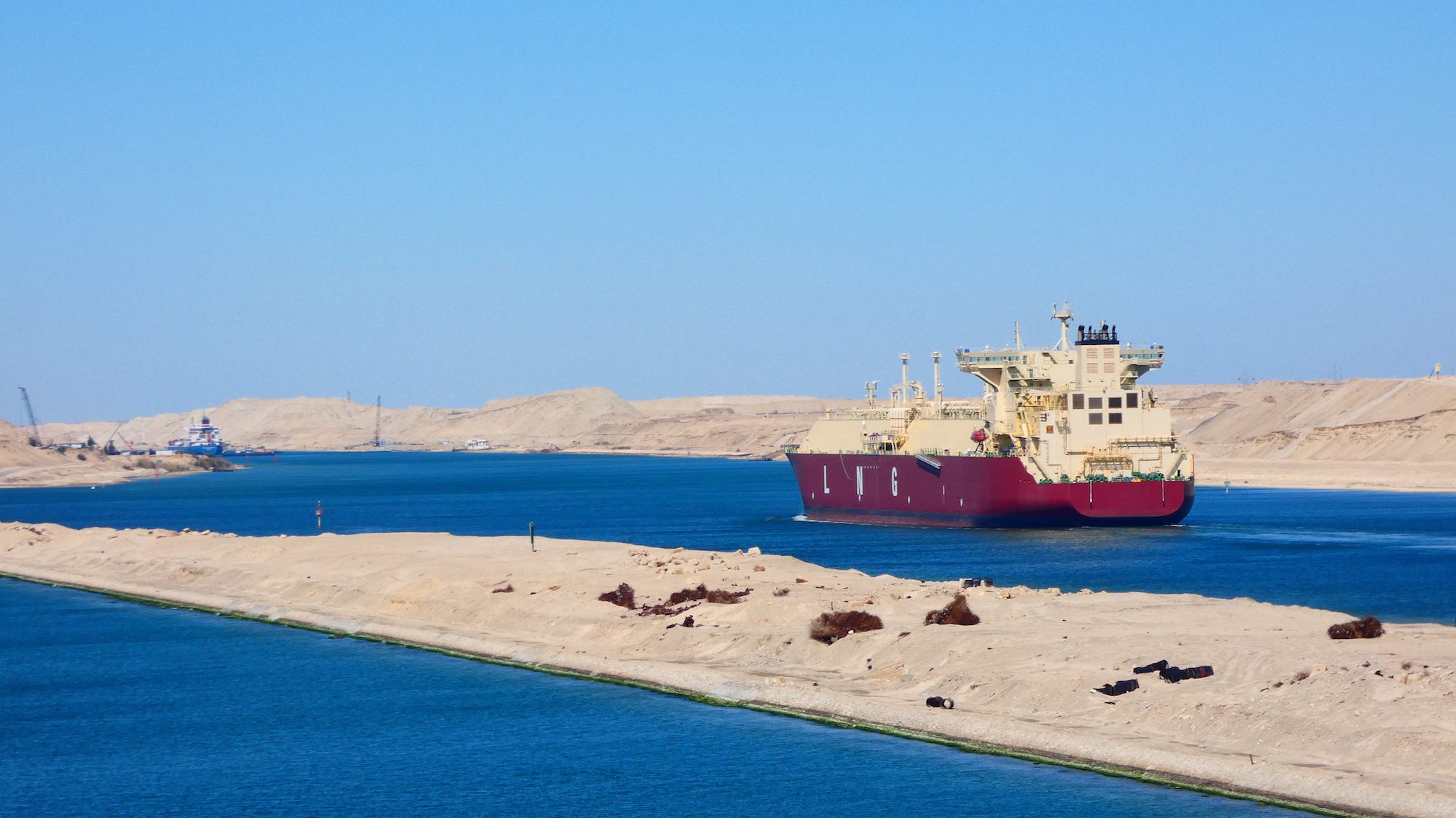
Russia’s Arctic LNG shadow fleet appears to be operating largely undeterred by escalating conflict in the Middle East, with at least seven tankers recently transiting or currently en route through the Red Sea and Bab el-Mandeb strait en route to and from Asia, even as many global shipping operators reroute to avoid the region.
Trump's strikes on Iran threaten the Strait of Hormuz, a critical chokepoint for 20% of global oil supply. Traffic has dropped sharply as Iran's 3.3M barrel daily production and regional exports face disruption.
The UK government announced new sanctions on Russia’s so-called shadow oil fleet as it ramped up efforts to squeeze energy revenues funding the Kremlin’s war in Ukraine.
February 24, 2026
Total Views: 450
Get The Industry’s Go-To News
Subscribe to gCaptain Daily and stay informed with the latest global maritime and offshore news
— just like 107,340 professionals
Secure Your Spot
on the gCaptain Crew
Stay informed with the latest maritime and offshore news, delivered daily straight to your inbox
— trusted by our 107,340 members
Your Gateway to the Maritime World!
Essential news coupled with the finest maritime content sourced from across the globe.

 Join The Club