A gas carrier in service of Russia’s sanctioned Arctic LNG 2 project has docked at a Chinese import terminal for the first time, ending more than a year of uncertainty for one of Moscow’s most ambitious energy ventures.
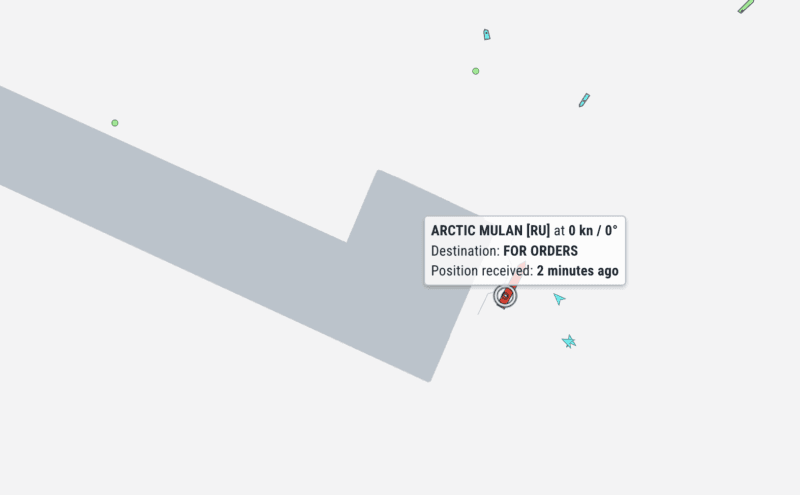
The 79,800-cbm Russian-flagged Arctic Mulan moored up at the Beihai LNG terminal in Guangxi province in southern China just before 5am UTC on August 28.
The apparent delivery, carried by a vessel from Russia’s so-called “shadow fleet,” suggests a potential shift in Beijing’s willingness to accept sanctioned Russian gas. It could also signal a softening of Washington’s position against Russian energy projects. U.S. officials discussed the issue of investments in Russian energy projects and the possible easing of sanctions alongside the latest Ukraine peace talks.
The Arctic LNG 2 project, located on the Gydan Peninsula in northwest Siberia, is majority-owned by Novatek, Russia’s largest private natural gas producer. The $21 billion venture was designed to supply up to 19.8 million tonnes of LNG annually once fully operational, strengthening Russia’s role as a major global gas exporter. But since U.S. sanctions were imposed on the project in late 2023, Arctic LNG 2 has struggled to place its cargoes abroad.
According to shipping data, the facility has produced and loaded 13 cargoes since August 2024, with a 14th loading currently underway. However, the tankers carrying those volumes have idled off Russian ports or meandered through international waters for months without offloading. Until now, none of the shipments had been accepted at an overseas terminal, underlining the chilling effect of Western restrictions.
Arctic Mulan docked at Beihai LNG terminal on August 28. (Source: Marinetraffic.com)
The move could have significant implications for the global gas trade and the enforcement of sanctions. For more than a year, Beijing appeared reluctant to take Arctic LNG 2 cargoes, possibly wary of exposing its energy companies and financial institutions to U.S. secondary sanctions. China has continued to buy large quantities of Russian pipeline gas and non-sanctioned LNG, but until now had steered clear of Arctic LNG 2’s output.
The decision could reflect China’s growing confidence in its ability to shield domestic companies from U.S. penalties, or a judgment that the economic and strategic value of Russian LNG outweighs the risks.
Analysts say the acceptance of this cargo may signal a calculated policy adjustment. By taking sanctioned LNG, China demonstrates its readiness to support Russian energy exports more openly.
For Moscow, the breakthrough offers a lifeline. With European markets closed and traditional buyers hesitant, finding outlets for Arctic LNG 2’s output is critical. Regular deliveries to China would help Russia monetize the project and keep production running, even at reduced levels. It also strengthens the narrative of a deepening Russia-China energy axis, with Beijing emerging as the indispensable buyer for Russian hydrocarbons under sanctions.
Still, questions remain. It is unclear whether this represents a one-off purchase or the beginning of consistent Chinese imports of Arctic LNG 2 cargoes. Close to a million tons of sanctioned LNG remain afloat aboard a dozen vessels and storage barges. Much will depend on Beijing’s appetite for confrontation with Washington and on the shadow fleet’s ability to deliver gas reliably – especially during the icy Arctic winter months – without access to Western shipping, insurance, and financial services.
For now, the docking of a sanctioned LNG carrier in China marks a milestone for Russia: the first time Arctic LNG 2 has successfully delivered cargo abroad.
By Marianna Parraga Jan 4 (Reuters) – Venezuela’s state-run oil company PDVSA is asking some joint ventures to cut back crude production amid an export paralysis, three sources close to the decision said...
By Ahmad Ghaddar, Alex Lawler and Olesya Astakhova DUBAI/LONDON, Jan 4 (Reuters) – OPEC+ kept oil output unchanged on Sunday after a quick meeting that avoided discussion of the political crises affecting several of...
By Kevin Crowley, Jennifer A. Dlouhy and Lucia Kassai Jan 3, 2026 (Bloomberg) –President Donald Trump said US oil companies will spend billions of dollars to rebuild Venezuela’s crumbling energy infrastructure...
January 3, 2026
Total Views: 971
Get The Industry’s Go-To News
Subscribe to gCaptain Daily and stay informed with the latest global maritime and offshore news
— just like 107,521 professionals
Secure Your Spot
on the gCaptain Crew
Stay informed with the latest maritime and offshore news, delivered daily straight to your inbox
— trusted by our 107,521 members
Your Gateway to the Maritime World!
Essential news coupled with the finest maritime content sourced from across the globe.

 Join The Club