Don’t Miss Your Daily Briefing for the Maritime Industry
Join the leading maritime news network
— trusted by our 107,203 members
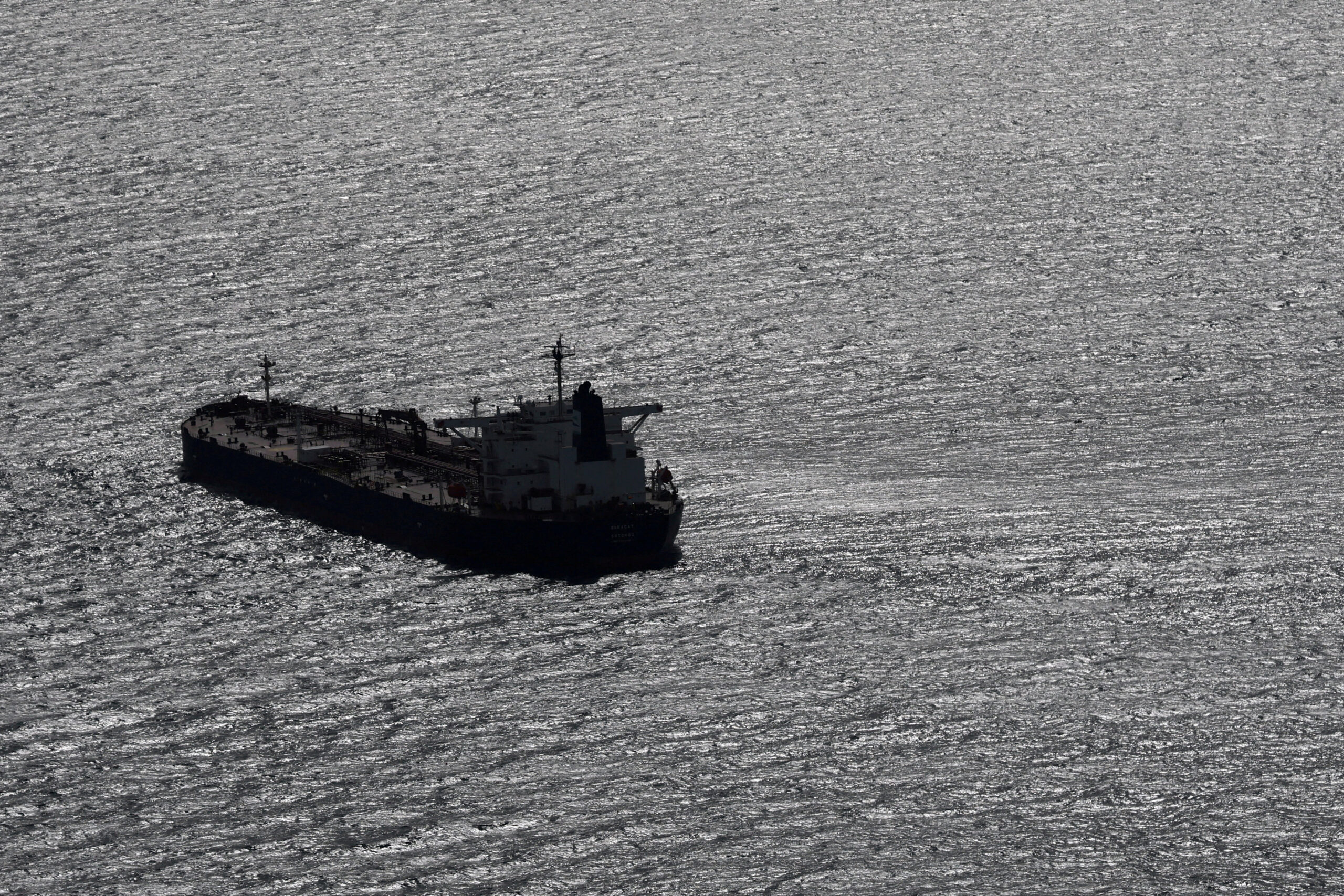
An aerial view shows the oil tanker named Boracay (also called Pushpa), a vessel being investigated by French authorities and suspected of belonging to the so-called "shadow fleet" involved in the Russian oil trade, off the coast of the western France port of Saint-Nazaire, France, October 2, 2025. REUTERS/Stephane Mahe
Oil Tankers Hauling Russian Oil Flood East Asia, Racing for Buyers
Updated: February 16, 2026 (Originally published February 7, 2026)
By Serene Cheong and Rong Wei Neo (Bloomberg) More than a dozen tankers loaded with Russian Urals oil are sailing toward Asia or idling along the route, a sign of producers racing to get cargoes closer to China as India pulls back from the trade.
These vessels, carrying a combined 10 million to 12 million barrels of oil, are spread across the Indian Ocean, and off the coasts of Malaysia, China and Russia. Five of them are indicating ‘for orders’ or ‘China for orders’ as their status, according to data intelligence firm Kpler, a category that usually means they don’t yet have a specific buyer or discharge port.
Another six are signaling Singapore and Malaysia, and are likely heading to a popular spot for ship-to-ship transfers in the South China Sea where they can wait until the crude is bought. Four are floating off Malaysia, China and Russia’s Far East, without indicating a clear destination.
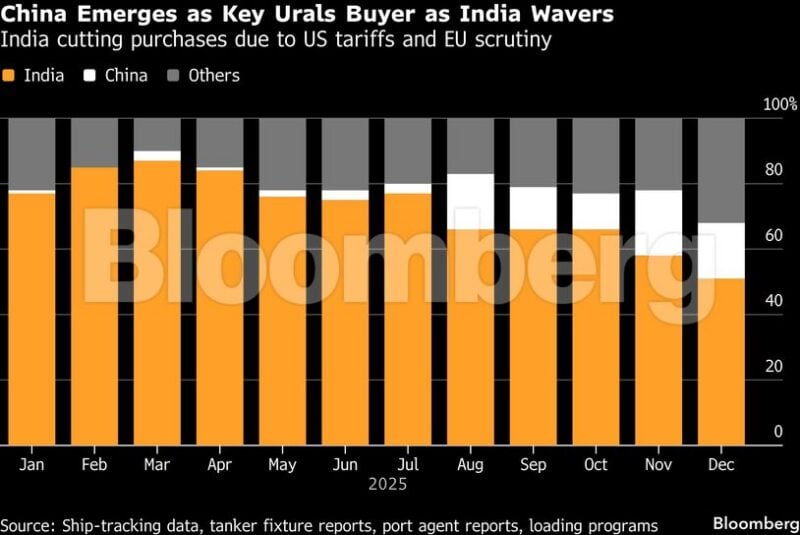
Urals — Russia’s flagship crude grade, which is loaded from ports in the Baltic Sea — has become the variety of choice for Indian refiners since the invasion of Ukraine in early 2022 saw it become heavily discounted. But pressure from Washington has pushed imports lower, reaching an average of 1.2 million barrels a day in January compared with a peak of more than 2 million barrels a day in mid-2024.
Indian imports of the crude could be trimmed further after President Donald Trump said on Monday the country would stop buying Russian oil as part of deal to cut trade tariffs. Prime Minister Narendra Modi confirmed the agreement but didn’t comment on oil. Some refiners are holding off purchases while they seek clarification from New Delhi.
Bloomberg Chart
China Emerges as Key Urals Buyer as India Wavers
The big question is where the surplus cargoes of Urals — the bulk of which have gone to India over the last few years — will now end up. China’s independent refiners have been enthusiastic buyers of Russian oil, but they favor grades such as ESPO and Sokol loaded from the country’s Pacific coast. They took about 500,000 barrels a day of Urals in January, according to Kpler, a record high but still well short of absorbing the flows being diverted from India.
Apart from China, Indonesia has occasionally imported Russian oil, but it tends to prefer lighter and sweeter grades such as ESPO and Sokol. The looming global oil glut is also making it harder for Moscow to find takers.
The benefit for buyers is that discounts on Urals have deepened since Trump’s India announcement on Monday.
The volumes of unsold Urals in Asia could increase. There are currently more than a dozen tankers carrying the grade that are not yet in the region, but are signaling Singapore as their destination, according to ship-tracking data. These vessels are in the Atlantic Ocean, Mediterranean Sea and the Red Sea, and could yet change their port of arrival.
The UK government announced new sanctions on Russia’s so-called shadow oil fleet as it ramped up efforts to squeeze energy revenues funding the Kremlin’s war in Ukraine.
Russia’s flagship crude is selling at the deepest discount in the international marketplace in almost three years as western sanctions deter trade with Moscow.
By Lucia Kassai Feb 20, 2026 (Bloomberg) –A ship believed to be carrying Russian fuels is on its way to Cuba, putting US President Donald Trump’s sanctions to the test amid the...
February 21, 2026
Total Views: 2854
Get The Industry’s Go-To News
Subscribe to gCaptain Daily and stay informed with the latest global maritime and offshore news
— just like 107,203 professionals
Secure Your Spot
on the gCaptain Crew
Stay informed with the latest maritime and offshore news, delivered daily straight to your inbox
— trusted by our 107,203 members
Your Gateway to the Maritime World!
Essential news coupled with the finest maritime content sourced from across the globe.

 Join The Club