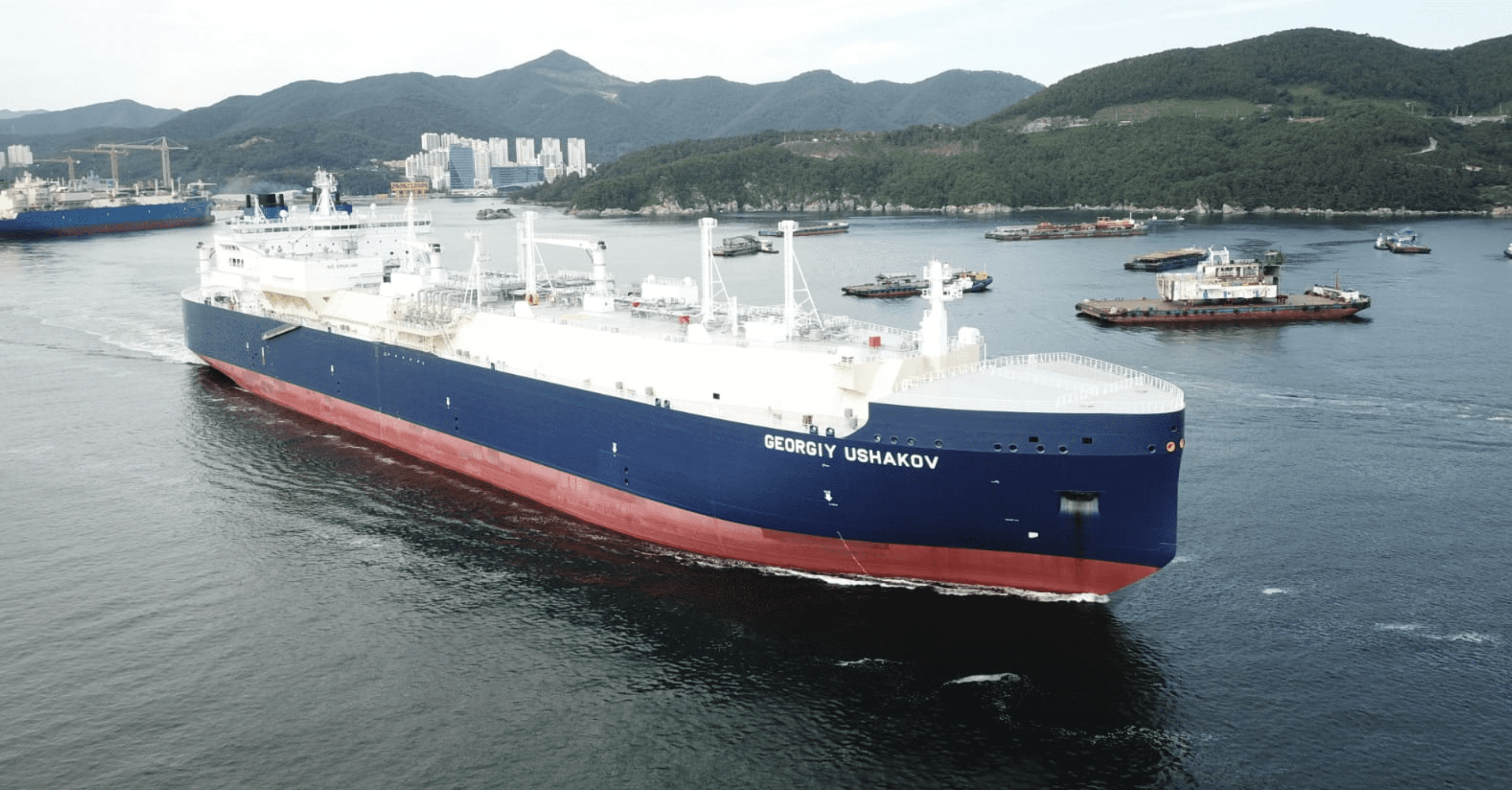
Russia’s Yamal LNG project has dispatched the first gas carrier in the direction of Asia via the Northern Sea Route. Two nuclear icebreakers, Yamal and Vaygach, set off ahead of Georgiy Ushakov to scout ahead and escort the LNG vessel. Georgiy Ushakov has reached the East Siberian Sea andis currently following behind nuclear icebreaker Yamal as the two ships encounter thicker remaining winter sea ice.
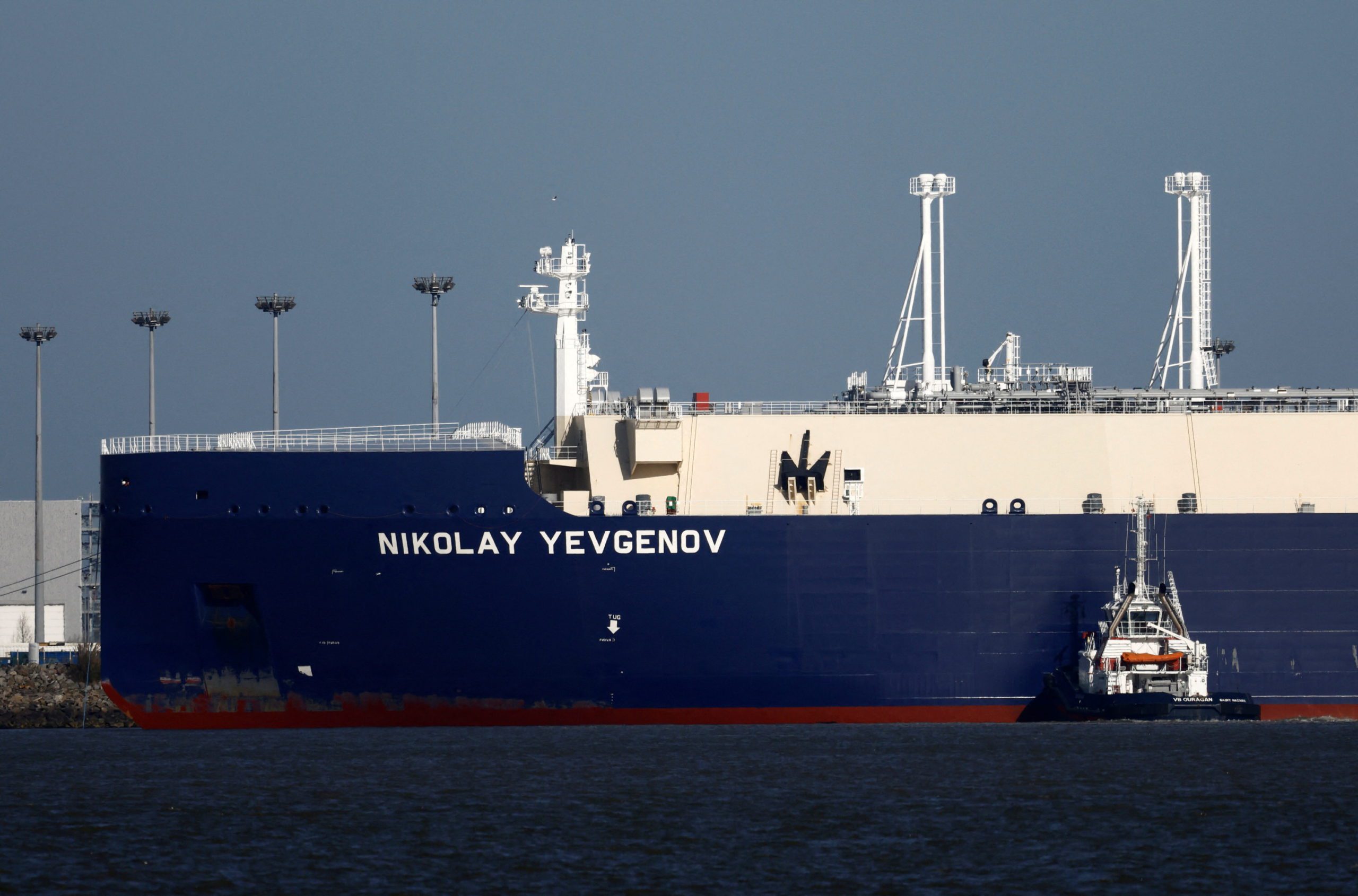
The Georgiy Ushakov is one of fifteen high ice-class LNG carriers in service of Russia’s largest operating liquefied gas project, Yamal LNG. The vessels are designed to push through up to 2.1 meters of sea ice independently in regular operation, though the vessels are routinely escorted by icebreakers during the early summer navigation season.
The early transit signals a busy summer shipping season along Russia’s Northern Sea Route, a shortcut for vessels sailing between Europe and Asia. Thus far Russia has granted permits to 345 vessels to travel along the route this year. That number routinely reaches around 1,000 permits by the end of the year.
LNG carrier Georgiy Ushakov following behind nuclear icebreakers Yamal and Vaygach with the two cargo vessels Bering and Tambey following some distance behind on June 22. (Source: Shipatlas)
The Northern Sea Route to Asia traditionally opens for shipping during June. Last year the first LNG carrier Eduard Toll carrier set off on June 21. The season comes to a close in November or December, though severe ice conditions can shut down the route as early as October.
Two general cargo vessels, Bering and Tambey, are following not far behind Georgiy Ushakov in the direction of Pevek, along the coast of Chukotka in Russia’s Far East. They are currently in a convoy with icebreaker Vaygach.
The European Union unveiled a new Arctic strategy Tuesday aimed at strengthening maritime security, expanding icebreaker capacity and protecting critical infrastructure as melting sea ice opens new shipping routes and...
Russia's oil exports through its Northern Sea Route (NSR) in 2026 have already exceeded last year's by nearly 50%, with some 20 million barrels shipped to Asia from the start of navigation in July to mid-October, traders said and data showed.
South Korean President Lee Jae Myung welcomed the PanStar Acro and its crew home on Tuesday after the container ship completed the country’s first round-trip commercial trial through the Arctic to Europe, hailing the voyage as a potential alternative to traditional shipping lanes even as questions remain over commercial viability and cooperation with Russia.
October 13, 2026
Total Views: 585
Get The Industry’s Go-To News
Subscribe to gCaptain Daily and stay informed with the latest global maritime and offshore news
— just like 106,597 professionals
Secure Your Spot
on the gCaptain Crew
Stay informed with the latest maritime and offshore news, delivered daily straight to your inbox
— trusted by our 106,597 members
Your Gateway to the Maritime World!
Essential news coupled with the finest maritime content sourced from across the globe.

 Join The Club