Don’t Miss Your Daily Briefing for the Maritime Industry
Join the leading maritime news network
— trusted by our 106,659 members
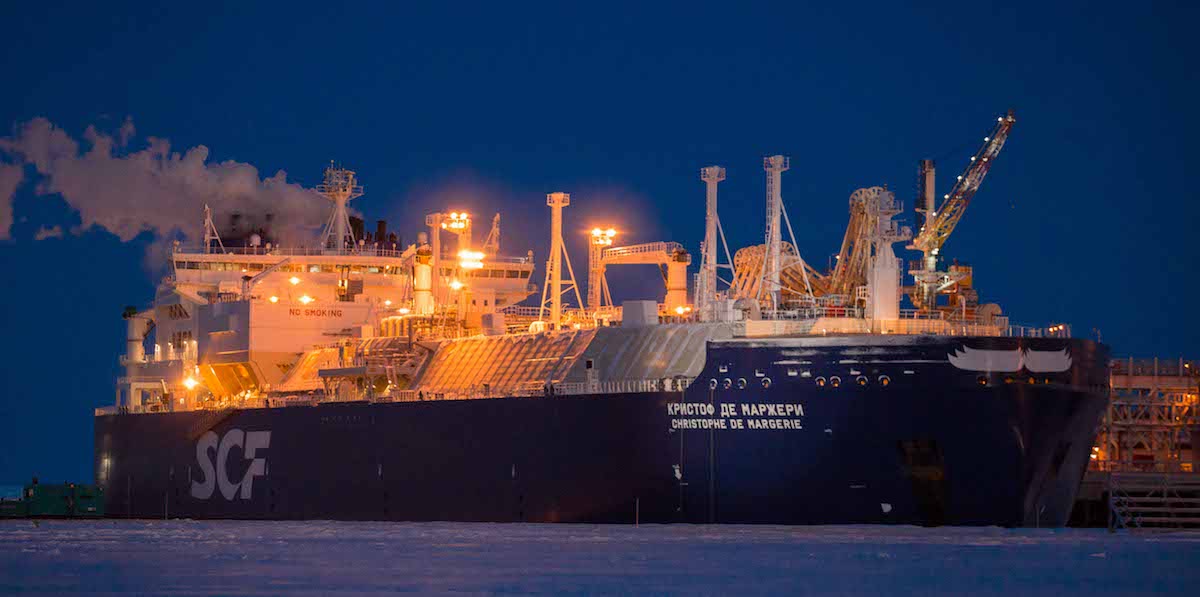
The Christophe de Margerie, the first of 15 icebreaking LNG carriers ordered for the Yamal LNG project to provide transport of LNG year-round in the Arctic, loads its first cargo at the Yamal LNG plant at the Port of Sabetta on the Yamal Peninsula, December 8, 2017. Photo: SCF Group
Russia Reactivates Arctic LNG Route to Asia as Icebreaking Carrier Completes Rare Early-Summer Transit
Russia has reopened its seasonal eastern export corridor for liquefied natural gas from the sanctioned Arctic LNG 2 project after the icebreaking LNG carrier Christophe de Margerie completed a rare early-summer voyage along the Northern Sea Route (NSR), signaling the start of the 2026 navigation season to Asia.
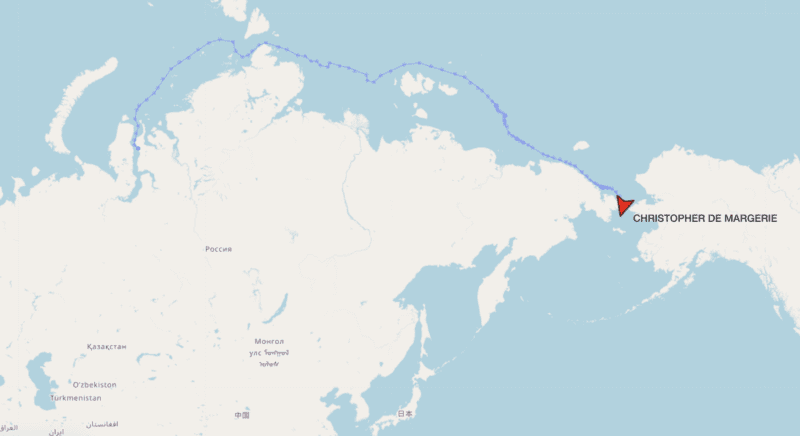
The Arc7 ice-class tanker departed the Utrenniy terminal at Arctic LNG 2 on May 26 and passed through the Bering Strait on June 8, completing the transit in 13 days, according to vessel tracking data.
While the voyage was around 40% slower than a typical summer transit under largely ice-free conditions, it remained substantially faster than the alternative route via the Barents Sea, around southern Africa and across the Indian Ocean to Asia.
The vessel is expected to arrive at the Koryak floating storage unit (FSU) off Russia’s Kamchatka Peninsula within the next two to three days, where it is likely to transfer its cargo for onward delivery to China’s Beihai terminal.
“Speed has ranged from the high teens in open sea, down to one knot as the [nuclear icebreaker] Ural has wiggled its way through the most challenging segments,” says Kjell Eikland, director of shipping data provider Eikland Energy.
“That includes the current near-shore route south of Wrangel Island towards the Bering Strait, which has become a more common choice in the last two years,” he added.
Christophe de Margerie’s route along the Northern Sea Route. (Source: GoRadar)
At the same time, the conventional LNG carrier Arctic Mulan has been sailing north after discharging cargo at China’s Beihai LNG terminal on June 1. The vessel is expected to head toward the Koryak FSU, potentially resuming shuttle operations between the offshore storage facility and Asian markets.
“The Arctic Mulan, having discharged at Beihai, China, is now on its way north and may resume a shuttle service. It is therefore likely that CdM will transfer its cargo to the Kamchatka Koryak FSU,” Eikland said.
The voyages indicate that the logistics chain linking Arctic LNG 2 with Asian customers through the eastern transfer hub has been reactivated for the summer season.
Novatek, Russia’s largest LNG producer and majority owner of Arctic LNG 2, is expected to gradually shift cargo transfers from the winter transshipment point, the Saam FSU in northwestern Russia, to the eastern Koryak FSU over the next two months. The summer transfer season typically lasts until November before worsening ice conditions force a return to western routing.
The company has recently secured four additional conventional LNG carriers – allowing Novatek to increase exports from Arctic LNG 2 compared with summer 2025 – and also operates several Arc4 ice-class vessels that can enter the NSR as early as July.
“Overall NSR ice extent is currently at last year’s level and complications then arose from difficult ice in the East Siberian Sea,” Eikland said.
“The experiences of the current Christophe de Margerie passage appear to confirm that even Arc4s could again face problems and significant delays around Wrangel Island until late July.”
Meanwhile, Russian state nuclear corporation Rosatom and shipping group Sovcomflot renewed their pledge to establish year-round navigation along the Northern Sea Route during the Maritime Congress of the Russian Far East in Vladivostok on May 28.
A congress summary said Rusatom Arctic and Sovcomflot intended to open year-round navigation during the 2026-2027 season, with Sovcomflot, Novatek, Rusatom Arctic and Russia’s Transport Ministry sharing responsibility for operations.
The announcement follows similar pledges made repeatedly by Russian officials since at least 2020 that have yet to materialize due to vessel shortages and challenging winter ice conditions.
The latest optimism may stem from the emergence of a new generation of Arc7 LNG carriers designed for Arctic LNG 2. These vessels are further optimized for year-round NSR operations and are expected to outperform the first-generation Arc7 fleet built for the Yamal LNG project.
Russia’s first domestically built LNG carrier, Alexey Kosygin, completed its maiden Arctic voyage in December 2025 via the NSR. Two sister vessels are under construction at the Zvezda shipyard, with both expected to be delivered before the end of 2026.
If these three second-generation Arc7 carriers are in service by year-end, a limited winter LNG export operation along the Northern Sea Route could become technically feasible for the first time.
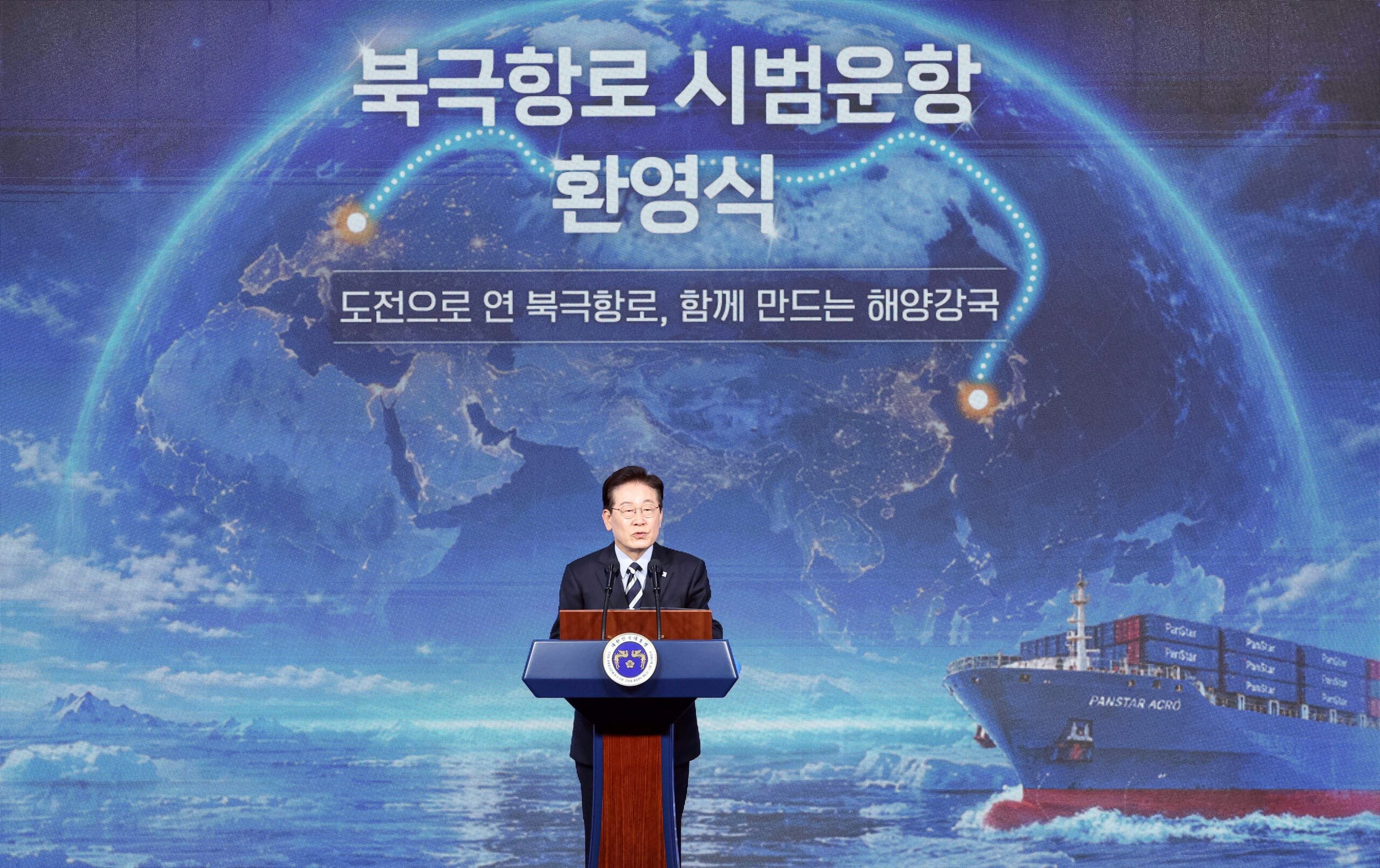
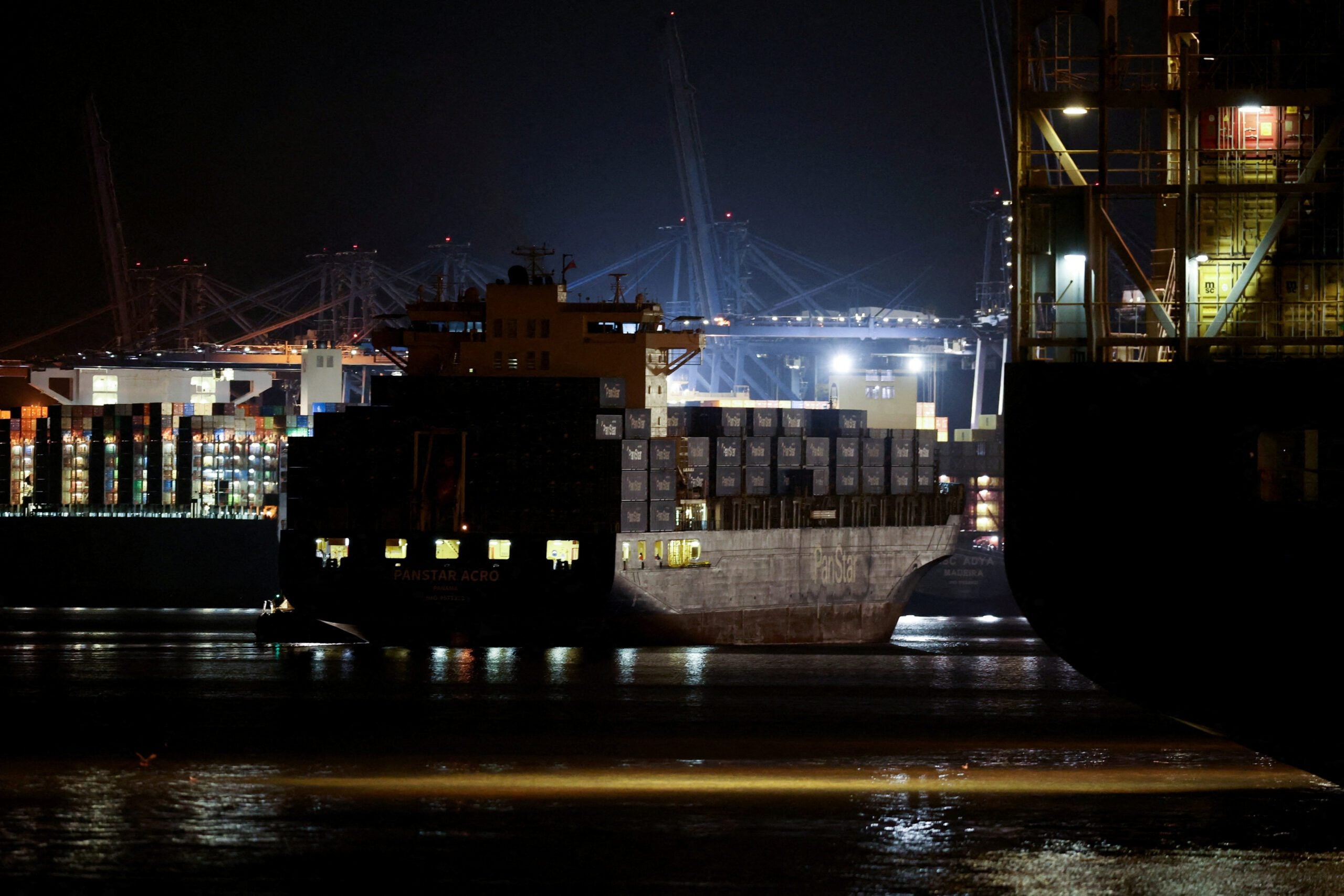
South Korean President Lee Jae Myung welcomed the PanStar Acro and its crew home on Tuesday after the container ship completed the country’s first round-trip commercial trial through the Arctic to Europe, hailing the voyage as a potential alternative to traditional shipping lanes even as questions remain over commercial viability and cooperation with Russia.
By Joyce Lee SEOUL, Oct 11 (Reuters) – A South Korean container ship completed the country’s first commercial round trip to Europe via the Arctic on Sunday, as authorities bank on the...
The United Kingdom on Thursday sanctioned 12 oil tankers it identified as part of Russia's shadow fleet, including the 22-year-old Dakar that is currently making an unusual late-season voyage on the Northern Sea Route.
October 8, 2026
Total Views: 563
Get The Industry’s Go-To News
Subscribe to gCaptain Daily and stay informed with the latest global maritime and offshore news
— just like 106,659 professionals
Secure Your Spot
on the gCaptain Crew
Stay informed with the latest maritime and offshore news, delivered daily straight to your inbox
— trusted by our 106,659 members
Your Gateway to the Maritime World!
Essential news coupled with the finest maritime content sourced from across the globe.

 Join The Club