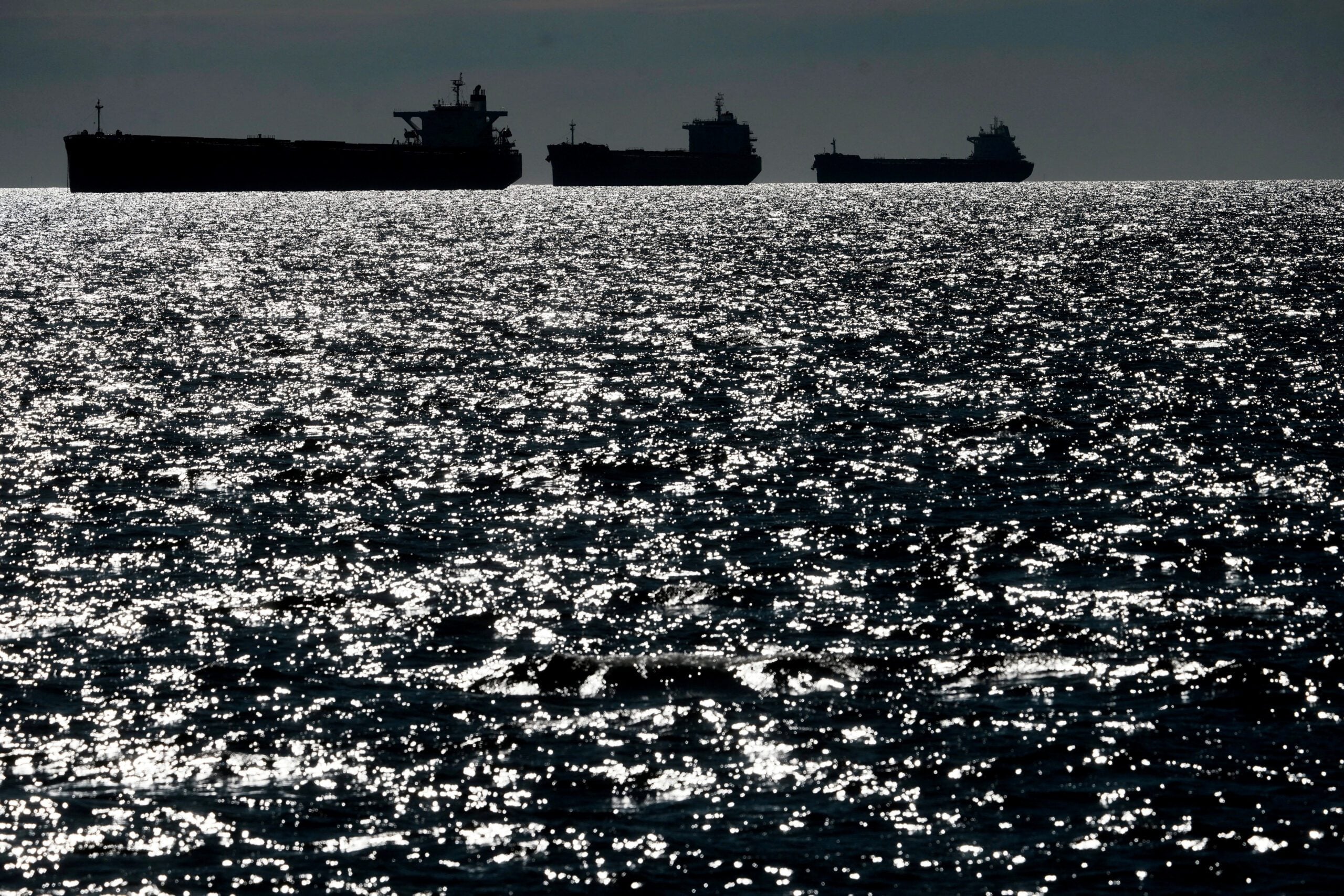
Four recently reflagged liquefied natural gas (LNG) carriers linked to new Turkish-controlled entities are heading north in the Atlantic, in what analysts say could mark a new push in Russia’s effort to expand its constrained export fleet.
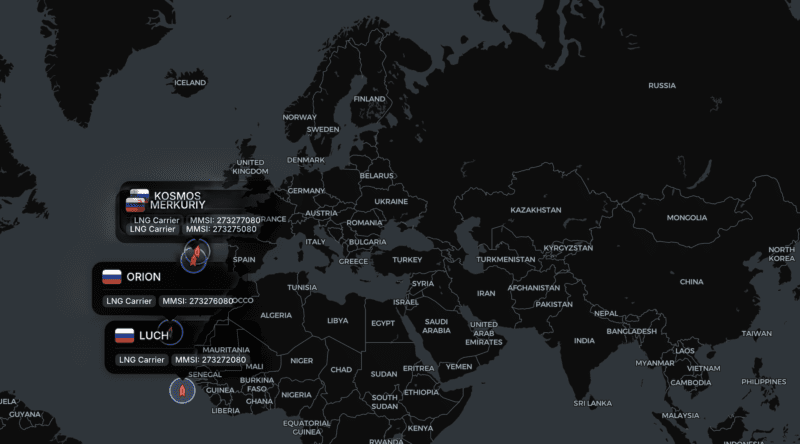
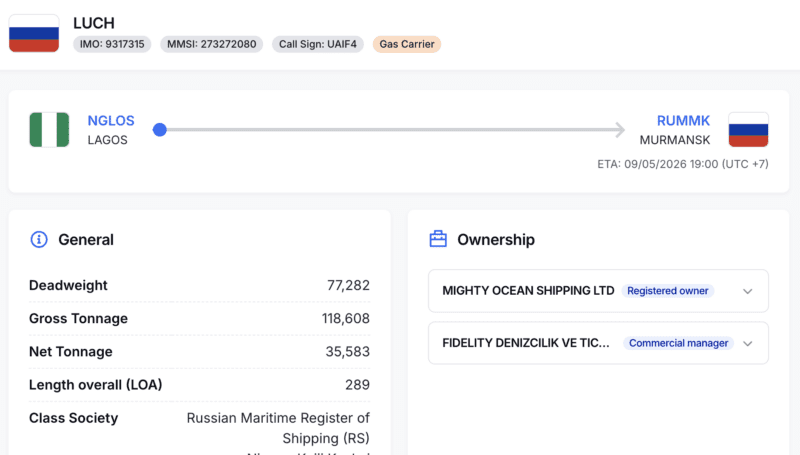
Vessel tracking data shows Kosmos and Merkuriy steaming north off the coast of Portugal, while Luch and Orion are following currently off West Africa. In recent days Luch started signaling Murmansk as the intended destination.
The four vessels – formerly part of Oman’s Asyad Shipping fleet – were sold en bloc earlier this year for roughly $110 million, according to company disclosures and shipbroking sources. Since then, they have undergone multiple renamings, brief re-registration under the Indian Register of Shipping, and eventual transfer to the Russian flag and maritime register.
Shipping databases and industry reports indicate that the new controlling interests behind the vessels are linked to Turkish entities, including Fidelity Denizcilik ve Ticaret and Celtic Maritime & Trading, although the ultimate beneficial ownership remains opaque.
Four Russian-flagged LNGC heading north as of April 28. (Source: Magicport.ai Maritime Intelligence)
Each vessel has followed a similar path of rapid identity changes.
Kosmos (ex-Salalah LNG, built 2005, ~148,000 cbm) was first renamed Cagri LNG and then Ocean LNG before adopting its current Russian-flagged identity. Equasis database shows it is owned by Hong Kong-based Mighty Ocean Shipping, with Turkish management links.
Luch (ex-Ibri LNG, built 2006, ~147,000 cbm) became Akit LNG and then Lake LNG before re-emerging under its current name also tied to Mighty Ocean Shipping.
Orion (ex-Nizwa LNG, built 2005, ~147,700 cbm) was renamed Vakit LNG and Sea LNG before its latest transition. Equasis shows ownership through Turkey-based Celtic Maritime & Trading.
Merkuriy (ex-Ibra LNG, built 2006, ~147,100 cbm) underwent a shorter renaming sequence, becoming Zahit LNG before switching to its current identity and Russian flag in March. Ownership is also via Celtic Maritime & Trading.
That need is becoming increasingly urgent. Analysts at Vortexa and CHNL estimate Russia may require around 30 additional LNG carriers to sustain exports from its projects as European Union restrictions tighten. A ban on short-term Russian LNG contracts took effect on April 25, with a full prohibition on long-term imports due from January 1, 2027.
To maintain flows, Russia must expand its shipping capacity both for the operational Yamal LNG project and the heavily sanctioned Arctic LNG 2 development.
The four reflagged vessels could represent an initial step in that expansion. However, their precise role remains unclear.
Because the ships now sail under the Russian flag and register, they would be barred from delivering cargoes into the European Union. This limits their potential deployment primarily to non-EU markets such as China.
At the same time, their lack of direct sanctions could allow them to carry legally produced LNG from Yamal LNG – either via direct loading at Sabetta or through ship-to-ship transfers from ice-class Arc7 carriers.
For now, the exact purpose behind the reflagging remains uncertain. But their coordinated movement north toward Russia’s LNG export hubs suggests they are likely to become part of a broader effort to expand the country’s shadow LNG fleet and sustain exports as logistical and sanctions challenges mount.
By Joyce Lee SEOUL, Oct 11 (Reuters) – A South Korean container ship completed the country’s first commercial round trip to Europe via the Arctic on Sunday, as authorities bank on the...
The United States on Thursday imposed sanctions on 22 tankers and dozens of individuals and companies linked to Iran’s oil trade, expanding its campaign to cut off Tehran’s remaining petroleum...
The United Kingdom on Thursday sanctioned 12 oil tankers it identified as part of Russia's shadow fleet, including the 22-year-old Dakar that is currently making an unusual late-season voyage on the Northern Sea Route.
October 8, 2026
Total Views: 495
Get The Industry’s Go-To News
Subscribe to gCaptain Daily and stay informed with the latest global maritime and offshore news
— just like 106,954 professionals
Secure Your Spot
on the gCaptain Crew
Stay informed with the latest maritime and offshore news, delivered daily straight to your inbox
— trusted by our 106,954 members
Your Gateway to the Maritime World!
Essential news coupled with the finest maritime content sourced from across the globe.

 Join The Club