Chinese shipping companies are preparing for their busiest season yet on the Northern Sea Route, with at least six operators planning a mix of container and bulk voyages linking China with Russia and increasingly with major Western European ports.
The initial container services alone represent around 20,000 twenty-foot equivalent units (TEU) of capacity, with some vessels scheduled to make a second Arctic voyage later in the season, according to shipping schedules and industry data.
Chinese operators have in previous summers primarily used the route to connect China with Russian ports in the Baltic and Arctic. But the network is now expanding westward, building on Sea Legend’s record-setting voyage by the Istanbul Bridge last summer and adding destinations including Felixstowe, Hamburg and Rotterdam.
NewNew Shipping and Sea Legend are expected to be the main container operators this season.
NewNew Shipping will deploy the NewNew Panda 1, as well as Xin Xin Hai 1 and Xin Xin Hai 2, on services linking China with Europe and Russia. The NewNew Panda 1 is scheduled to depart Nansha and call at additional Chinese ports before reaching St. Petersburg and Kaliningrad in mid-October, too late in the season for a return voyage through the Northern Sea Route.
The company’s other two vessels are scheduled to connect China with Murmansk and Arkhangelsk in August and September, with return voyages planned through the Arctic.
NewNew Shipping had previously outlined ambitions to expand its Northern Sea Route offering to 20 voyages or more using larger ice-class container ships, but those plans have yet to materialize. The company’s container ship NewNew Polar Bear reportedly dragged its anchor across the Baltic Sea floor in October 2023 severing the Balticconnector gas pipeline and cables resulting in over $40m in damages.
Sea Legend, meanwhile, is introducing what it describes as its first seasonal liner-type Arctic service, with eight weekly sailings from eastern China to Felixstowe, Hamburg and Rotterdam. The initial voyage, operated by the Dubai Tower, is scheduled to depart China on August 15.
Sea Legend’s Arctic fleet ranges from about 1,500 TEU to 4,900 TEU. Earlier sailings are planned to return through the Arctic, while later departures into October are scheduled to return via the Suez Canal.
The distance savings are significant. An Arctic voyage from Shanghai to Rotterdam can cut roughly 3,000 nautical miles and 15 days compared with the Suez route. With instability around the Persian Gulf and Red Sea prompting many vessels to sail around southern Africa, the Northern Sea Route can save roughly 6,500 nautical miles and 25 days compared with the longer route.
While the route remains a limited, seasonal alternative to established global shipping corridors, Chinese operators are gradually moving beyond one-off trials toward more structured seasonal networks, with published schedules and regular booking opportunities.
The bulk shipping segment also promises a busy season as well, with more than 25 Chinese-operated bulk carriers, mainly Panamax and Kamsarmax vessels, scheduled to connect China with ports in northern Russia and the Baltic.
China’s Arctic shipping effort is becoming increasingly institutionalized. The China Shipowners’ Association is providing information and support for the emerging traffic, while the Ministry of Transport is introducing an active sea-ice forecasting service for Chinese vessels.
For the first time, the ministry will provide 72-hour ice forecasts along the Northern Sea Route, rather than relying solely on observations of existing ice conditions. The forecasts will cover the route from the Bering Strait and East Siberian Sea to the Kara and Barents seas.
The service will provide information on ice thickness, coverage and drift speed at three-hour intervals, with a spatial resolution of 10 km and updates every 24 hours.
Based at the ministry’s Beihai Navigation Support Center, the forecasting system has been supported by China’s polar research program, including observations and testing conducted aboard the icebreakers Xue Long and Xue Long 2. Both vessels are again active in the Arctic this summer, including in waters off the Alaska coastline.
The developments suggest that China’s Arctic shipping ambitions are increasingly shifting from experimentation toward a more coordinated seasonal presence, even as the Northern Sea Route remains constrained by its short operating window, ice conditions and limited infrastructure.
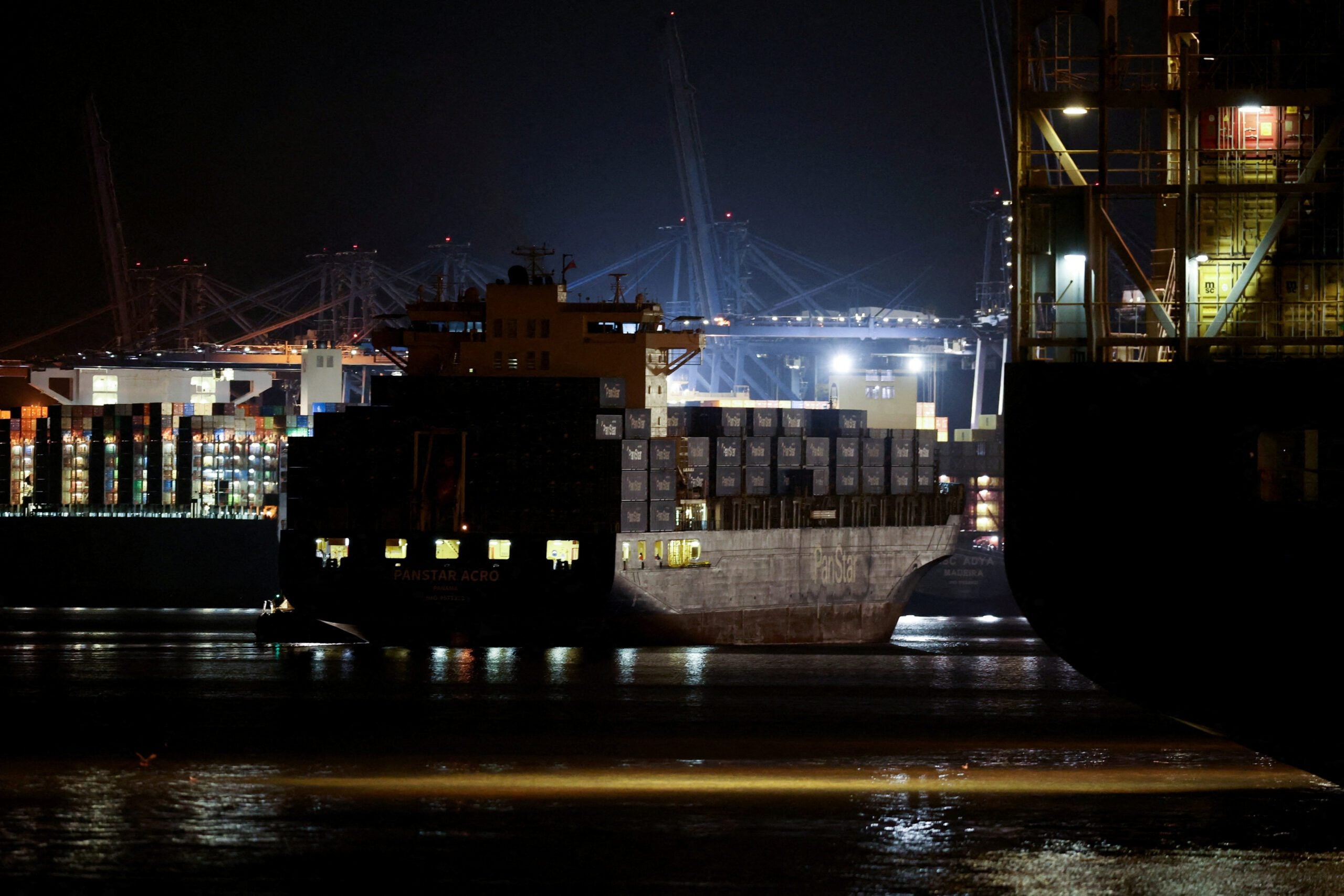
South Korea is also set to conduct a container shipping trial voyage this summer with the vessel PanStar Arco scheduled for departure from Busan on August 22.

 Join The Club