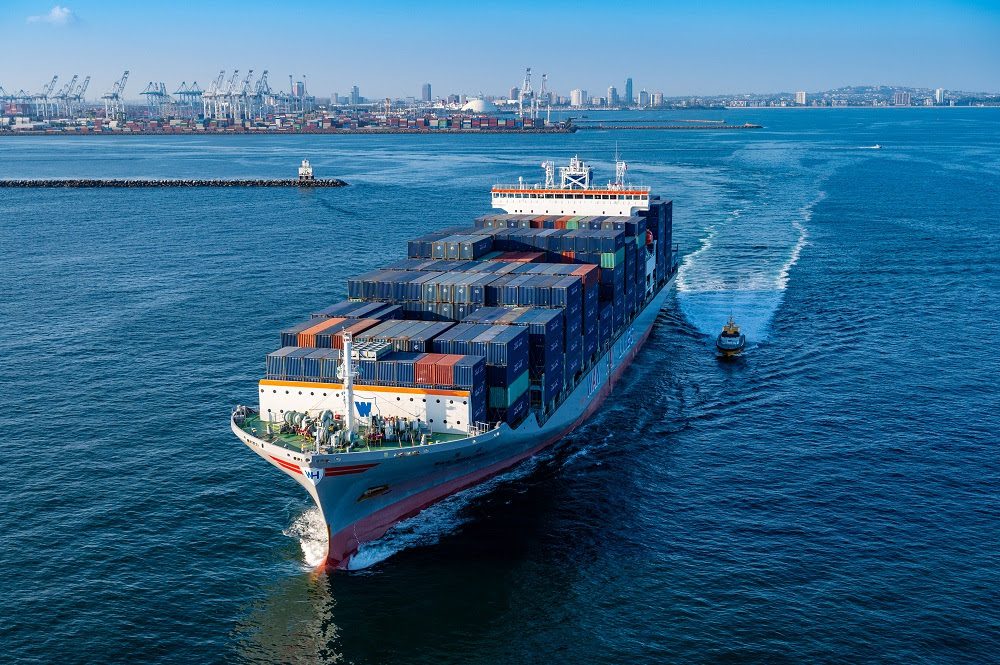
The Port of Long Beach has become the first U.S. seaport to formalize a partnership with the U.S. Maritime Administration (MARAD) aimed at advancing small modular reactor (SMR) technology for commercial maritime applications, marking another step in the Trump administration’s push to revive nuclear-powered shipping.
The nonbinding Memorandum of Cooperation, signed Wednesday, establishes a framework for the Port and MARAD to work together on the development of nuclear technology for commercial vessels, port operations, and other maritime assets.
The agreement follows MARAD’s May request for industry input on designing a U.S.-built, commercially viable small modular reactor for the nation’s marine transportation system. It also comes as interest in nuclear propulsion has grown across the shipping industry, driven by the need to decarbonize long-distance shipping while improving energy security and operational endurance.
“This first-of-its-kind partnership with MARAD allows us to leverage strong federal leadership and private sector innovation to catalyze SMR technology as we safely and securely support the next generation of shipping,” said Port of Long Beach CEO Noel Hacegaba. “We’re building the Port of the Future in Long Beach, and we will continue our tradition of leadership as we partner to advance nuclear energy in maritime and beyond.”
Maritime Administrator Stephen Carmel said the partnership aligns with the administration’s broader efforts to rebuild U.S. shipbuilding capacity while expanding the nation’s energy capabilities.
America’s Nuclear Shipping Revival Is About More Than Reactors
“Under President Trump’s and Secretary Duffy’s leadership, MARAD is taking decisive action to revitalize U.S. shipbuilding and secure our national energy dominance,” Carmel said. “This milestone agreement with the Port of Long Beach brings cutting-edge Small Modular Reactor technology into active testing. It ensures our maritime supply chains stay operational under any contingency while training the next generation of high-skilled American mariners.”
Under the agreement, the Port and MARAD will coordinate with the U.S. Coast Guard, Department of Energy, and Nuclear Regulatory Commission to develop operational protocols, safety standards, inspection procedures, and other best practices needed to support future SMR-powered vessels calling at U.S. ports.
The partnership does not authorize construction of nuclear-powered ships or commit either party to funding, procurement decisions, or deployment of any specific reactor technology.
The announcement also complements the Port’s recently signed lease agreement with BlueCore Energy Inc., which will assemble, test, and store maritime power modules at the port, adding private-sector participation to the broader initiative.
Long Beach officials say the effort also supports the port’s long-term infrastructure plans. The port aims to double annual container throughput to 20 million TEUs by 2050, a goal expected to significantly increase electricity demand as cargo handling equipment and terminal operations become increasingly electrified.
Board of Harbor Commissioners President Frank Colonna said the agreement continues the port’s history of testing emerging technologies.
“This Memorandum of Cooperation with MARAD positions the Port of Long Beach to help develop energy sources for the goods movement industry while maintaining our role as the premier gateway for trans-Pacific trade,” Colonna said.
The Port of Long Beach is home to two MARAD Ready Reserve Force vessels—SS Cape Island and SS Curtiss—and is one of 18 designated Commercial Strategic Seaports that support military logistics during national emergencies.
The agreement represents the latest federal effort to explore nuclear propulsion for commercial shipping. Recent industry studies have concluded that advanced small modular reactors could eliminate carbon emissions from oceangoing vessels while allowing ships to operate for decades without refueling, although significant regulatory, public acceptance, and infrastructure hurdles remain before commercial deployment becomes a reality.

 Join The Club