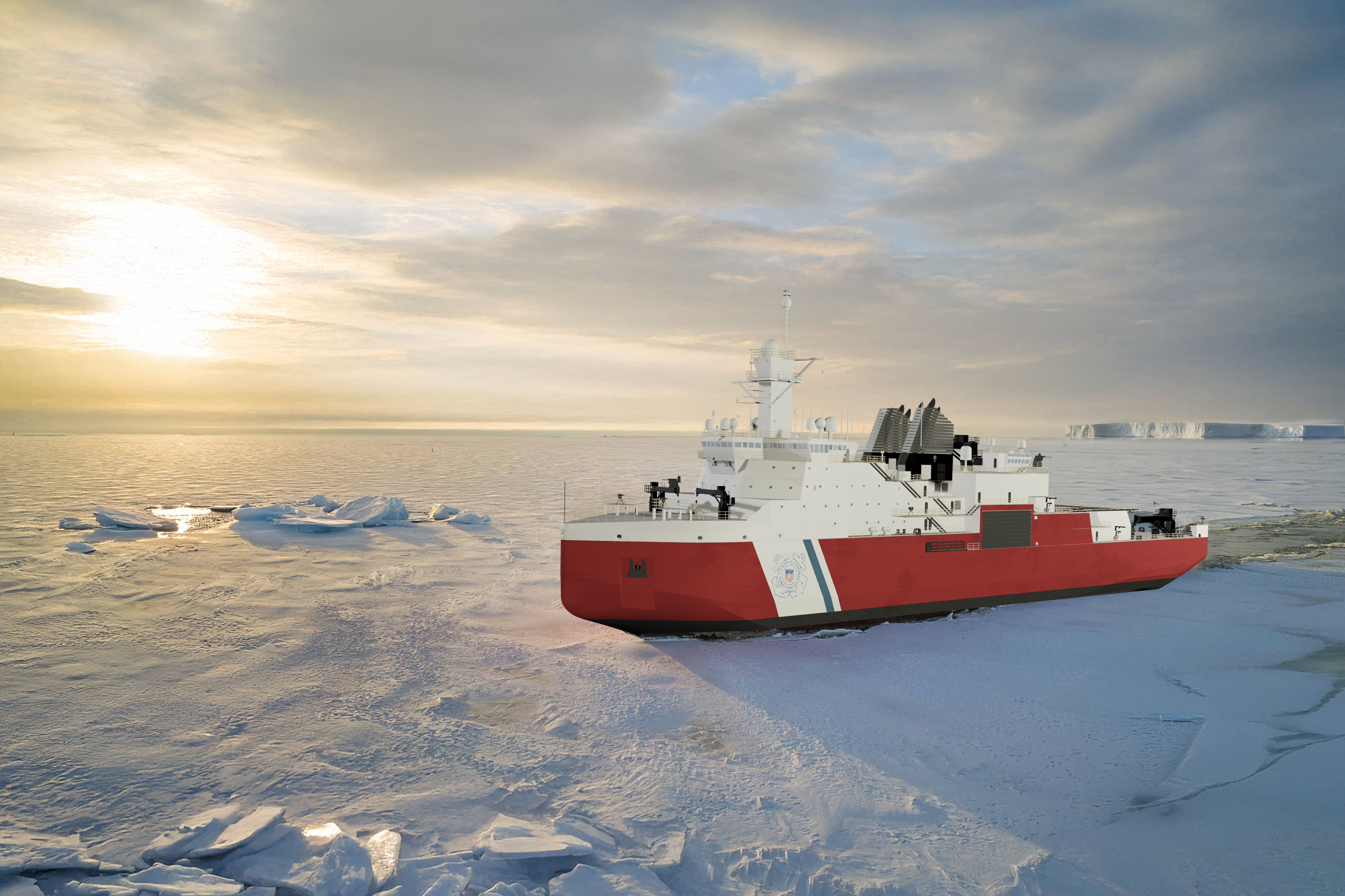
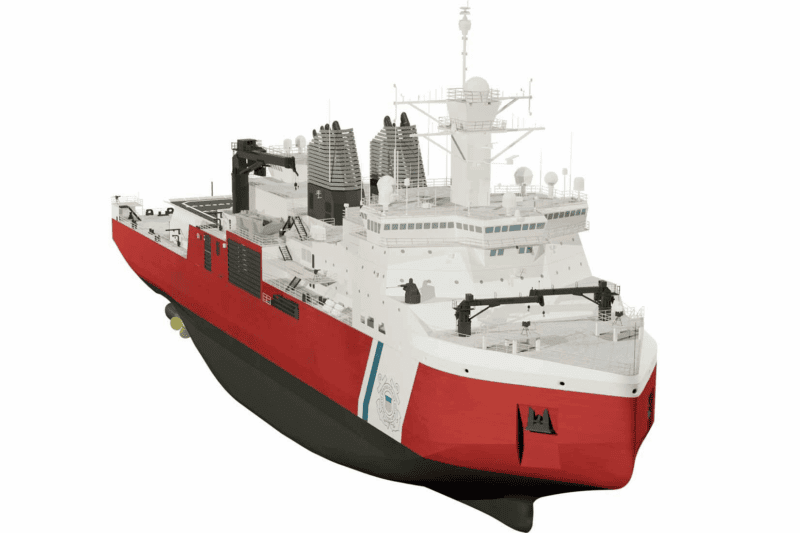
The U.S. Coast Guard’s troubled Polar Security Cutter program faces further delays with a new government watchdog report projecting delivery of the first heavy icebreaker in March 2033, almost a decade later than originally planned.
The recent Government Accountability Office (GAO) report also raises fresh doubts that even the revised schedule can be met, citing unresolved construction risks, a planned 40% expansion of the shipyard workforce, and the lack of a fully validated production schedule.
The latest assessment marks another blow for a program that has become one of the Coast Guard’s most delayed and expensive acquisitions. The lead vessel is now expected to cost about $3.4 billion, matching the original estimate for all three planned Polar Security Cutters.
The Coast Guard awarded the contract to VT Halter Marine in 2019 with plans to deliver the first vessel by March 2024. Bollinger Shipyards acquired Halter Marine in 2022, inheriting the struggling program and continuing development of what is intended to become the United States’ first new heavy polar icebreaker in more than 50 years.
Despite the revised schedule, Coast Guard leadership has continued to publicly target delivery by 2030, as recently as April 2026. The GAO, however, says the program’s newly approved baseline points to a March 2033 delivery and warns that even this schedule excludes several significant risks.
Among them is the need for Bollinger to increase its shipyard workforce by roughly 40% between 2025 and mid-2026 while simultaneously determining staffing levels needed to build all three vessels. The report also notes that the revised schedule was approved before completing an integrated baseline review with the shipbuilder, meaning it does not yet incorporate current contractor performance data.
“These risks call into question whether the lead PSC will be delivered later than 2033,” the GAO said.
Public information on construction progress remains scarce.
Rear Admiral Mike Campbell, the Coast Guard’s chief acquisition officer, told lawmakers in April that 26 of the ship’s planned 85 structural sections were under construction. He did not disclose how many had been completed.
Previous Coast Guard planning documents cited by the GAO envisioned the first eight prototype sections being completed by early 2026, allowing assembly of larger portions of the hull. Neither the Coast Guard nor Bollinger has provided updated progress reports. Prototype blocks briefly appeared in social media photographs during 2025 before the posts were later removed.
Costs also continue to climb.
The Coast Guard’s latest acquisition baseline places the lead vessel’s cost at roughly $3.4 billion. Meanwhile, negotiations over the second and third Polar Security Cutters remain underway and are expected to conclude later this year, meaning the program’s final price tag remains unknown.
The Coast Guard now says those funds cover the first two vessels and long-lead materials for the third, indicating additional appropriations will likely be needed before the program is completed.
The GAO estimates the three-ship program will not achieve full operational capability until March 2039.
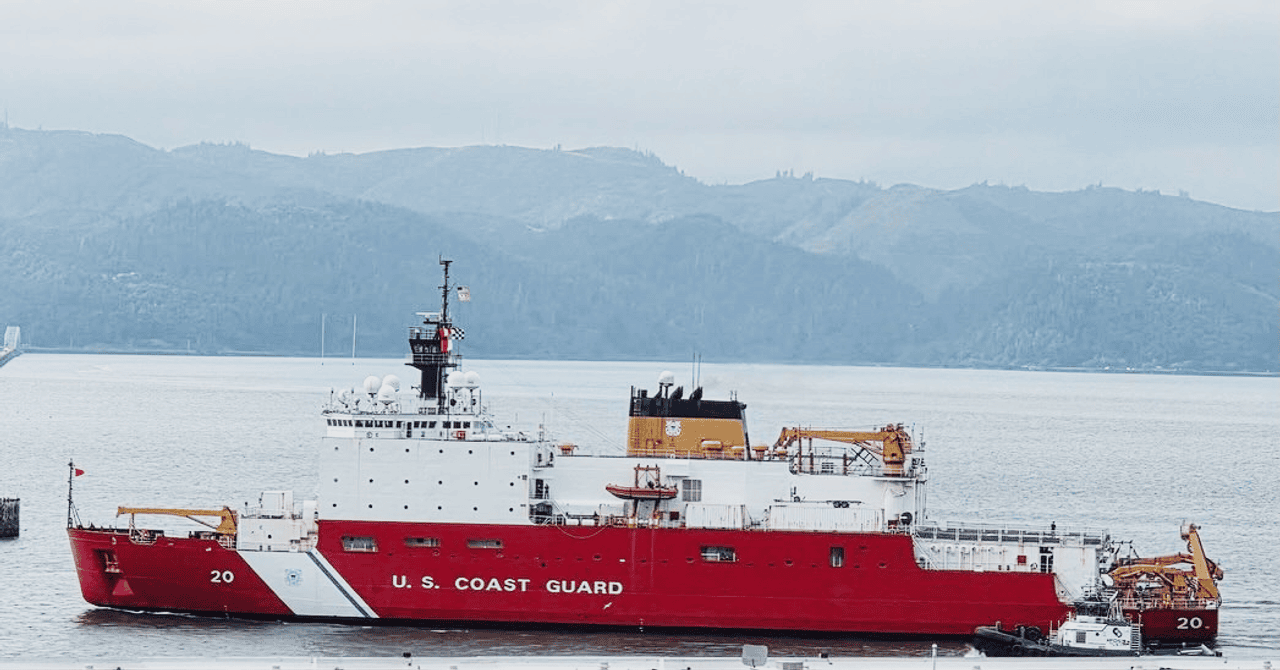
The Polar Security Cutter is intended to replace the aging Polar Star, the Coast Guard’s only operational heavy icebreaker, which entered service in 1976 and has remained in operation through repeated life-extension efforts.
While the heavy icebreaker program continues to slip, the Coast Guard has made faster progress on its separate Arctic Security Cutter program. The first four medium icebreakers will be built in Finland, with deliveries scheduled to begin in late 2028. Those vessels are expected to provide a significant boost to U.S. polar capabilities several years before the first Polar Security Cutter is now expected to enter service.
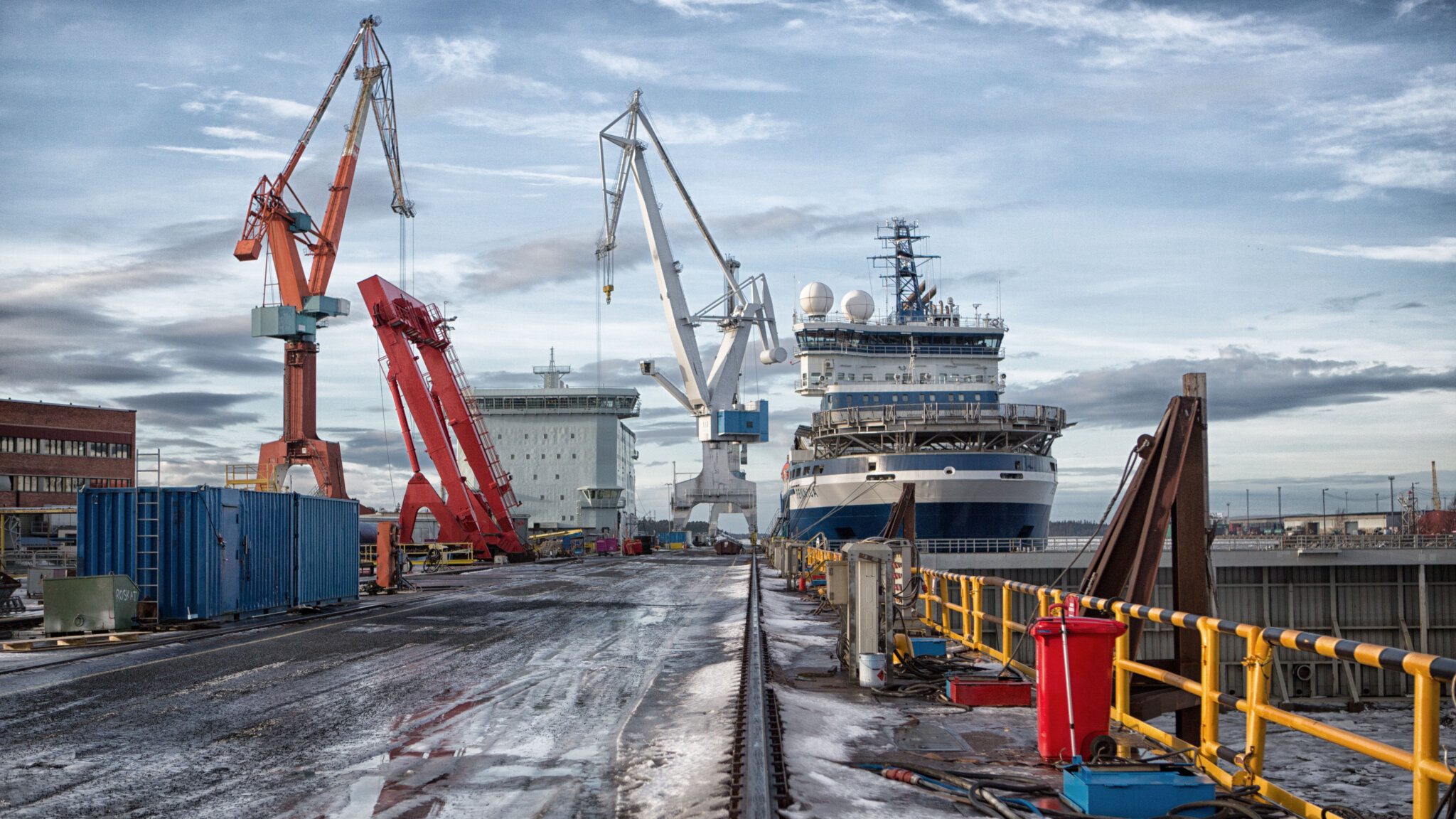
Rauma Marine Constructions in Finland has made rapid progress on the first of two Arctic Security Cutters it is building for the U.S. Coast Guard, with almost half of the vessel's blocks already launched and construction of the second ship approaching, according to the Finnish shipbuilder's chief executive.
The United States is watching China's presence in its Arctic zone "very closely" amid concerns regarding the security of the US homeland, a senior US Arctic military official said.
The U.S. Coast Guard’s icebreaker Healy will not carry out its planned high-latitude Arctic mission this summer following a serious engineering casualty in July, a spokesperson said. The statement provides the clearest indication yet of the impact of the incident on the Coast Guard’s key icebreaker.
September 16, 2026
Total Views: 6251
Get The Industry’s Go-To News
Subscribe to gCaptain Daily and stay informed with the latest global maritime and offshore news
— just like 106,814 professionals
Secure Your Spot
on the gCaptain Crew
Stay informed with the latest maritime and offshore news, delivered daily straight to your inbox
— trusted by our 106,814 members
Your Gateway to the Maritime World!
Essential news coupled with the finest maritime content sourced from across the globe.

 Join The Club