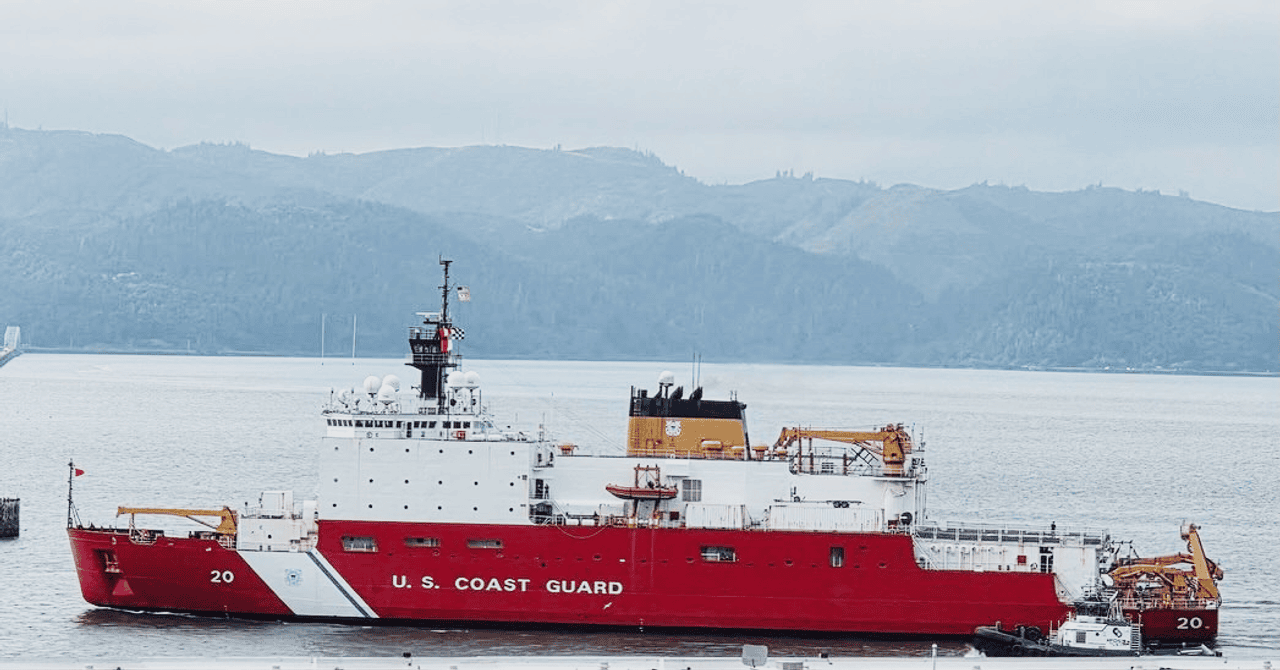
U.S. Coast Guard icebreaker Healy suffered a significant engineering casualty during post-refit sea trials off the Washington coast before being towed back to Seattle on July 13 for an investigation and major repairs, the Coast Guard told gCaptain.
The Coast Guard said there were no reported injuries after the incident, which occurred while the 420-foot icebreaker was operating northwest of Port Angeles. Tugboats safely returned the vessel to its homeport in Seattle, where it will undergo an investigation and repairs.
“The crew of Coast Guard Cutter Healy acted with speed and skill in responding to this casualty,” Admiral Kevin E. Lunday, the Coast Guard’s commandant, said in a statement.
“While the Coast Guard remains underway and on mission in the Arctic, this casualty underscores the vital importance of President Trump’s vision to rapidly build and deliver a modern icebreaker fleet. The United States is an Arctic nation with enduring security, economic, and strategic interests in the region. The Nation needs a highly capable icebreaking fleet operated by the Coast Guard to ensure year-round access to the region to protect our northern border in Alaska and maritime approaches in the Arctic,” Lunday said.
Video captured by a publicly accessible webcam showed the Foss Maritime tug Marshall Foss towing Healy off Port Angeles toward Seattle on July 13. Automatic Identification System (AIS) data also showed the icebreaker under tow after previously operating off the Washington coast.
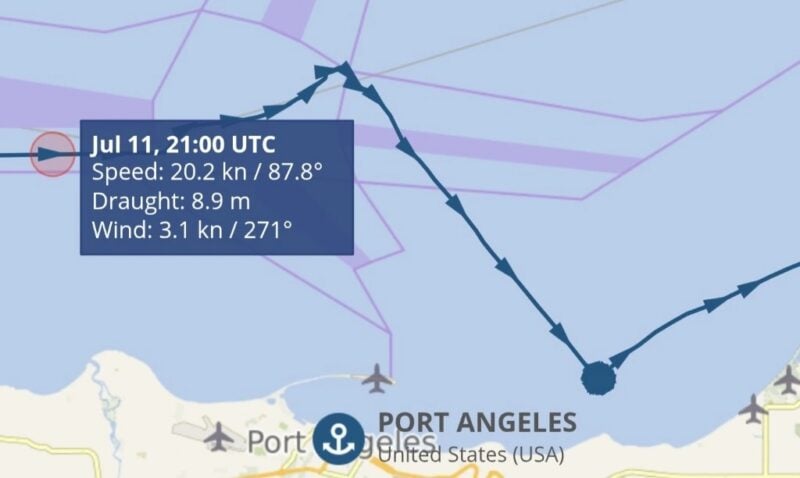
AIS data indicates Healy had been conducting high-speed sea trials in recent days, reaching speeds exceeding 20 knots west of Port Angeles before abruptly slowing to about 2 knots and ceasing forward progress. The vessel was subsequently assisted by Marshall Foss outside Air Station Port Angeles before returning to Seattle under tow.
Healy recording 20 knots on July 11, 2026 before rapid slowdown to 2 knots. (Source: Vesselfinder)
A source familiar with the incident told gCaptain the engineering casualty involved a crankcase explosion in one of the vessel’s engines during sea trials following its recent shipyard period. No injuries were reported, but the affected engine room was taken offline and the tug was dispatched out of an abundance of caution, the source said.
The Coast Guard has not identified the nature of the engineering casualty or provided details about the damage.
Marine engineering specialists said the consequences of a crankcase explosion can vary widely depending on its severity, ranging from relatively limited damage to catastrophic engine failure.
Healy is powered by four medium-speed Sulzer 12ZAV40S diesel generators arranged in two separate engine rooms divided by a fire-resistant bulkhead. The configuration, derived from Finnish icebreakers, provides a degree of redundancy because each engine room can operate independently.
On modern marine diesel engines, crankcase relief valves are designed to vent pressure during an internal explosion, limiting damage in many cases. A minor event may require little more than inspection, cleaning oil mist from the engine room and replacement of damaged components, if any.
More severe explosions, however, can crack an engine frame, damage the crankshaft or trigger secondary fires, potentially requiring extensive repairs or even replacement of the engine. At present, the extent of any damage aboard Healy remains unknown.
Marine engineers noted that even significant crankcase explosions are generally considered repairable and do not necessarily mean the loss of a vessel. Because Healy has four main diesel generators split between two engine rooms, an incident affecting one engine room would not automatically render the ship beyond repair, although the Coast Guard would be expected to suspend operations until the cause is identified and repairs completed.
The incident marks the latest engineering setback for the Coast Guard’s largest and most capable scientific research icebreaker.
Commissioned in 1999, the 420-foot Healy is the United States’ premier high-latitude research icebreaker, supporting scientific missions, Arctic domain awareness and national security operations. The vessel has become increasingly important as melting sea ice drives growing commercial and strategic interest in the Arctic.
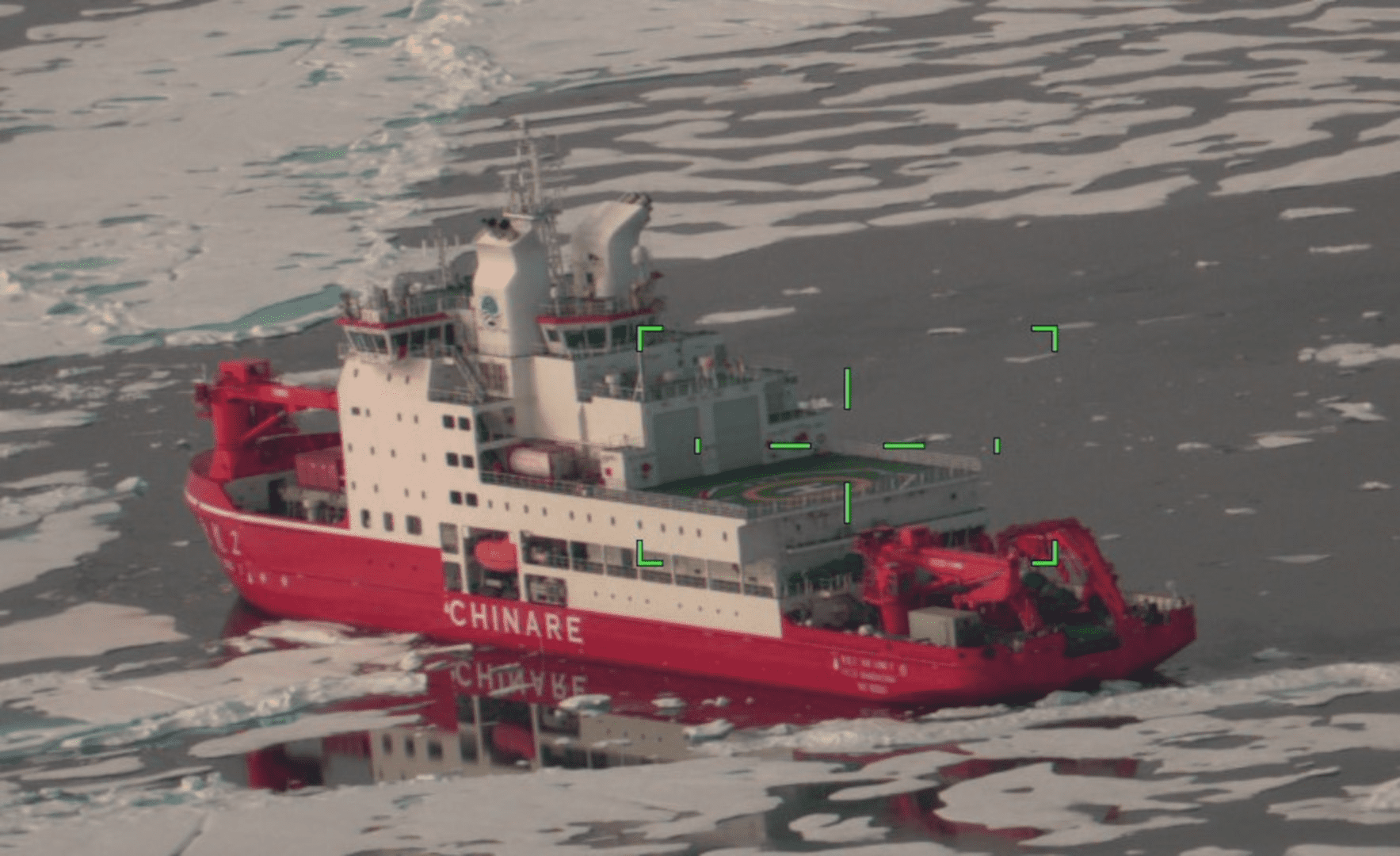
Any extended repair period could affect the Coast Guard’s Arctic operations at a time when the service continues to face a shortage of operational icebreaking capacity. In addition to Healy, the Coast Guard currently operates only two other ocean-going icebreakers, including aging heavy icebreaker Polar Star and recently commissioned Storis. Last year, Healy returned to its home port in Seattle in November following a 129-day Arctic patrol that underscored growing strategic competition in the far north, where the massive icebreaker monitored multiple Chinese research vessels operating in U.S. territorial waters.
The casualty comes as the U.S. Coast Guard’s troubled Polar Security Cutter program faces further delays with a new government watchdog report projecting delivery of the first heavy icebreaker in March 2033, almost a decade later than originally planned. The Polar Security Cutter is intended to replace the aging Polar Star, the Coast Guard’s only operational heavy icebreaker, which entered service in 1976 and has remained in operation through repeated life-extension efforts.
Meanwhile, the Coast Guard has made faster progress on its separate Arctic Security Cutter program. Under the current plan, the first four medium icebreakers will be built in Finland before production shifts to U.S. shipyards, with the first cutter expected to be delivered by the end of 2028.
The Coast Guard has said Healy will undergo an investigation into the casualty before major repairs begin but has not provided a timeline for returning the vessel to service.
Healy being towed off Port Angeles on July 13, 2026. The icebreaker and tug pass through the image from right to left. (Source: video footage via John Slomnicki)
A new federal watchdog report says gaps in training, coordination and emergency planning continue to complicate the response to ship fires at U.S. ports, three years after two firefighters were...
Rauma Marine Constructions in Finland has made rapid progress on the first of two Arctic Security Cutters it is building for the U.S. Coast Guard, with almost half of the vessel's blocks already launched and construction of the second ship approaching, according to the Finnish shipbuilder's chief executive.
The United States is watching China's presence in its Arctic zone "very closely" amid concerns regarding the security of the US homeland, a senior US Arctic military official said.
September 21, 2026
Total Views: 3644
Get The Industry’s Go-To News
Subscribe to gCaptain Daily and stay informed with the latest global maritime and offshore news
— just like 106,899 professionals
Secure Your Spot
on the gCaptain Crew
Stay informed with the latest maritime and offshore news, delivered daily straight to your inbox
— trusted by our 106,899 members
Your Gateway to the Maritime World!
Essential news coupled with the finest maritime content sourced from across the globe.

 Join The Club