Don’t Miss Your Daily Briefing for the Maritime Industry
Join the leading maritime news network
— trusted by our 107,359 members
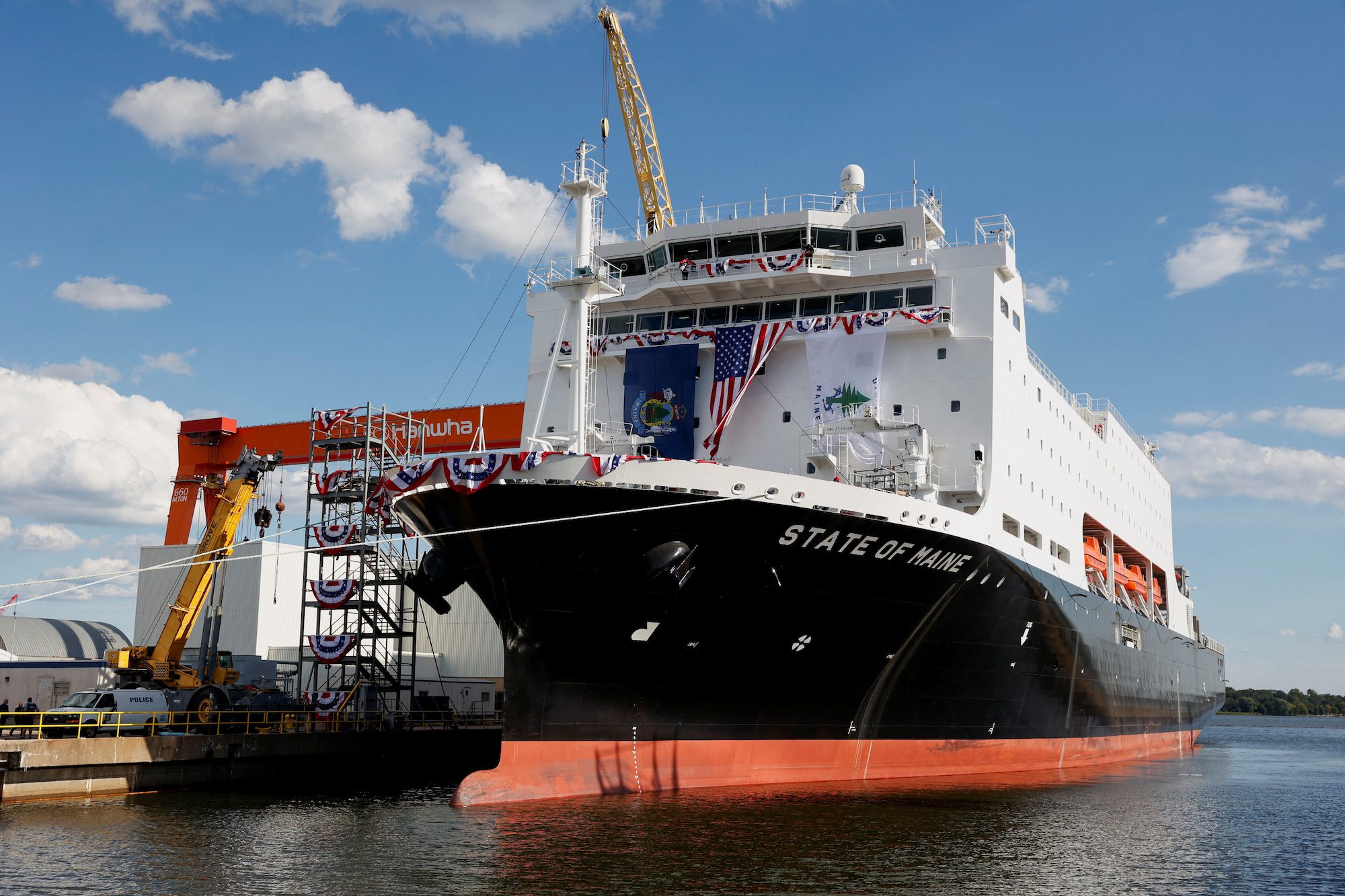
The National Security Multi-Mission Vessel (NSMV) "State of Maine" sits on the day it was christened, at the Hanwha Philly Shipyard in Philadelphia, Pennsylvania, U.S. August 26, 2025. REUTERS/Rachel Wisniewski
Hello Club Members! Here is your weekly Dispatch with all the maritime news you need to know to end your week.
Ship Photo of The Week
The National Security Multi-Mission Vessel (NSMV III) “State of Maine” sits ahead of its christening at the Hanwha Philly Shipyard in Philadelphia, Pennsylvania, U.S. August 26, 2025. REUTERS/Rachel Wisniewski
Top Stories
Korea Supercharges U.S. Shipyards
South Korea is digging deeper into America’s maritime base. Hanwha grabbed headlines with a $5 billion overhaul of Philly Shipyard, adding docks, quays, and possibly a new block assembly line that could boost output from fewer than two ships a year to as many as 20. The plan comes with the largest U.S. shipbuilding order in two decades—10 Jones Act tankers for Hanwha Shipping—plus a second LNG carrier, following last month’s milestone deal for the first U.S.-ordered export LNG carrier in nearly 50 years.
Meanwhile, HD Hyundai Heavy Industries will merge with Hyundai Mipo to target U.S. defense and Arctic icebreaker work. Cerberus and Hyundai launched “Cerberus Maritime” to funnel private equity into U.S. yards, while Vigor Marine paired with Samsung Heavy to expand Navy and MSC forward maintenance in the Indo-Pac.
All this unfolded as South Korea’s president was in Washington to pitch a $350 billion U.S. investment plan—with $150B earmarked for shipbuilding under the “Make American Shipbuilding Great Again” banner—in a bid to smooth trade ties with the Trump administration.
Big money and bold promises—but can U.S. yards and labor scale fast enough to meet the surge?
Trump Takes a Wrecking Ball to Offshore Wind
The Trump administration is taking a wrecking ball to offshore wind. At a cabinet meeting Tuesday, Health and Human Services Secretary Robert F. Kennedy Jr. revealed a new inter-agency task force—Defense, Energy, Commerce, and Interior—to review Atlantic Coast wind farms green-lit under Biden.
The crackdown is already biting. Last week, the White House ordered Ørsted’s Revolution Wind project off Rhode Island to halt construction—despite being 80% complete with 45 of 65 turbines installed. BOEM cited “national security” and “interference with reasonable uses” of U.S. waters, invoking Trump’s January 20 memorandum suspending federal wind approvals. The move follows this spring’s pause of Equinor’s Empire Wind, which ended with a $763 million impairment. And now, another Maryland project is facing cancellation despite its Biden-era permit.
The hammer fell again on Friday: Transportation Secretary Sean Duffy announced the withdrawal or termination of $679 million in funding for 12 offshore wind projects nationwide. The largest hit was to the Humboldt Bay Offshore Wind project in California, which lost $427 million in INFRA funds. MARAD also pulled $177 million from six projects and terminated another five worth $75 million under its Port Infrastructure Development Program.
The administration says the funding will be redirected to critical port upgrades and traditional energy priorities, aligning with Trump’s April 2025 directive to “restore America’s maritime dominance.”
Kennedy pointed to last year’s turbine blade failure off Massachusetts and warned offshore wind is costly, bad for whales, and harmful to fishermen. Trump was blunter still: “We don’t allow windmills.”
With billions invested and projects nearing the finish line, the industry is staring down a gale-force political headwind.
Sanctioned Russian LNG Lands in China
For the first time, gas from Russia’s sanctioned Arctic LNG 2 project has found a home abroad. The Russian-flagged Arctic Mulan docked at China’s Beihai LNG terminal on August 28, ending more than a year of limbo for one of Moscow’s most ambitious energy ventures.
Until now, Arctic LNG 2 cargoes had circled aimlessly at sea or idled off Russian ports after U.S. sanctions in late 2023 froze out traditional buyers. The project—majority-owned by Novatek and built to supply nearly 20 million tonnes of LNG annually—has loaded 13 cargoes since August 2024, none accepted overseas until this week.
The breakthrough comes amid the Putin-Trump summit in Alaska and could mark a policy shift in Beijing’s stance toward sanctioned Russian energy. China has continued to import Russian pipeline gas and unsanctioned LNG but had steered clear of Arctic LNG 2’s output, wary of U.S. secondary sanctions. Accepting this cargo may signal growing confidence that Beijing can shield its companies—or a calculation that the strategic value of Russian LNG outweighs the risks.
For Moscow, the delivery offers a critical outlet. With Europe closed off, regular Chinese imports could keep Arctic LNG 2 afloat and cement a Russia-China energy axis. But questions remain: was this a one-off test or the start of steady shipments? Nearly a million tons of sanctioned LNG remain stuck at sea, and the shadow fleet faces tough odds operating without Western insurance and services—especially through the Arctic winter.
For now, the Arctic Mulan’s arrival in China marks a milestone: sanctioned Russian LNG has finally landed abroad.
Tariffs Cloud U.S. Trade Outlook as Spot Rates Split
July’s 3.2% rise in U.S. inbound container volumes looks less like a rebound and more like retailers racing to beat Trump’s August tariff hikes. Analyst John McCown warns imports could plunge over the final five months of 2025—a policy-driven downturn, not a cyclical dip—and one that may persist as long as tariffs remain in place.
Adding fuel to the fire, Washington’s planned October ship fees on Chinese-built or operated vessels are expected to squeeze capacity and push freight rates higher. Meanwhile, Drewry reports its World Container Index has now fallen for 11 straight weeks as the early peak season fizzled out.
Yet spot rates are sending conflicting signals. Drewry’s Shanghai–Los Angeles leg slipped 3% and Shanghai–New York dropped 5%, while Freightos’s FBX also weakened and Xeneta’s XSI stayed flat. In contrast, forward-looking benchmarks surged: the SCFI leapt 17% westbound and 10% eastbound, while the NCFI rocketed 45% and 25% respectively. Analysts point to optimism over September general rate increases—or perhaps pre–Golden Week demand—as drivers of the split.
Still, rates are edging back toward pre–Red Sea crisis lows, where carriers struggle to cover costs. As Xeneta’s Peter Sand notes, Q4 could see red ink even if carriers finish 2025 in profit overall.
Bottom line: U.S. container trade is caught between collapsing volumes and volatile pricing. Shippers may gain leverage in upcoming contract talks, but for now the industry is staring down a turbulent Q4.
Carbon Capture Goes Live in Europe
Europe just took a giant step toward making carbon capture real. The Northern Lights project—backed by Equinor, Shell, and TotalEnergies—has begun injecting CO2 2,600 meters beneath the North Sea seabed, marking the launch of the world’s first third-party CO? transport and storage network.
The operation ships carbon from Heidelberg Materials’ cement plant in Brevik to a new Øygarden terminal, then pipes it 100 km offshore into the Aurora reservoir. Phase 1 can handle 1.5 million tonnes per year (already fully booked), with an EU-funded Phase 2 set to quadruple that capacity.
Funded in large part by Norway, the project aims to prove CCS can scale as an industry. Equinor CEO Anders Opedal called the first injection “a major milestone,” while EVP Irene Rummelhoff noted it shows what’s possible when “governments, industry, and customers” collaborate.
Next up: expansion across Europe and the U.S., with Equinor targeting 30–50 million tonnes annually by 2035.
Turkey Slams the Port Doors on Israel
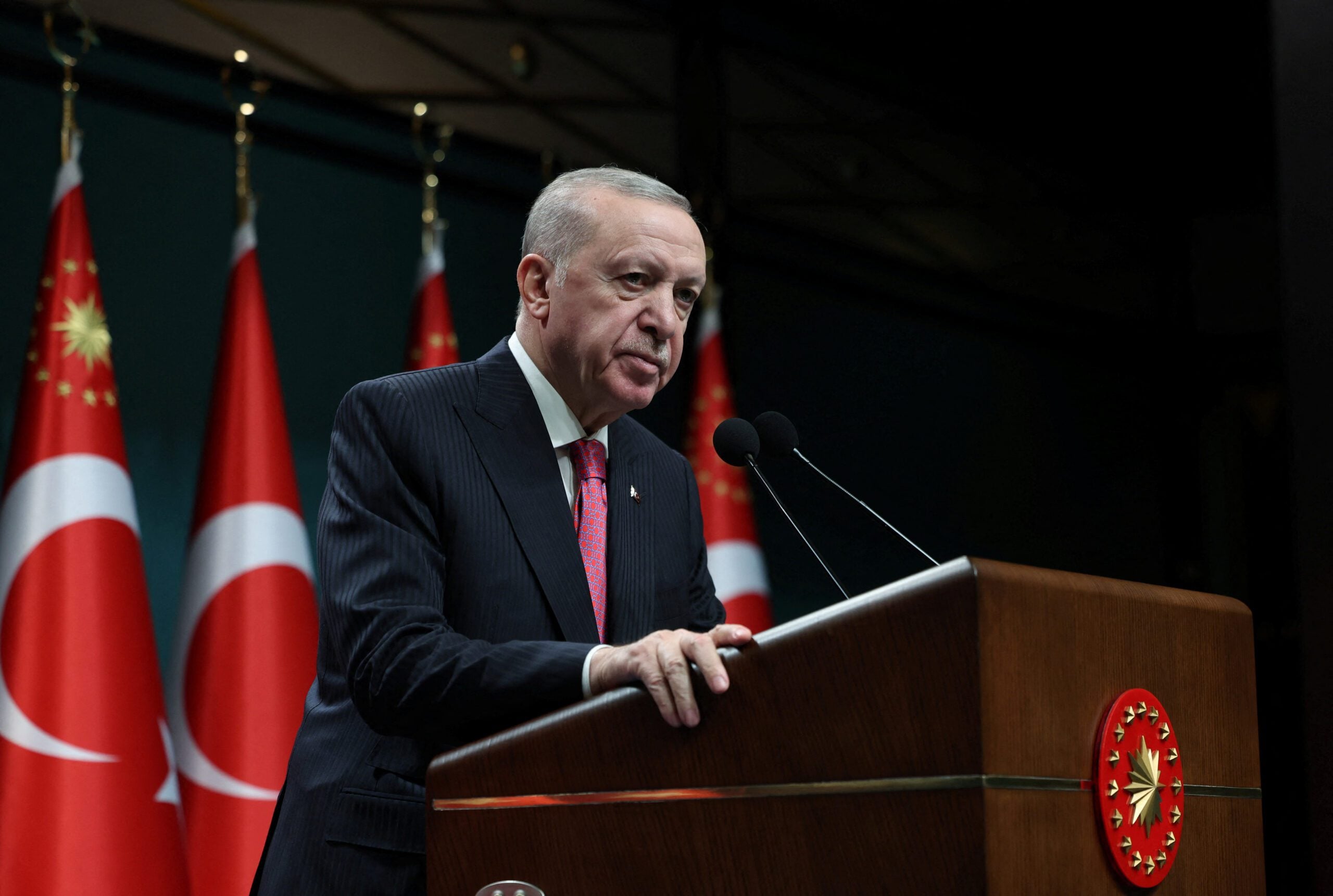
Turkey has slammed the hatch shut on maritime ties with Israel. Foreign Minister Hakan Fidan told parliament Friday that Israeli vessels are now barred from Turkish ports, Turkish ships are blocked from Israeli ports, and planes face new restrictions in Turkish airspace.
The move formalizes what port insiders said was already happening: Turkish authorities were informally requiring agents to certify that ships weren’t tied to Israel or carrying military cargo bound there.
Ankara has already halted all trade with Israel, accusing it of committing genocide in Gaza—a charge Israel denies. “We have totally cut our trade with Israel,” Fidan declared, adding that no container ships carrying weapons or ammunition for Israel will be allowed through Turkish ports.
Fidan also revealed Turkey has presidential approval to carry out air drops of humanitarian aid into Gaza, pending clearance from Jordan. “Our planes are ready,” he said.
Israel has yet to respond publicly, but the ban signals a hardening of Turkey’s stance as regional tensions spill into shipping lanes and air corridors.
Trump Doubles Down on India Tariffs
The U.S.-India trade partnership just hit rough seas. President Donald Trump’s tariffs on Indian imports jumped to as much as 50% on Wednesday, following a new 25% levy tied to New Delhi’s purchases of Russian oil. Combined with earlier duties, the move delivers one of the steepest tariff regimes the U.S. has imposed on any major economy.
Export groups warn that over half of India’s $87 billion in shipments to the U.S. could be affected, handing competitors like Vietnam, Bangladesh, and China an edge.
Washington insists India’s oil deals bankroll Moscow’s war in Ukraine. New Delhi calls it hypocrisy, pointing to U.S. and European trade ties with Russia. Indian officials, while pledging to protect energy security, say they’ll cushion exporters with credit relief and expanded trade with partners such as the U.K., Australia, and the UAE.
The financial fallout is already showing: the rupee slid to a three-week low and Indian equities logged their worst day in three months ahead of the tariff’s activation. Analysts estimate up to 2 million jobs could be at risk if the duties stick, though strong domestic demand may soften the blow.
Five rounds of talks failed to avert the showdown, underscoring just how quickly a strategic partnership forged against China can unravel when trade politics takes center stage.
As always, we’d love to hear your feedback. Email [email protected] with any questions, comments, tips, or concerns. Don’t forget to check out the Club Discord and gCaptain.com for the latest maritime news.
2025 Unofficial Networks LLC
Tags:
Subscribe for Daily Maritime Insights
Sign up for gCaptain’s newsletter and never miss an update
U.S. exports of liquefied natural gas rose to an all?time high in March as plants ran above nameplate capacity and new units started up, preliminary data from financial firm LSEG showed.
Libyan authorities have effectively halted efforts to secure the stricken LNG tanker Arctic Metagaz, towing the vessel far offshore and leaving it adrift near the edge of Malta’s search and rescue (SAR) zone, according to maritime tracking data, regional media and OSINT reporting.
Turkey is seeking permission from Iranian authorities for 11 Turkish-owned ships to pass through the Strait of Hormuz, the country’s transportation minister said on Wednesday.
11 hours ago
Total Views: 486
Get The Industry’s Go-To News
Subscribe to gCaptain Daily and stay informed with the latest global maritime and offshore news
— just like 107,359 professionals
Secure Your Spot
on the gCaptain Crew
Stay informed with the latest maritime and offshore news, delivered daily straight to your inbox
— trusted by our 107,359 members
Your Gateway to the Maritime World!
Essential news coupled with the finest maritime content sourced from across the globe.

 Join The Club