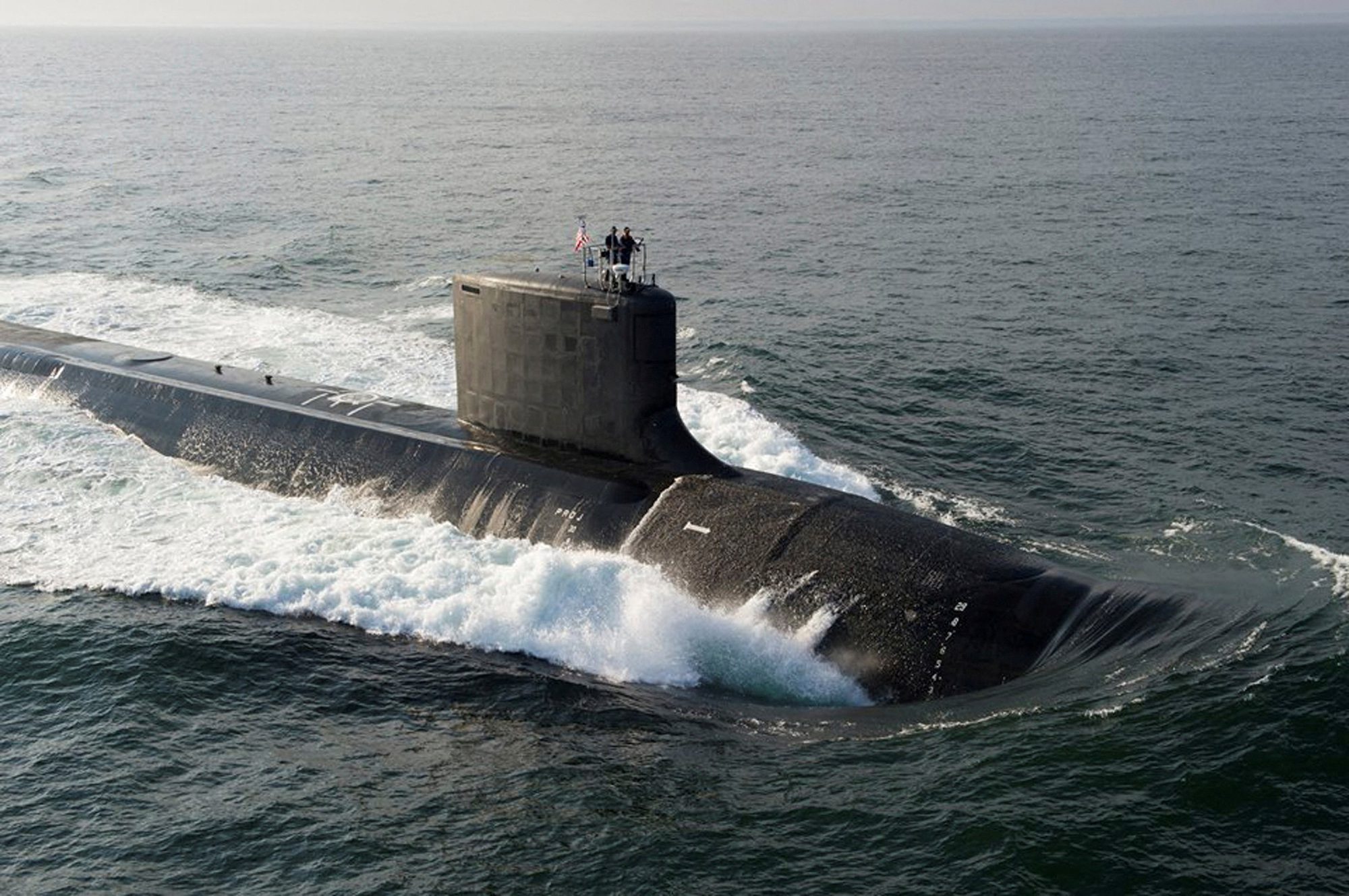
Anduril Industries plans to invest $3.7 billion in a new Maryland shipyard to manufacture major components for Virginia-class attack submarines, backed by a U.S. Navy contract worth up to $2.9 billion as Washington looks for ways to expand a submarine industrial base struggling to keep pace with demand.
The facility, known as Arsenal-2, will be built at Tradepoint Atlantic’s Sparrows Point complex in Baltimore County and is expected to begin operations in 2030. Anduril said the more than 2 million-square-foot facility will manufacture complex components and large assemblies for delivery to General Dynamics Electric Boat and HII’s Newport News Shipbuilding, which will continue to perform final submarine construction and assembly.
The project marks a significant expansion by Anduril into traditional naval shipbuilding. The defense technology company is better known for autonomous aircraft, weapons and unmanned maritime systems, but Arsenal-2 will put it directly into the supply chain for one of the Navy’s largest and most complex shipbuilding programs.
Anduril stressed that it will not build complete submarines.
“Our goal here is to be a critical and hopefully over time, much larger and growing part of the supply chain for our lead shipbuilders,” company President Christian Brose said, according to USNI News.
The Navy contract will tie payments to demonstrated production results, according to Anduril. Combined with the company’s private investment, the arrangement represents as much as $6.6 billion in planned spending on additional submarine manufacturing capacity.
The investment comes as the Navy continues to grapple with a persistent shortfall in Virginia-class production.
Although Congress has generally funded two Virginia-class submarines annually, actual output has remained well below that level. A Congressional Research Service report said the production rate has been roughly 1.1 to 1.4 submarines per year in recent years, constrained by workforce shortages and supply-chain problems across the submarine industrial base. The Navy wants to reach two submarines per year before eventually increasing production to about 2.33 annually to meet U.S. fleet requirements and commitments to Australia under the AUKUS submarine agreement.
Arsenal-2 is intended to remove some of those constraints by allowing more submarine work to take place in parallel outside Electric Boat and Newport News.
A senior Trump administration official said the facility could eventually add about 9 million production labor hours annually, equivalent to roughly a 15% increase in capacity for the Virginia-class program. Torpedo tubes are among the components Anduril plans to manufacture, an area officials have identified as one of the existing production bottlenecks.
The Baltimore facility will include high-bay assembly halls, fabrication areas, reconfigurable production lines and a 1,200-foot graving dock, with road, rail and marine connections for moving large submarine assemblies.
Anduril plans to operate the yard using ArsenalOS, its industrial software platform, to manage fabrication, material movements, inspections and other production processes.
Before Arsenal-2 opens, the company plans to begin submarine component work at a new 160,000-square-foot manufacturing facility in Orange County, California. Anduril said the California operation will give it roughly a two-year head start developing manufacturing processes and qualifying production systems, including work on Virginia-class torpedo tubes.
The Maryland project is expected to create more than 3,100 direct jobs and support more than 11,000 additional jobs, according to Anduril and Maryland officials.
Sparrows Point was once home to Bethlehem Steel’s sprawling steelmaking and shipbuilding operations and has since been redeveloped into the Tradepoint Atlantic logistics and industrial complex.
The timing of Arsenal-2 means it will not address the Navy’s immediate submarine delivery backlog. But its planned 2030 opening places the facility directly in the period when the United States will be trying to sustain higher Virginia-class production while preparing to transfer submarines to Australia under AUKUS.
That requirement is placing pressure on an industrial base already struggling to produce enough submarines for the U.S. Navy itself.
The Virginia-class program has experienced delivery delays measured in years, while the Navy and Congress have committed billions of dollars toward expanding shipyards, suppliers and the skilled workforce needed to increase production.
Arsenal-2 represents one of the largest private-sector additions yet to that effort.

 Join The Club