Russia has dispatched two powerful icebreakers, including a nuclear-powered vessel, from Arctic waters to the Baltic Sea to help keep shipping lanes open as one of the harshest ice seasons in more than a decade disrupts maritime traffic across northern Europe.
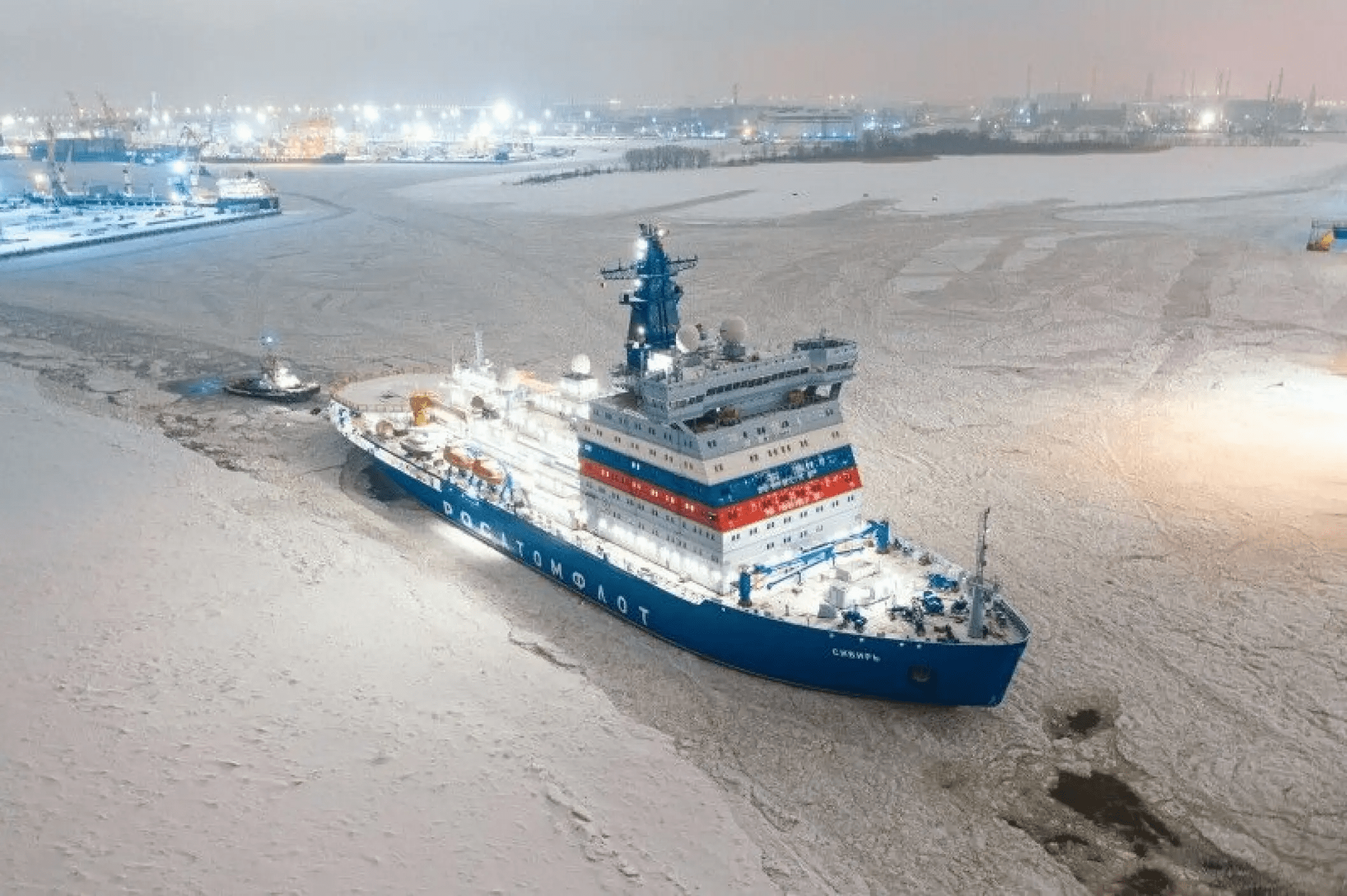
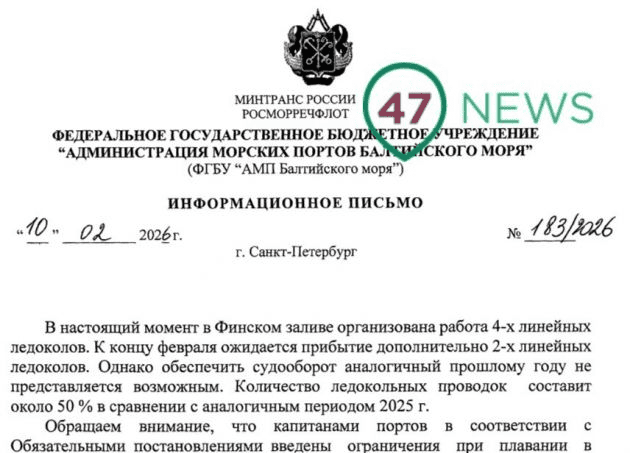
Russia’s Transport Ministry said on Feb. 10 that nuclear icebreaker Sibir and conventional diesel-powered Murmansk would reach the Baltic by the end of February to reinforce four icebreakers already working near Russian ports.
Information release from Russia’s Ministry of Transport on February 10 confirming the dispatching of Sibir and Murmansk. (Source: Ministry of Transport)
The moves come as severe ice conditions grip the Baltic region, echoing a notorious winter in 2011 when hundreds of ships were trapped in ice approaching St. Petersburg. At that time nuclear icebreaker Vaigach had also been called from Arctic duties to assist in the Baltic Sea.
Sibir, one of Russia’s newest Arktika-class nuclear icebreakers, entered into service in 2022. It spent much of the past year escorting tankers along the Northern Sea Route, completing four full transits last summer and assisting vessels in the Chukchi Sea in late summer and autumn.
The vessel left the Barents Sea about a week ago, sailed south along Norway’s coastline and is now passing through the Danish Straits en route to the Baltic.
Murmansk, a diesel-powered icebreaker that had been working in the Yenisei Gulf since mid-November, also began heading west earlier this month and is currently rounding Norway’s southwestern tip.
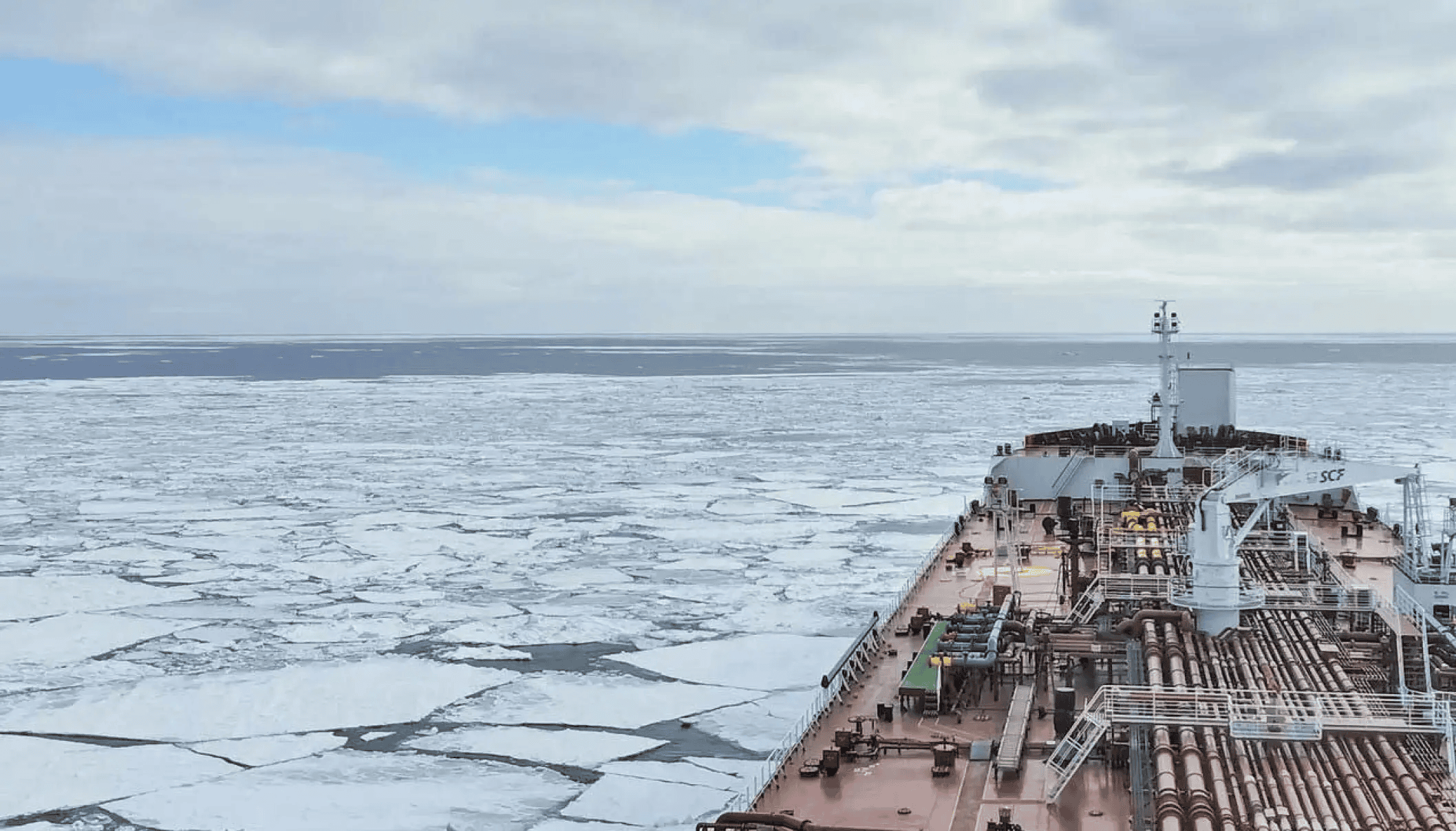
Heavy ice throughout the Baltic Sea has strained regional fleets. Finland has deployed all eight icebreakers operated by state-owned Arctia, with the last two joining operations on Feb. 3. Sweden has committed all six of its icebreakers, and Estonia has deployed three vessels.
The harsh conditions also contributed to recent incidents, including an oil tanker, Tony, striking a berth at the Ust-Luga terminal on February 7 and the bulk carrier Sfera grounding near Seskar Island in the Gulf of Finland.
Russia relies heavily on winter navigation to keep exports flowing from Baltic ports that handle oil, coal, fertilizers and metals. Nuclear icebreakers can operate for months without refueling and break thicker ice than conventional ships, making them critical in extreme winters.
Officials say Sibir and Murmansk will work alongside existing Baltic icebreakers to escort convoys and maintain channels into Russian ports. Russia currently operates a half dozen icebreakers in the Arctic, including several nuclear vessels in the Gulf of Ob and Yenisei Gulf.
South Korean President Lee Jae Myung welcomed the PanStar Acro and its crew home on Tuesday after the container ship completed the country’s first round-trip commercial trial through the Arctic to Europe, hailing the voyage as a potential alternative to traditional shipping lanes even as questions remain over commercial viability and cooperation with Russia.
The United Kingdom on Thursday sanctioned 12 oil tankers it identified as part of Russia's shadow fleet, including the 22-year-old Dakar that is currently making an unusual late-season voyage on the Northern Sea Route.
A 22-year-old product tanker sanctioned by the European Union is making an unusual late-season voyage along Russia's Northern Sea Route, highlighting the growing use of older, lower-specification vessels to move petroleum products through the Arctic.
October 7, 2026
Total Views: 1722
Get The Industry’s Go-To News
Subscribe to gCaptain Daily and stay informed with the latest global maritime and offshore news
— just like 106,720 professionals
Secure Your Spot
on the gCaptain Crew
Stay informed with the latest maritime and offshore news, delivered daily straight to your inbox
— trusted by our 106,720 members
Your Gateway to the Maritime World!
Essential news coupled with the finest maritime content sourced from across the globe.

 Join The Club