Don’t Miss Your Daily Briefing for the Maritime Industry
Join the leading maritime news network
— trusted by our 106,633 members
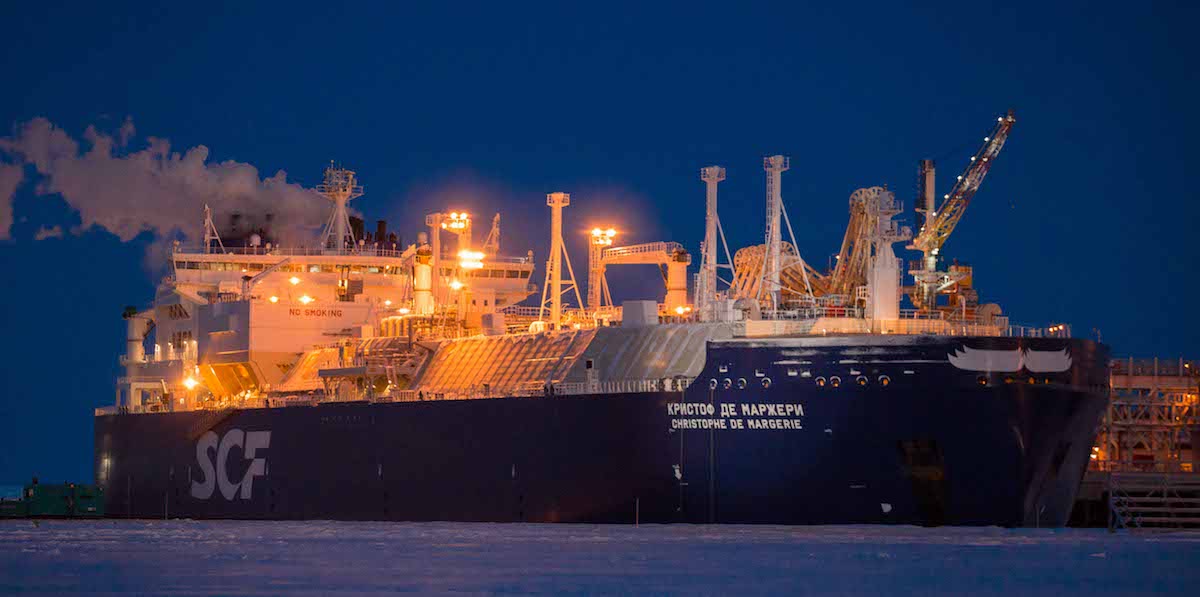
The Christophe de Margerie, the first of 15 icebreaking LNG carriers ordered for the Yamal LNG project to provide transport of LNG year-round in the Arctic, loads its first cargo at the Yamal LNG plant at the Port of Sabetta on the Yamal Peninsula, December 8, 2017. Photo: SCF Group
EU Buys 93 Percent of Yamal LNG As Imports Surge Ahead of 2027 Russian Ban
According to the report, EU buyers purchased 92.6% of Yamal LNG production in January 2026, totaling 1.69 million tonnes, an 8% increase over January 2025. A total of 23 out of 25 shipments were delivered to European ports, underscoring the continent’s continued reliance on Russian Arctic gas despite sanctions and political pressure.
Belgium’s Zeebrugge terminal led imports with six cargoes, with France’s Montoir and Dunkerque terminals also receiving six and five shipments respectively.
Additional cargoes went to the Gate terminal in Rotterdam and three Spanish ports. On average, a Russian LNG tanker called at an EU terminal every 32 hours, highlighting the relentless pace of deliveries.
Yamal LNG imports to EU in January 2026. (Source: urgewald)
The report highlights the critical role of European shipping providers in sustaining Yamal LNG exports. Seapeak and Dynagas accounted for 20 of the 25 January shipments, with their Arc7 ice-class LNG carriers enabling year-round operations in the harsh Arctic environment. Without these European-operated vessels, Russian LNG exports from Yamal LNG would effectively be shut down for six months of the year.
Despite this leverage, the EU has taken only limited action, with the full LNG import ban more than 11 months away.
“Sanctioning and restricting these vessels would directly cut off Putin’s Arctic LNG revenues and close one of the most important remaining energy loopholes funding the Kremlin’s war,” said Sebastian Rötters, sanctions campaigner at urgewald.
The figures also illustrate the limits of the EU transshipment ban, which took effect in March 2025. Intended to hinder Russian LNG re-exports to Asia by stopping cargoes from being reloaded in EU ports, the policy has instead kept more shipments within the EU. Cargoes that might have previously been re-exported are now consumed domestically, effectively increasing Yamal LNG deliveries to the continent.
Yamal LNG, however, continues to operate largely unimpeded, with European policymakers failing to take advantage of the project’s unique dependence on European shipping infrastructure, services, and markets.
“Europe has a clear opportunity to act together to cut these revenues,” Rötters said. “But until then, Yamal LNG remains a steady stream of cash for Russia, despite four years of sanctions.”
The Trump administration is authorizing the sale of sanctioned oil tankers in an effort to allow the vessels to start legitimately shipping crude, US Energy Secretary Chris Wright said.
The number of commercial transit voyages through Russia’s Northern Sea Route (NSR) had already surpassed the full-year 2025 total by the end of September, putting Arctic shipping on course for another record season as cargo volumes rise and more vessels test the route between Asia and Europe.
Britain has expanded its sanctions against Russia’s oil industry, targeting two more energy companies, a dozen shadow-fleet tankers and financial networks used to move money around Western restrictions. The measures,...
October 15, 2026
Total Views: 502
Get The Industry’s Go-To News
Subscribe to gCaptain Daily and stay informed with the latest global maritime and offshore news
— just like 106,633 professionals
Secure Your Spot
on the gCaptain Crew
Stay informed with the latest maritime and offshore news, delivered daily straight to your inbox
— trusted by our 106,633 members
Your Gateway to the Maritime World!
Essential news coupled with the finest maritime content sourced from across the globe.

 Join The Club