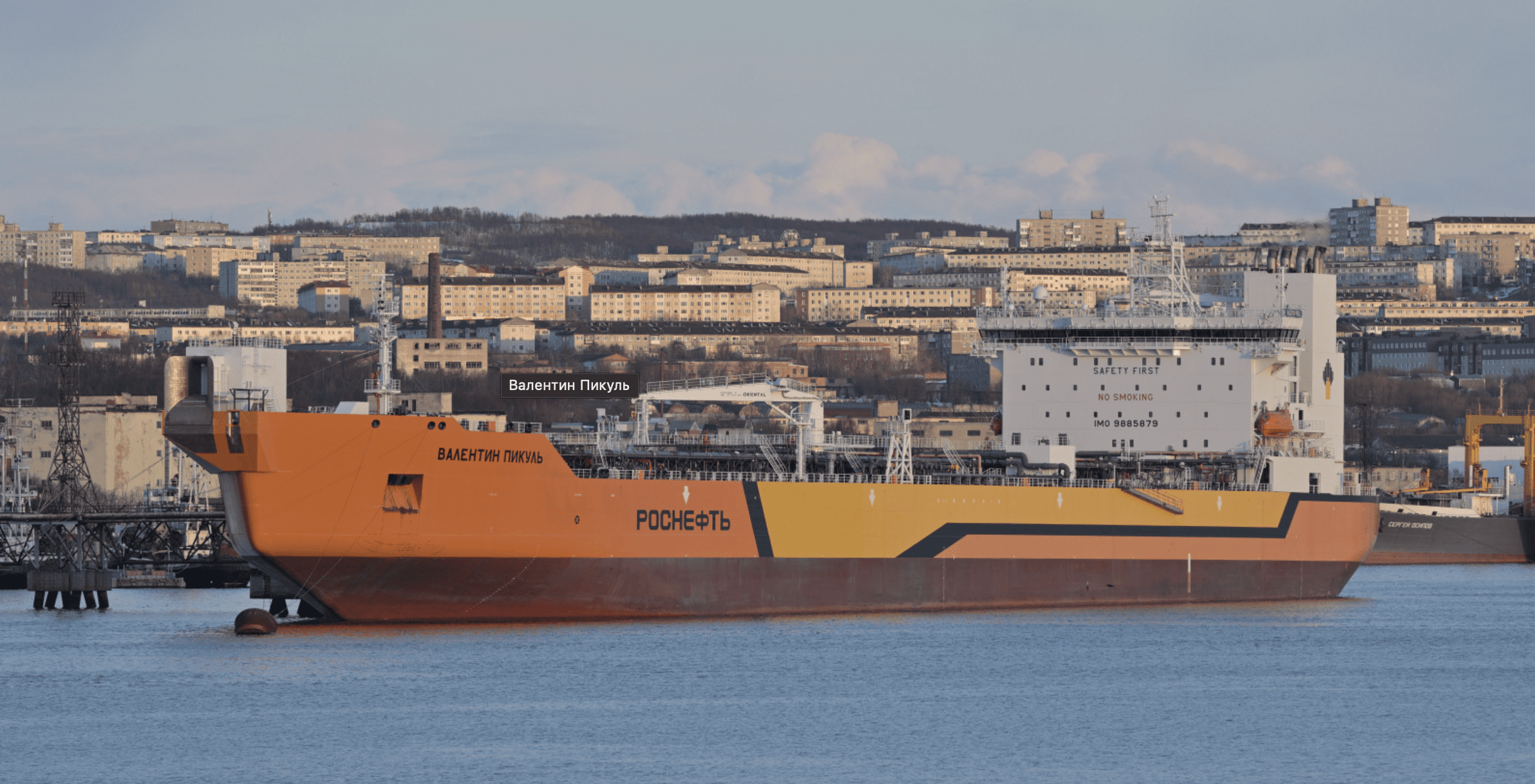
Russia’s newest ice-capable oil tanker, Valentin Pikul, has reached the Vostok Oil project, under construction in the high Arctic, for the first time.
The trip through hundreds of nautical miles of sea ice likely serves as the vessel’s ice trials.
Valentin Pikul is the first high ice-class oil tanker constructed by Russia’s Zvezda shipyard; albeit in partnership with South Korean builder Samsung Heavy Industries (SHI).
Russia envisions Valentin Pikul and dozens of additional Arctic shuttle tankers to carry hundreds of millions of barrels of crude oil each year from Rosneft’s Vostok Oil project. Delayed several times, in part due to Western sanctions, the facility is expected to begin production and exports next year.
Vostok Oil is currently the world’s largest investment in oil or gas, with total development costs likely to exceed $120bn. At full buildout the project is designed to produce in excess of 100 million tons per year, nearly tripling current Arctic shipping volume.
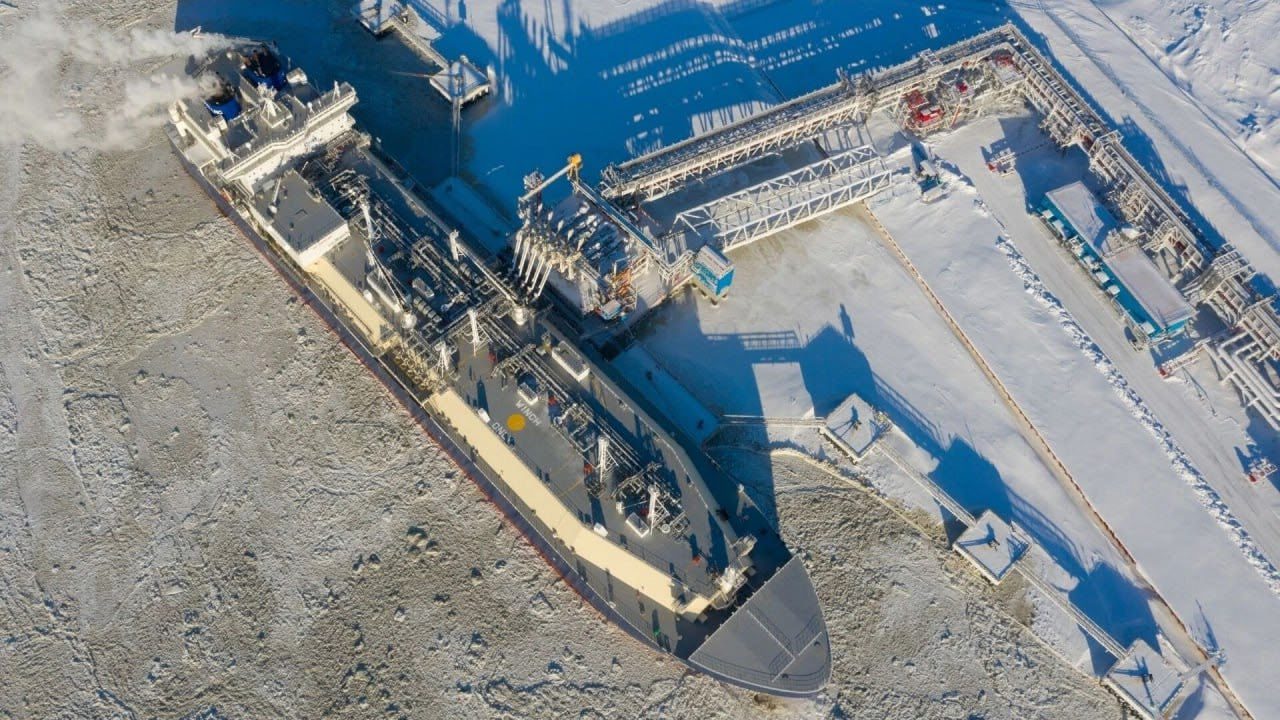
Over the past three years Rosneft has turned the Arctic tundra around Sever Bay into a bustling industrial hub satellite images reveal.
Valentin Pikul departed from Murmansk two weeks ago passing to the north of the Novaya Zemlya archipelago before transiting through the Kara Sea and into the mouth of Yenisei Gulf, where Vostok Oil is being built on the Taymyr Peninsula.
After approaching Sever Bay and the oil terminal under construction on June 4, the vessel has continued operating through sea ice in the vicinity and now remains at anchor to the north of the project.
Valentin Pikul’s voyage from Murmansk to the Vostok Oil project passing through extensive sea ice. (Source: Shipatlas)
Since 2022 Rosneft has shipped millions of tons of construction equipment to the Taymyr Peninsular split across thousands of deliveries, working year-round to construct the port, loading terminal, and hundreds of kilometers of pipelines.
A key element of the project is a 5.8 kilometer underwater pipeline to carry crude oil across the Yenisei River near the town of Dudinka en route to Sever Bay. Rosneft completed this challenging segment of the pipeline network in 2024.
Pilot oil production for the project began in Q1 2025 and Rosneft continues work on the first two oil loading berths in Sever Bay.
Indian refiners have cut back Russian crude purchases for November delivery, as rising competition from China pushes up prices at a time when buyers can tap alternative shipments from the Middle East.
South Korea's presidential office on Wednesday dismissed a Ukrainian report that Russia has imported petroleum products from South Korean ports, calling the accusation inappropriate.
October 7, 2026
Total Views: 803
Get The Industry’s Go-To News
Subscribe to gCaptain Daily and stay informed with the latest global maritime and offshore news
— just like 106,875 professionals
Secure Your Spot
on the gCaptain Crew
Stay informed with the latest maritime and offshore news, delivered daily straight to your inbox
— trusted by our 106,875 members
Your Gateway to the Maritime World!
Essential news coupled with the finest maritime content sourced from across the globe.

 Join The Club