The International Maritime Organization convenes its 84th Marine Environment Protection Committee session in London next week under the shadow of last year’s dramatic delay of the sector’s proposed Net-Zero Framework, but with a broader agenda that could shape everything from shipping emissions rules to air pollution controls and underwater noise.
While a final decision on the delayed climate package is not expected until later this year, MEPC 84 is widely seen as an important political and technical waypoint that could help determine whether a path back to agreement still exists.
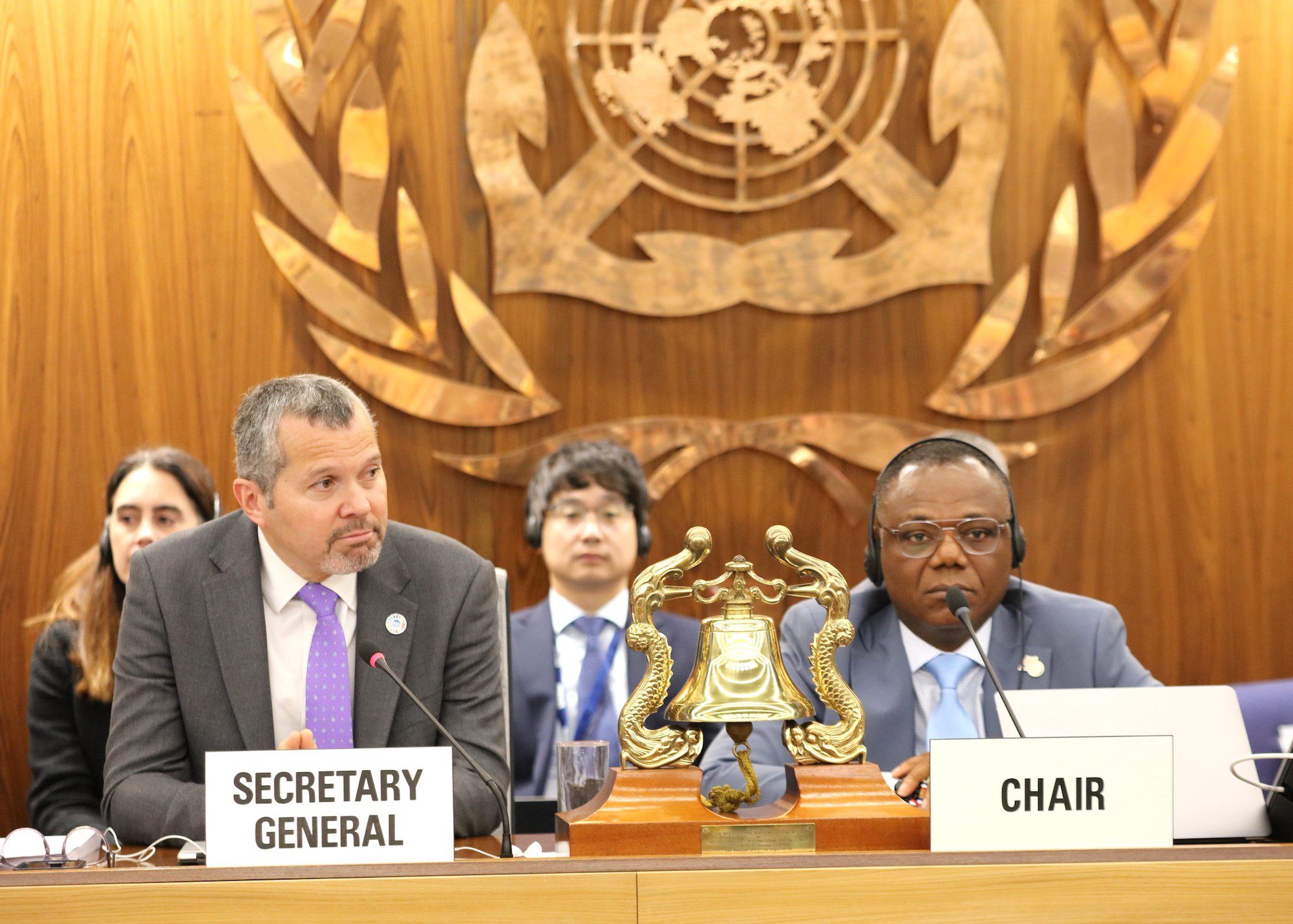
The session, chaired by Liberia’s Dr. Harry Conway, will be the first MEPC gathering since governments voted in October to adjourn adoption of the proposed framework by one year, after a contentious 57-49 vote with 21 abstentions due to strong pressure from the U.S. and Saudi Arabia. That decision halted what would have been adoption of the world’s first global carbon pricing mechanism for an industry.
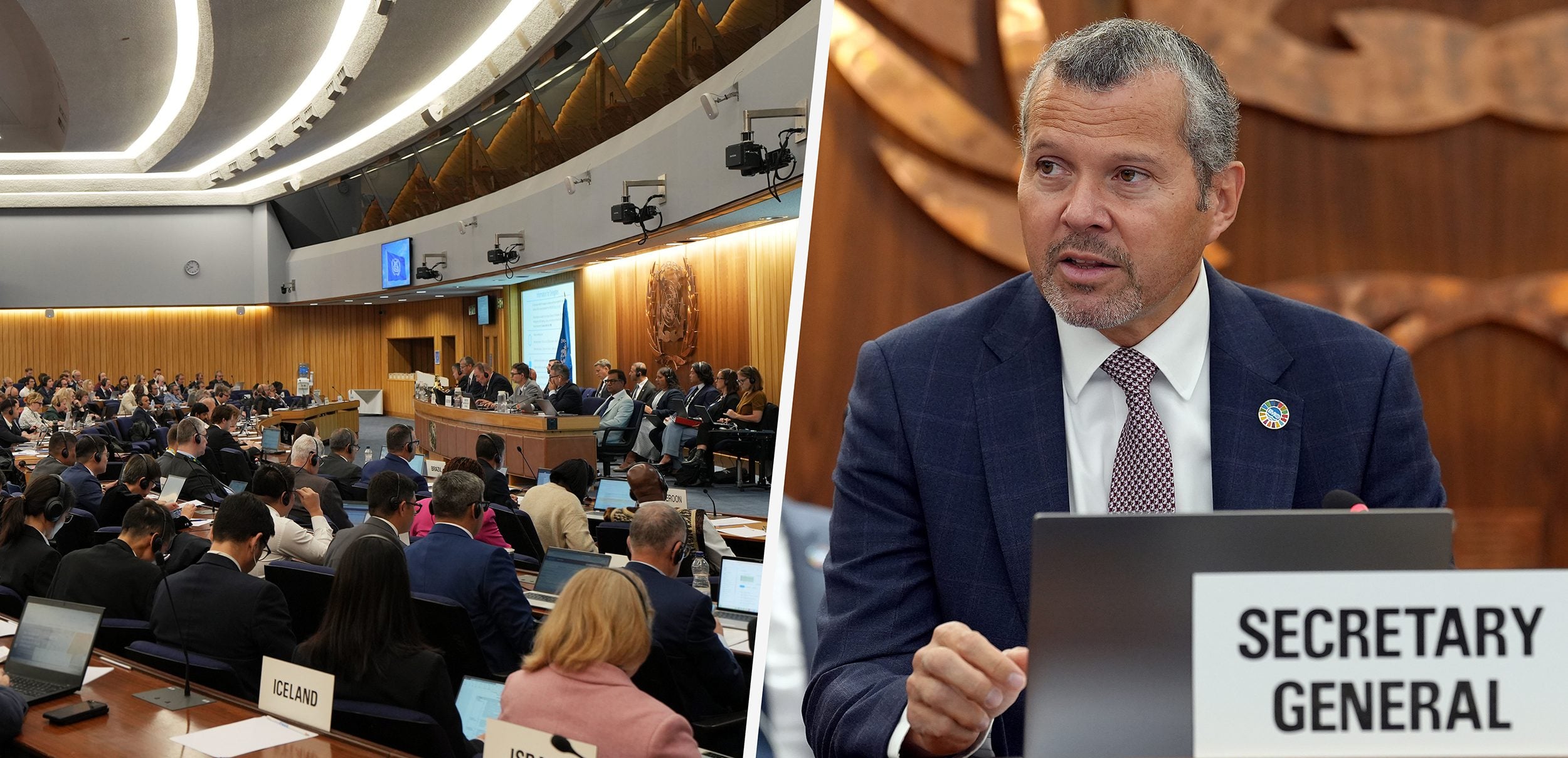
Now negotiators return to the issue under Agenda Item 7 on reduction of greenhouse gas emissions from ships, where 57 submissions have been tabled, underscoring both the complexity and weight of the debate. A dedicated working group on GHG reductions is expected to be established, while delegates will also consider options for resuming the extraordinary MEPC session where the framework was paused.
Those discussions are expected to be informed by this week’s intersessional greenhouse gas talks, which continued work on implementation guidelines tied to elements of the proposed framework, including lifecycle fuel assessments and the draft terms of reference for the fifth IMO greenhouse gas study.
Supporters see MEPC 84 as a chance to begin narrowing divisions over unresolved questions including carbon pricing, revenue distribution and greenhouse gas fuel-intensity rules.
“MEPC 84 could… point to a direction towards which the NZF discussion could be steered so that agreement could eventually be reached,” analysts at the University College London said in a pre-meeting assessment.
Recent signals suggest those divisions remain sharp. European states have moved to defend the framework’s carbon-pricing core ahead of the meeting, while Japan and some shipping interests have floated alternatives. The United States remains opposed.
Still, some officials see room for progress. Norway’s environment minister Andreas Bjelland Eriksen said this week the IMO still has a chance to strike a historic deal, but may need to consider “different approaches” to avoid a repeat of last year’s breakdown.
Groups including BIMCO, International Chamber of Shipping and the World Shipping Council have warned prolonged uncertainty risks undermining investment signals as carriers weigh major commitments tied to low- and zero-emission fuels.
“The industry remains unified in its commitment to the value and effectiveness of the IMO as the global regulator for international shipping,” the groups said in a joint statement ahead of the meeting.
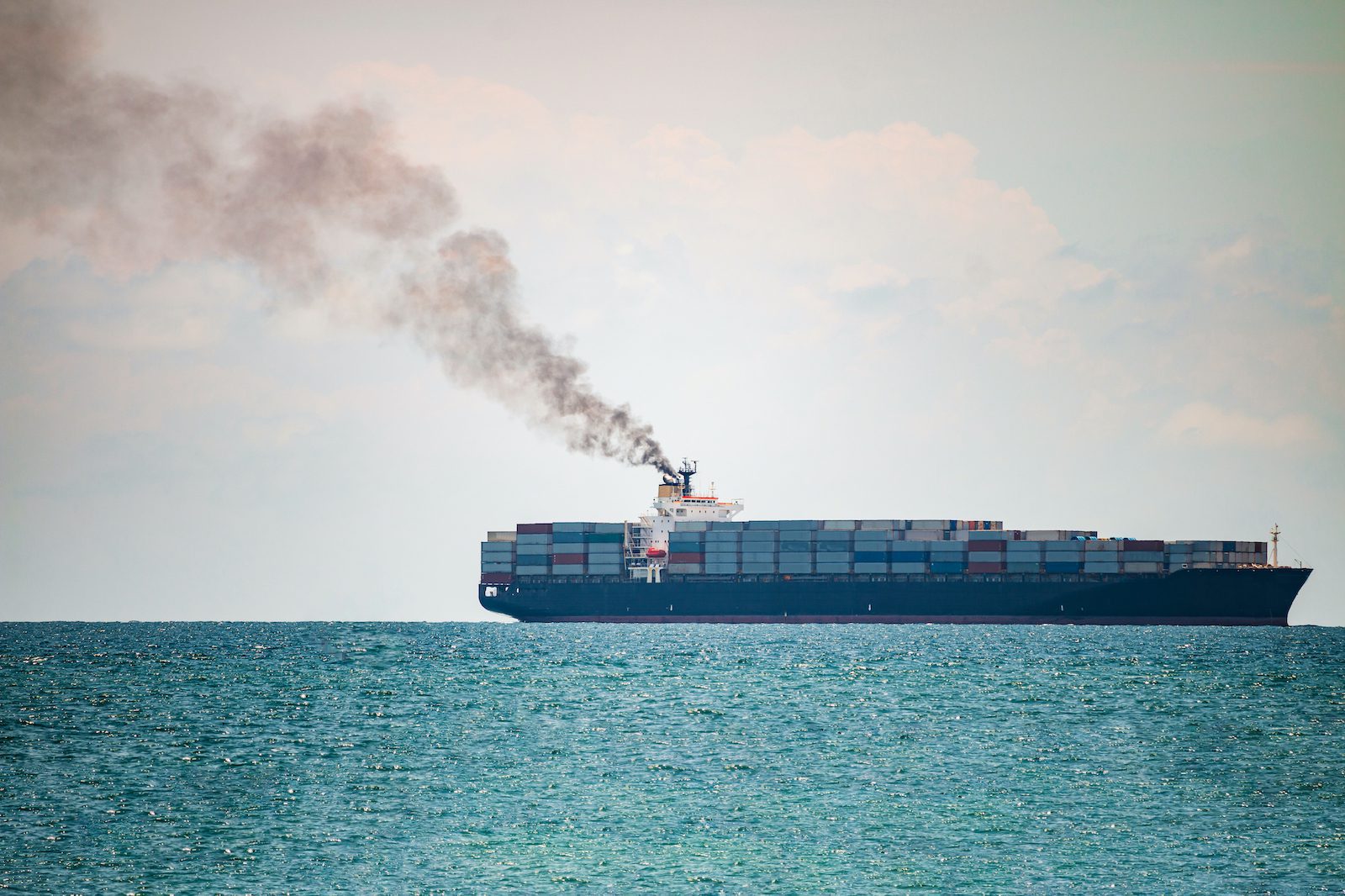
MEPC 84 is also expected to consider adoption of amendments to MARPOL Annex VI, including designation of the North-East Atlantic as an Emission Control Area for nitrogen oxides, sulphur oxides and particulate matter — a potentially significant expansion of emissions controls.
Delegates will also consider changes related to the IMO fuel consumption data collection system and operational carbon intensity reporting, along with work on ballast water, marine plastic litter, plastic pellet pollution, energy efficiency, air pollution prevention and underwater radiated noise.
Beyond the climate debate, the breadth of the agenda underscores that MEPC 84 carries implications well beyond the fate of the Net-Zero Framework.
While much attention will focus on whether negotiators can narrow divisions over the delayed climate package, the committee will also continue advancing environmental rules even as broader political questions remain unresolved.

 Join The Club