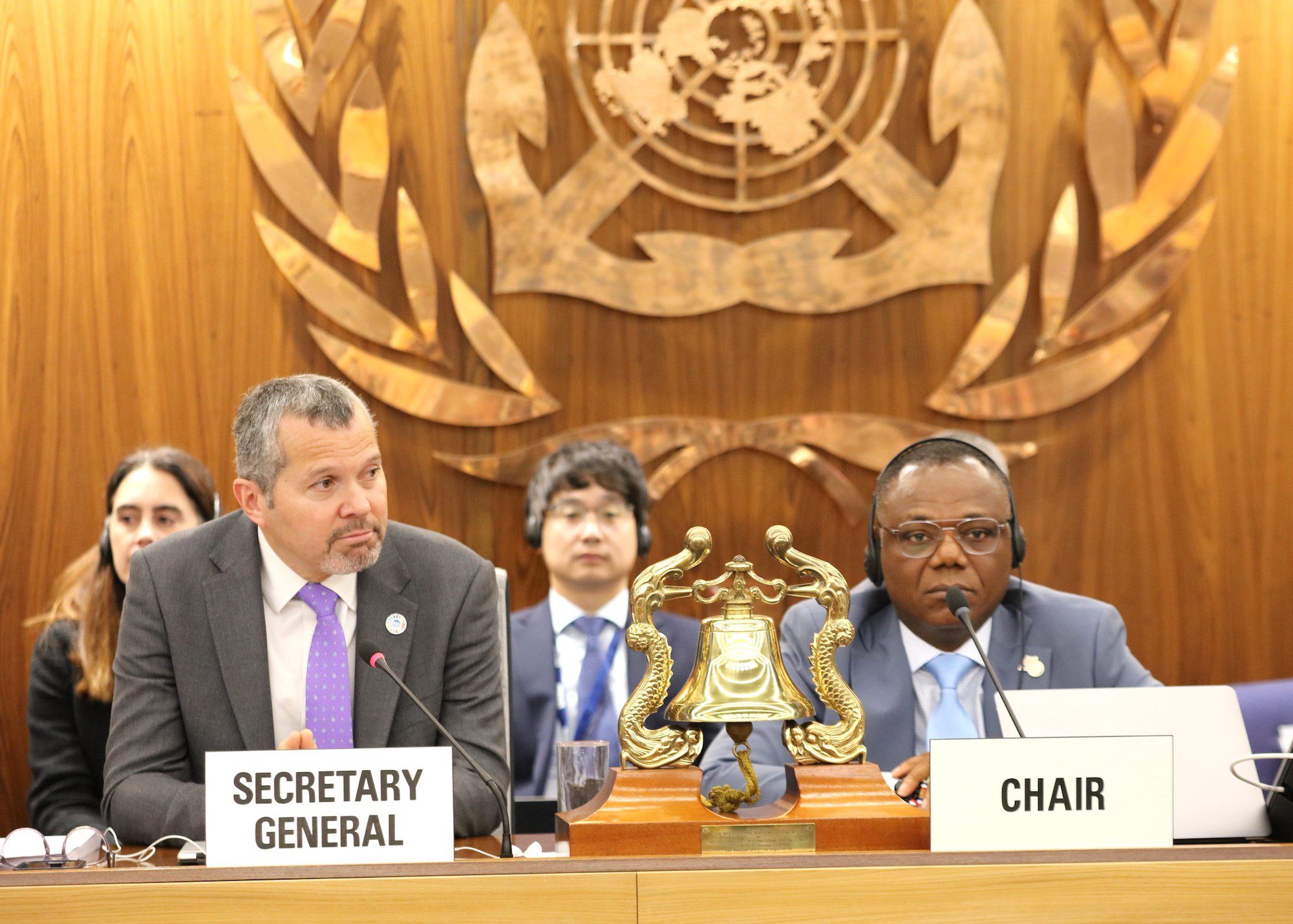
International Maritime Organization faces a defining moment next week as global shipping groups line up in rare unity behind the regulator ahead of renewed climate negotiations at Marine Environment Protection Committee 84 in London.
Just six months after governments failed to adopt a landmark carbon pricing framework, the industry is sending a clear message: deliver a global deal—or risk fragmenting the rules that govern international shipping.
In a coordinated statement ahead of the meeting, major trade bodies—including BIMCO, International Chamber of Shipping, and World Shipping Council—threw their support behind the IMO as the only viable global regulator for shipping emissions.
“The industry remains unified in its commitment to the value and effectiveness of the IMO as the global regulator for international shipping and remains committed to pursuing the ambition established within the 2023 IMO Strategy on Reduction of GHG Emissions from Ships,” the joint statement reads.
The timing is no coincidence. At the October 2025 session, a widely backed Net-Zero Framework collapsed after a bloc of oil-producing states, led by the United States and Saudi Arabia, pushed through a one-year delay—derailing what would have been the first global carbon pricing system for shipping.
That failure left the industry facing growing uncertainty just as shipowners are committing billions to alternative fuels and new technologies.
The industry’s concern is now shifting from whether a deal is possible to what happens if one isn’t.
Without a global framework, regional regimes are expected to fill the gap—raising the risk of overlapping carbon rules, duplicate penalties, and a compliance landscape that becomes increasingly difficult to navigate. That’s exactly what shipping groups are trying to avoid.
Their joint message ahead of MEPC 84: global rules must remain global.
Talks will resume under Agenda Item 7, with dozens of submissions and a new working group tasked with advancing mid-term greenhouse gas measures under the IMO’s 2023 strategy targeting net-zero emissions by or around 2050.
But the same divisions that sank the deal last year remain unresolved, particularly around carbon pricing, revenue distribution, and enforcement.
Whether negotiators can bridge those gaps this time remains uncertain.
Beyond emissions, the meeting will advance a wide slate of environmental rules, including amendments to MARPOL Annex VI, new emissions monitoring guidelines, and updated measures on plastics, ballast water, and underwater noise.
Still, it is the fate of the Net-Zero Framework that will define the meeting.
After October’s breakdown, MEPC 84 is shaping up as more than a technical meeting, but rather a test of whether the IMO can still deliver consensus-based global regulation in an increasingly divided geopolitical environment.

 Join The Club