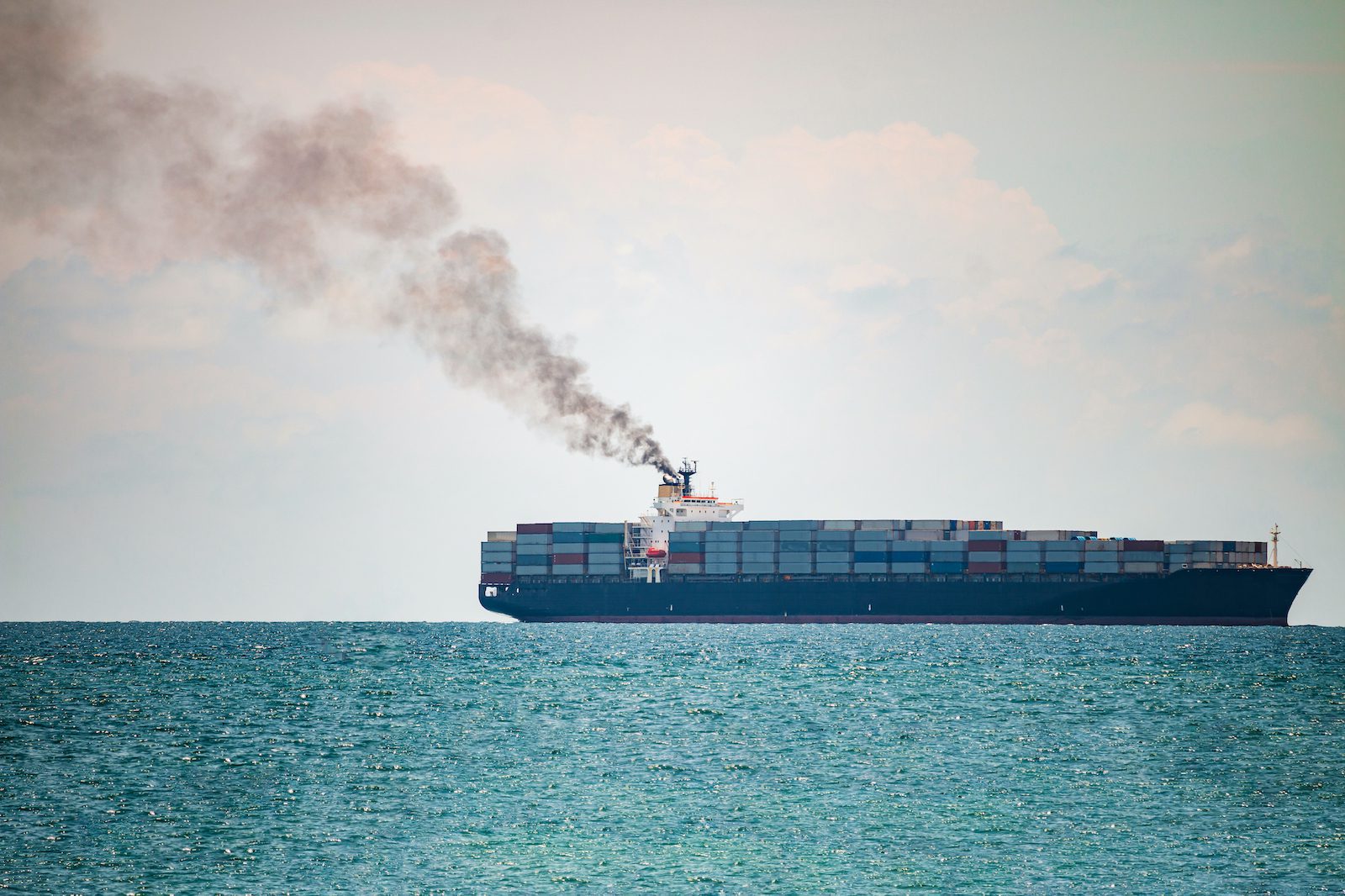
The International Maritime Organization has kept its landmark shipping climate framework alive following a week of high-stakes negotiations in London, setting up a decisive endgame later this year after deep divisions again blocked a final deal.
The outcome from MEPC 84 broadly matched expectations heading into the meeting, with the IMO Net-Zero Framework (NZF) ultimately emerging intact as the sole agreed basis for continued negotiations despite a coordinated push to weaken or reopen the proposal.
Closing the session, Secretary-General Arsenio Dominguez said talks were “back on track,” while cautioning that rebuilding trust among member states remains essential to securing agreement.
MEPC 84 was widely seen as a key political checkpoint after last year’s dramatic delay of the framework, when a razor-thin vote exposed deep geopolitical divides—tensions that resurfaced again this week.
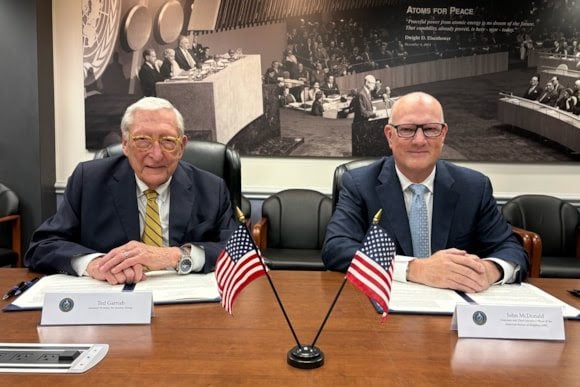
The United States, building on comments from Federal Maritime Commission Chairman Laura DiBella, pressed countries to reconsider the framework, arguing it risks imposing broad costs across global supply chains and disproportionately impacting consumers.
But the collapse of the framework never came. Instead, a broad coalition of countries held the line to preserve the framework’s core structure, including its controversial carbon pricing mechanism, which is widely seen as the defining feature of the proposal.
The numbers underscore just how divided the IMO remains. A large bloc of countries, including the EU, UK, Australia, and Canada, continued to back the framework and its pricing mechanism as essential to driving emissions cuts and financing the transition.
At the same time, a similarly sized group, including the U.S., Saudi Arabia, and UAE, pushed to reopen negotiations, with proposals ranging from stripping out carbon pricing entirely to weakening fuel standards that would extend fossil fuel use.
Washington, however, framed the outcome differently. The United States Department of State said its coalition helped force the IMO to expand negotiations to include alternative proposals that could remove the carbon pricing element altogether.
In a statement, spokesperson Thomas “Tommy” Pigott said U.S. diplomats “successfully delivered” a path forward that protects American economic interests, arguing the NZF would act as a global carbon tax on shipping and consumers. The U.S. said partners including Saudi Arabia, Liberia, Panama, and Argentina backed efforts to examine competing proposals, some representing a significant share of global tonnage.
The State Department also pointed to the decision to continue negotiations across multiple proposals as evidence that support for the original framework is eroding—though that interpretation contrasts with other delegations that maintained the NZF as the central negotiating text.
Faced with the broader impasse, delegates chose to move forward rather than force a vote, keeping the NZF as the central negotiating text while allowing alternative proposals to remain under consideration.
The next phase will now unfold through a series of intersessional talks in September and November, with a potential decision window in December.
The International Chamber of Shipping welcomed the continuation of talks but made clear a deal remains out of reach.
“The constructive dialogue that has taken place this week is hugely welcome,” said Secretary-General Thomas A. Kazakos. “Although it is clear that many Member States are still unable to adopt a global regulatory framework unless further adjustments are made.”
The group warned that prolonged uncertainty risks delaying investment decisions across the sector, as shipowners weigh billions in commitments tied to alternative fuels and new technologies.
Reaction from delegates and observers pointed to a fragile but meaningful shift. Officials from climate-vulnerable states said the framework remains viable for adoption this year, with Pacific nations signaling confidence it can move forward largely intact to support a “just and equitable energy transition.”
Environmental groups and policy experts struck a more urgent tone, warning that reopening the deal risks undermining years of negotiations and delaying emissions cuts at a critical moment.
Several observers also pushed back on the narrative of a “silent majority” opposing the framework, arguing instead that a broad coalition across Europe, Africa, Latin America, and small island states continues to support it as the only workable path forward.
At the same time, multiple voices cautioned that survival alone is not enough, warning against slipping into prolonged, open-ended negotiations that could dilute ambition or delay implementation.
The debate is unfolding against a rapidly shifting global energy backdrop. The Middle East conflict has already driven sharp volatility in bunker fuel prices, reinforcing arguments from framework supporters that a global system could provide long-term cost stability and accelerate the shift to alternative fuels.
Critics continue to argue the opposite—that carbon pricing risks raising costs and distorting trade flows.
That tension now sits at the center of the negotiations heading into the next round.
While the carbon debate dominated headlines, MEPC 84 delivered several tangible regulatory outcomes.
The IMO approved a new Emission Control Area in the Northeast Atlantic, tightening limits on sulphur oxides, nitrogen oxides, and particulate matter across a wide swath of European waters beginning in 2028.
The committee also adopted a new strategy targeting zero plastic waste discharges from ships by 2030, advanced work on a global code for transporting plastic pellets, and moved forward amendments to strengthen ballast water rules and address underwater noise pollution.
In a separate move reflecting the broader geopolitical environment, the IMO adopted a resolution condemning attacks on commercial shipping in the Strait of Hormuz, warning of heightened risks of large-scale marine pollution tied to ongoing hostilities.
MEPC 84 did not deliver the breakthrough some had hoped for, but it avoided the breakdown many feared. Despite mounting political pressure and competing proposals, the IMO’s Net-Zero Framework remains alive, with carbon pricing still firmly at the center of the debate.
The next round of talks will determine whether that framework becomes the world’s first global carbon pricing system for an industry, or another casualty of geopolitical division.

 Join The Club