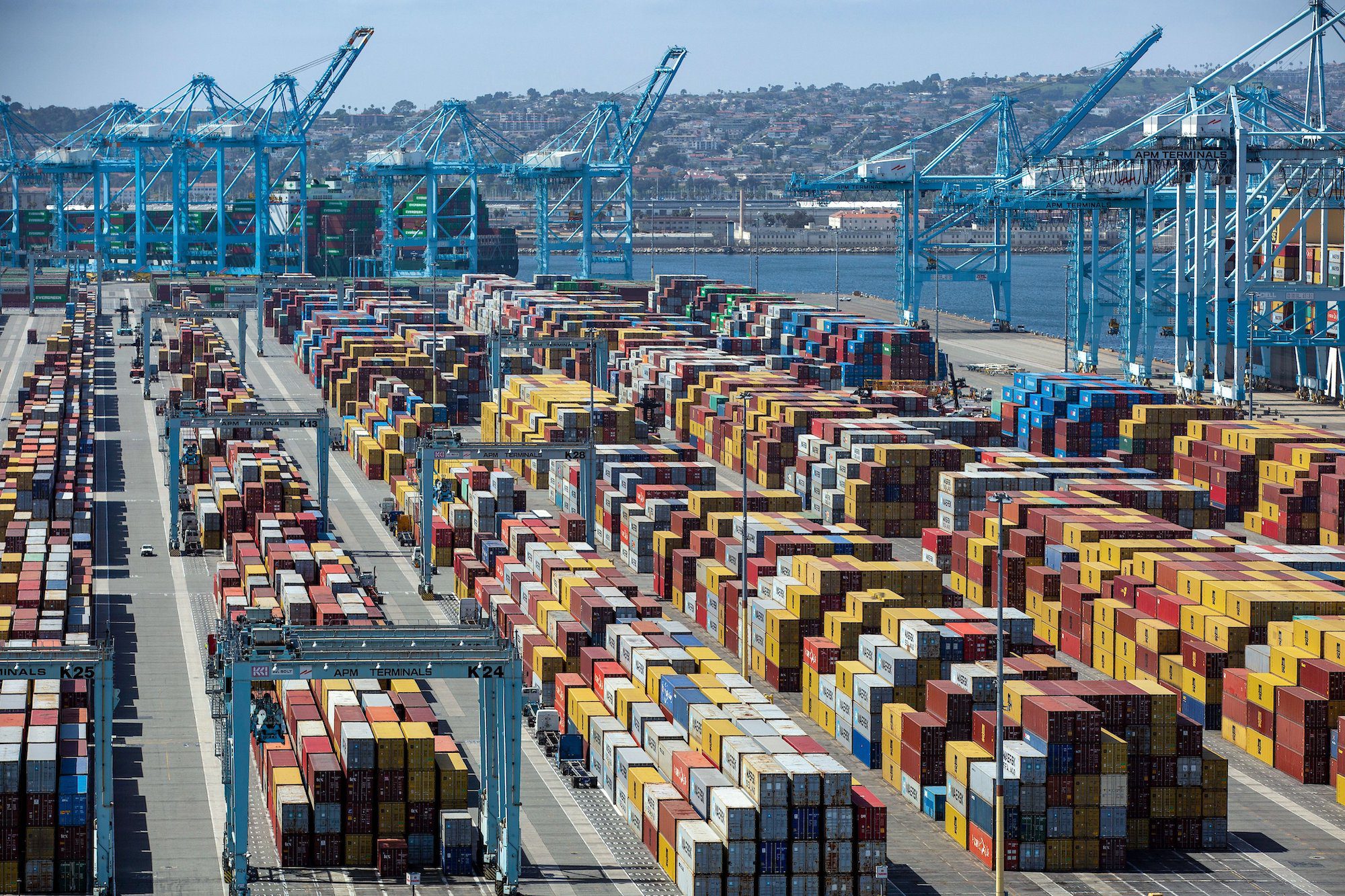
U.S. container imports are facing growing pressure from tariffs and rising fuel prices, even as the conflict involving Iran has yet to significantly disrupt cargo volumes moving through the nation’s major ports, according to the latest Global Port Tracker report from the National Retail Federation and Hackett Associates.
The report says the biggest immediate drag on import demand remains trade policy, with retailers continuing to navigate a temporary 10% global tariff announced by President Donald Trump last month under the Trade Act of 1974, along with changes to Section 232 duties on metals and new tariffs on pharmaceutical products and ingredients.
While the Strait of Hormuz crisis has not materially slowed U.S. containerized imports, NRF said the broader global supply chain is still exposed through higher bunker costs, equipment imbalances, vessel rerouting, and weaker consumer spending power as gasoline prices rise.
“Just because retailers don’t import a lot of merchandise from the Middle East doesn’t mean the U.S. supply chain isn’t affected by the turmoil there,” NRF Vice President for Supply Chain and Customs Policy Jonathan Gold said. He said disruptions anywhere in the global logistics network can create ripple effects, including higher fuel costs for shippers and less money in consumers’ pockets.
Hackett Associates Founder Ben Hackett said the operational hit to U.S. container imports from the Iran situation has so far been limited because relatively little U.S. box cargo originates in the region. But he warned that the blockage of the Strait of Hormuz is pushing up fuel prices for container shipping worldwide and could tighten fuel availability at some Asian ports if the crisis drags on.
“The United States is less impacted operationally as there is no shortage of fuel at U.S. ports, but the price of fuel here is based on international pricing,” Hackett said. “Higher fuel costs drive up the price of shipping a container for either import or export and ultimately have an inflationary impact on consumers and other end users.”
U.S. ports tracked by Global Port Tracker handled 1.95 million TEU in February, excluding the Port of New York and New Jersey, which had not yet reported data. That was down 7.5% from January and 4.2% from the same month a year earlier. February is typically the slowest month of the year because of Lunar New Year-related factory shutdowns in Asia.
For March, the report projects import volumes of 1.97 million TEU, down 8.3% year-over-year. April is forecast at 2.08 million TEU, down 5.6%, followed by 2.09 million TEU in May, up 7.3%, and 2.1 million TEU in June, up 6.9%. July is forecast at 2.2 million TEU, down 8%, with August at 2.18 million TEU, down 6%.
If those projections hold, first-half 2026 import volume would total 12.3 million TEU, down 1.8% from 12.53 million TEU in the same period last year.
The report noted that the year-over-year gains expected in May and June are largely a comparison effect tied to the sharp falloff in imports during those months in 2025 after the announcement of “Liberation Day” tariffs.
Total U.S. container imports in 2025 came in at 25.4 million TEU, slightly below the 25.5 million TEU recorded in 2024.
The takeaway for retailers is that Iran-related turmoil has not yet delivered a direct hit to U.S. import flows, but the longer the energy shock lasts, the more likely it is to show up in freight bills and, eventually, on store shelves.
Editorial Standards · Corrections · About gCaptain

 Join The Club