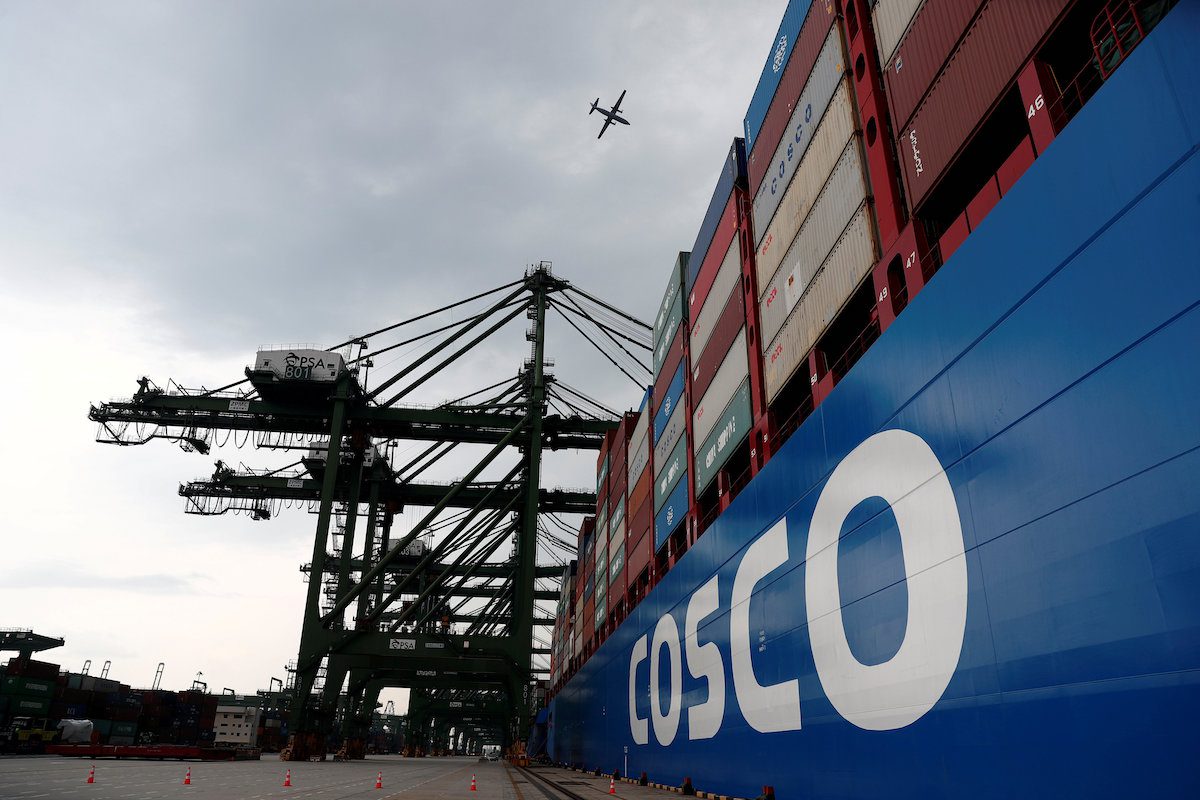
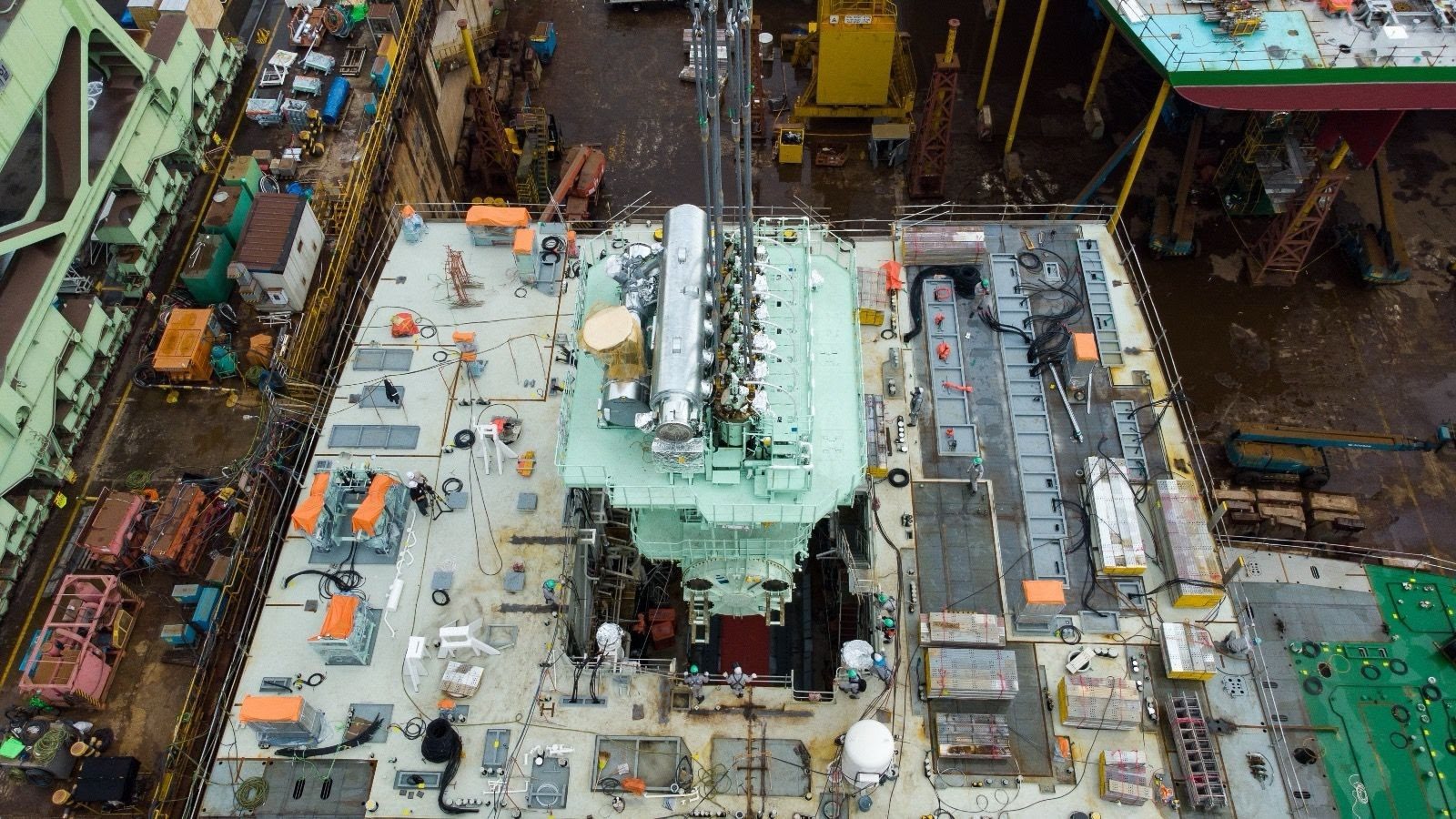
Everllence has completed the world’s first conversion of a B&W S90 two-stroke engine to dual-fuel methanol operation following successful sea trials of COSCO Shipping Lines’ containership COSCO Shipping Libra. The 20,000+ TEU vessel’s 11S90ME-C engine was retrofitted to an 11S90ME-LGIM (Liquid Gas Injection Methanol) unit.
The project was executed by Everllence PrimeServ, the company’s after-sales division, in partnership with COSCO Shipping Heavy Industry. The full-scope retrofit covered engineering, project management, installation, commissioning and sea trials. To validate the technology, Everllence commissioned a dedicated 4S90 testbed engine in Japan in early 2025, which confirmed the S90 engine’s methanol performance under real operating conditions before the retrofit.
“We’re proud to support COSCO Shipping Lines and COSCO Shipping Heavy Industry — and the maritime industry as a whole — in taking this significant step toward decarbonizing shipping,” said Michael Petersen, Senior Vice President and Head of Everllence PrimeServ, Denmark.
Petersen noted that Everllence has already completed 26 dual-fuel conversions with a larger pipeline of projects across various alternative fuels in progress.
The successful retrofit opens significant opportunities for the maritime industry. Over 300 vessels worldwide are currently equipped with S90-class engines, making them potential candidates for similar conversions. Everllence believes the demonstration of methanol’s viability as a marine fuel proves that large-bore retrofits are technically and commercially feasible.
“While the journey toward full decarbonisation will require collaboration across the industry, this achievement demonstrates that large-scale conversions are both technically proven and commercially viable,” Petersen added.”This opens a practical pathway towards accelerating the maritime energy transition together with our customers.”

 Join The Club