Procurement records now establish that the incident involved more than an isolated engine casualty, with a subsequent fire and extensive damage to equipment in Generator Room No. 2, alongside corrective maintenance requirements affecting two additional generators.
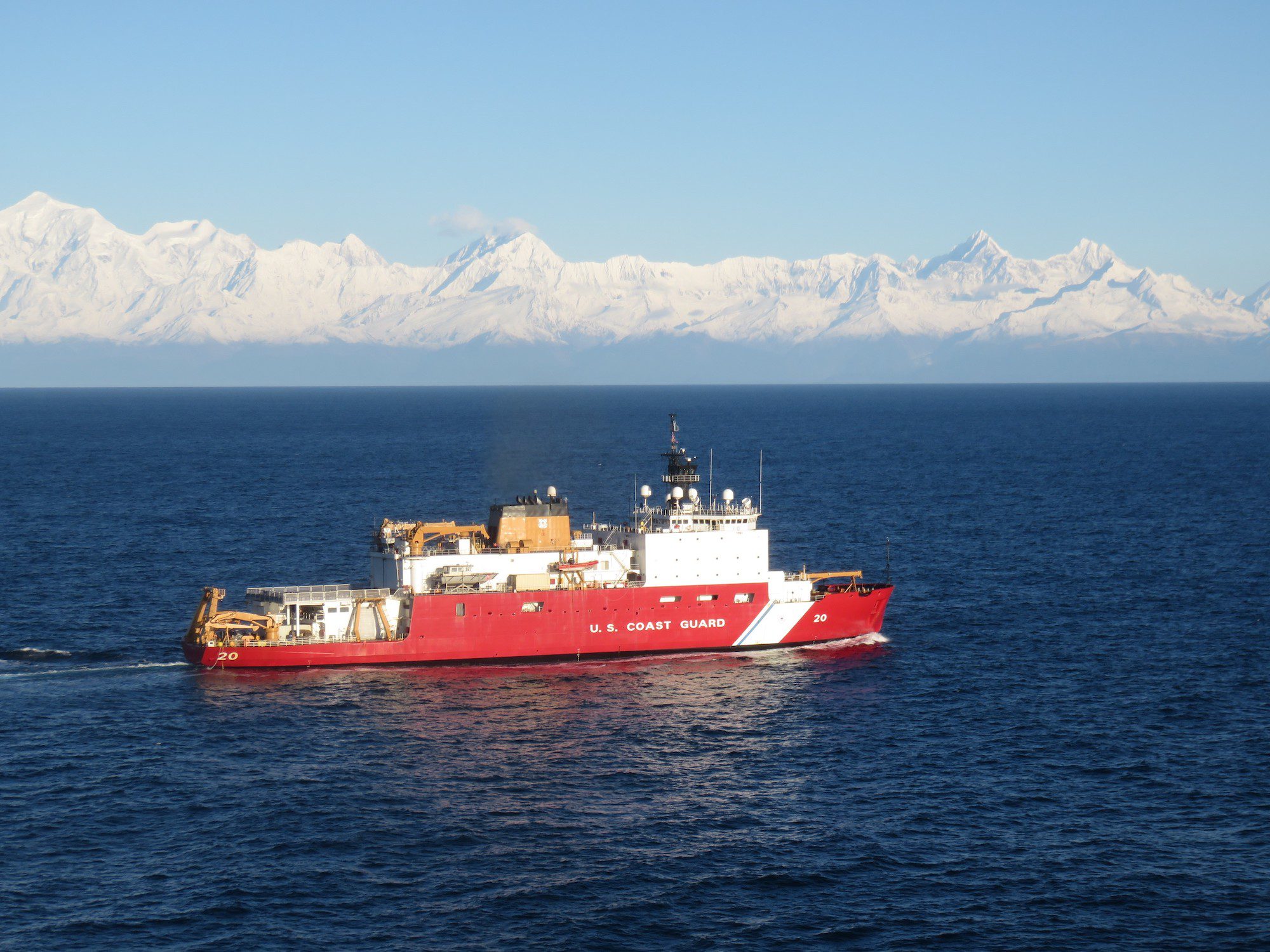
The U.S. Coast Guard’s largest icebreaker, USCGC Healy, suffered a catastrophic overspeed failure of one of its main propulsion diesel generators in July, triggering a fire in the generator room and requiring extensive repairs to electrical and fire-detection systems, and corrective maintenance affecting two additional engines, according to Coast Guard procurement documents.
The documents provide the most detailed account yet of the incident aboard the 420-foot icebreaker, which was towed back to its homeport in Seattle on July 13 after experiencing a significant engineering casualty while operating northwest of Port Angeles, Washington.
The Coast Guard announced the incident on July 24, saying Healy would undergo major repairs and an investigation. The vessel subsequently abandoned its planned 2026 high-latitude summer mission.
The decision to end icebreaker Healy’s planned high-latitude mission left the service leaning more heavily on its newest icebreaker during an increasingly active Arctic season.
A procurement document issued in October for corrective maintenance on two of Healy‘s other main propulsion diesel generators provides a more specific description of the incident, stating: “CGC HEALY suffered a catastrophic overspeed failure of its #2 MPDG.”
The document also recommended immediate corrective action on the overspeed protection devices and governor equipment on generators No. 1 and No. 3.
A separate September procurement document for an overhaul of Healy‘s fire-detection system describes a subsequent fire in Generator Room No. 2 and the resulting damage.
“The USCGC HEALY experienced an engine casualty in Generator Room #2 that resulted in a fire in the compartment,” the document states. “Fire detection equipment and wiring were exposed to high temperatures causing a ground fault in the system.”
The document continues that “all equipment and wiring in the upper section of the Generator room will need to be renewed.”
The fire also caused numerous faults in the detection system, while its Person Machine Interface (PMI-2) was experiencing problems retaining memory and required replacement.
The Coast Guard sought a contractor to overhaul the Siemens FireFinder XLS system, including replacement of damaged detection equipment and wiring. The work was to be performed alongside at Coast Guard Base Seattle, with a completion deadline of October 16.
The October solicitation provides further insight into the maintenance required following the failure of generator No. 2. The Coast Guard sought contractors to overhaul the mechanical and electro-pneumatic overspeed protection systems on generators No. 1 and No. 3, as well as their Woodward governors and associated equipment.
The work included disassembly, inspection, cleaning, repair, recalibration and bench testing of the mechanical overspeed cutouts and electro-pneumatic limiters. The governors and their boosters were also to be removed, completely disassembled, inspected against original equipment manufacturer specifications, fitted with replacement seals and bearings, and bench tested.
The solicitation contained another revealing detail about the condition of the machinery.
“The governors and boosters appeared to be operating properly but there is no record of service or overhaul,” the document states. It adds that both engines had accumulated more than 40,000 operating hours.
The work also included replacement of the A2 cylinder head on engine No. 3 because of damage to the dummy-valve seating surface and dummy-valve body. The removed cylinder head and valve were to be sent to a machine shop for inspection and reconditioning.
The Coast Guard scheduled the corrective maintenance between October 13 and October 31 in Seattle. The contract also included an option for up to $60,000 in additional repairs if inspections identified further problems.
Meanwhile, a separate procurement addressed the vessel’s CO2 fire-suppression system, including replacement of manual fire-pull equipment and associated cabling serving Generator Rooms No. 1 and No. 2.
The documents do not establish whether all the contracted work has been completed or provide a revised return-to-service date for the icebreaker.
Another procurement published November 13 provides a glimpse of the Coast Guard’s longer-term maintenance plans for Healy‘s integrated propulsion plant.
The Surface Forces Logistics Center is conducting market research for a five-year support requirement covering July 2028 through July 2033. The proposed contract would cover maintenance and technical support for the vessel’s integrated machinery plant and associated shoreside equipment.
GE Power Conversion, part of GE Vernova, is identified as the original equipment manufacturer and holder of the proprietary data rights needed to provide the support. The previous contract was awarded to GE on a sole-source basis.
The proposed scope includes periodic equipment maintenance, technical support and troubleshooting, casualty response, engineering analysis, configuration management, and replacement of obsolete components.
It also specifically calls for hands-on and classroom training for both Healy‘s permanent crew and Coast Guard shore-support personnel.
The requirement includes evaluating equipment obsolescence and forecasting reliability, maintainability and availability concerns five years beyond the contract period. It also calls for technical upgrades intended to maintain operational availability through the vessel’s midlife maintenance period.
The November notice is a sources-sought market survey rather than a request for proposals or an awarded contract. It does not establish that the long-term support arrangement is a consequence of the July casualty.
The Coast Guard has not publicly released the findings of its investigation into the overspeed failure or provided a detailed repair timeline. It did not respond to a request for comment.
Whether Healy will be ready to resume Arctic operations for the 2027 navigation season remains unclear.

 Join The Club