By Gwladys Fouche
OSLO, Sept 21 (Reuters) – The United States is watching China’s presence in its Arctic zone “very closely” amid concerns regarding the security of the US homeland, a senior US Arctic military official said.
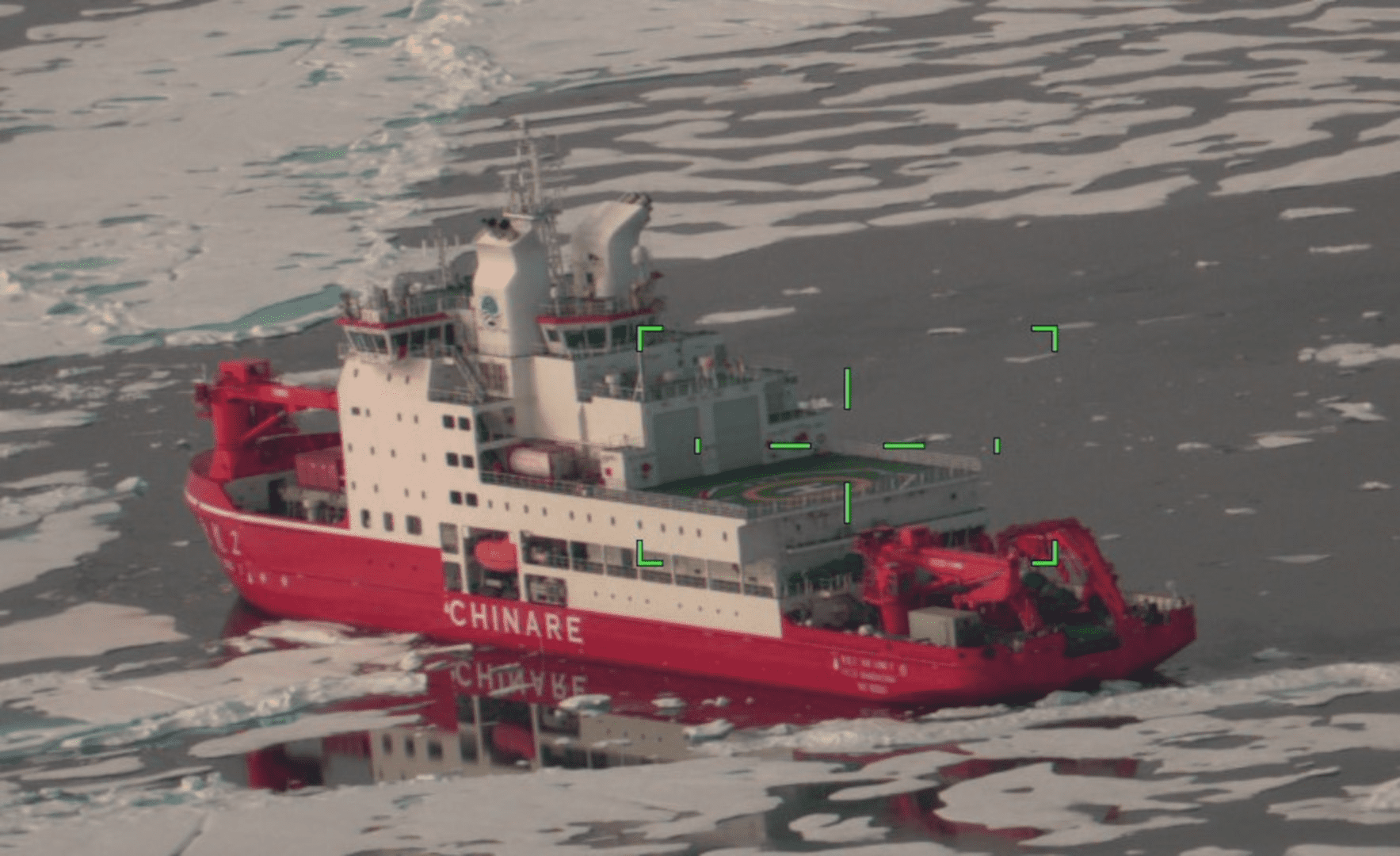
So far in 2026, four Chinese research vessels have conducted work offshore in the US Arctic, compared to a total of five in 2025, Rear Admiral Bob Little, Commander of the US Coast Guard’s Arctic District, told Reuters.
The Chinese ships sailed in the maritime zones off the US state of Alaska, including the Aleutian Islands, into the Bering Strait and as far north as the North Pole, he said during a visit to Oslo to speak at a conference on Arctic security.
“Where I have responsibility, interest and concern is when they are operating in and around US sovereign space,” said Little.
“So inside of our exclusive economic zones, or over our extended continental shelf, we certainly have a security concern. And so those are the types of activities that we see that we’re watching very closely.”
The ships remained in international waters but had not notified the US of their presence in advance through diplomatic channels, as would be the usual practice.
“When we challenge them and query them as to the purpose of their activities, their response typically is either ‘we are conducting operations in international waters’ or ‘we are conducting scientific research’,” he said.
CONCERNS
The concern is two-fold. One is that China may be involved in scientific research focused on the mineral exploitation of the seabed in an area that belongs to the US, Little said.
The other is that these vessels conduct activity that might “provide them (the Chinese) with a military advantage or pose a security threat to the United States,” said Little, whose area of operations is nearly as vast as Europe.
China, which calls itself a “near-Arctic” state and wants to create a “Polar Silk Road” in the Arctic, has stepped up its presence in the polar region in recent years, sometimes in joint operations with Russia and sometimes alone.
While in Norway, Little discussed with international colleagues how they were dealing with similar activities by Russian research vessels.
“Whether it’s the Barents (Sea) or the Baltic (Sea), it’s easy to find examples of hybrid threats and activities,” he said.
“So I certainly watch that very carefully, because it’s the same nation-state that’s my neighbor on the western side of the Arctic,” he said, referring to Russia.
Moscow denies that its research vessels conduct illegal activity or that it poses any threat to US interests.
(Reporting by Gwladys Fouche in OsloEditing by Gareth Jones)
(c) Copyright Thomson Reuters 2026.

 Join The Club