By Weilun Soon
Nov 18, 2026 (Bloomberg) –Oil is increasingly moving through the Strait of Hormuz on smaller vessels, helping sustain exports as attacks on supertankers squeeze availability of the ships that typically dominate the trade.
The volume shipped through the waterway by Suezmaxes and Aframaxes has climbed over the past two months, hitting a wartime high of more than 2 million barrels a day in October, according to Vortexa. That helped elevate overall daily exports to 11.4 million barrels, the highest since the conflict began.
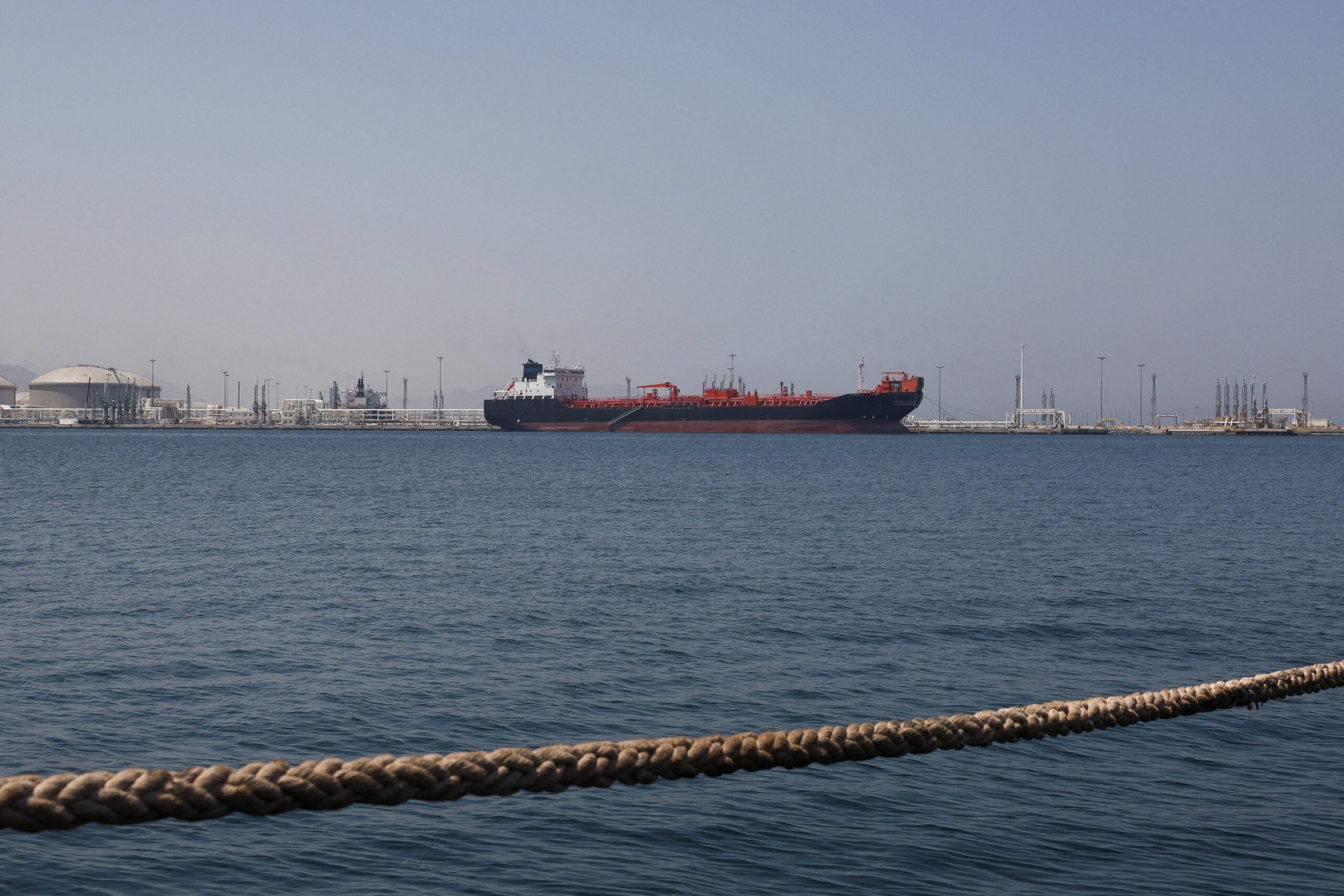
The lucrative but risky trade of shuttling crude out of the Persian Gulf during the US-Iran war has primarily relied on very large crude carriers, which can carry up to 2 million barrels. The supertankers account for 72% of the vessels transiting Hormuz, according to BRS Shipbrokers, although they have become the target of Iranian attacks, taking some out of operation.
The use of Suezmaxes and Aframaxes has helped ensure Gulf exports remain robust, according to shipbrokers and traders. The vessels, which carry less than half as much as a VLCC, have mostly been used to load cargoes from Iraq, Kuwait and Qatar, they said. The tankers either transfer crude to other ships after passing through Hormuz or sail directly to ports, often in India.
The Lucia A is among the first Suezmaxes to enter the trade, ship-tracking data show. Since June, it’s picked up at least four cargoes from Iraq and delivered them to ships waiting in the Gulf of Oman or to Ain Sukhna, an Egyptian port in the Red Sea. Earlier this month, it loaded its fifth Iraqi shipment.
Another Suezmax, the Ture, collected its third Iraqi cargo last week, according to ship-tracking data. The vessel previously transported crude from Russia’s western ports to India, a trade permitted as long as the oil complies with price-cap guidelines imposed by the Group of Seven nations.
An attempt to contact the Marshall Islands-based owner of Lucia A was unsuccessful. The ship’s safety manager in Shanghai and the manager of Ture in Greece, did not immediately respond to emailed requests for comment.
Smaller vessels also offer significantly lower freight costs. While they carry less crude, supertanker rates have risen much faster than those for other tankers since the start of the war. Shipbrokers have assessed the rate for a Suezmax traveling from the Persian Gulf to China at around a third to just under half the published benchmark rate for a VLCC on the same route.
© 2026 Bloomberg L.P.

 Join The Club