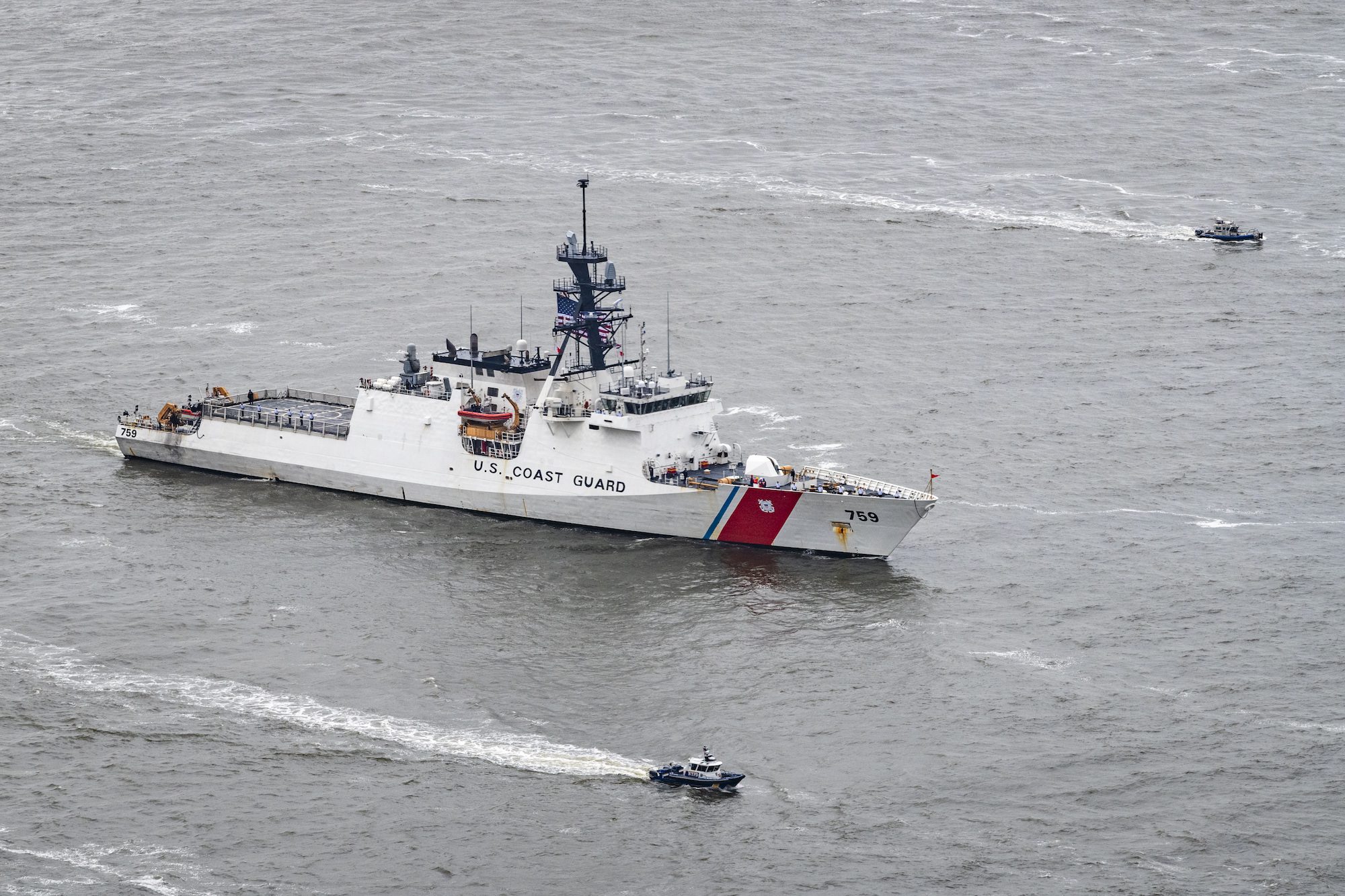
The U.S. Coast Guard has released its first formal update on Force Design 2028, a sweeping reform effort aimed at reshaping the service into a more agile and combat-ready maritime force as it faces growing demands from border security to sanctions enforcement far from U.S. shores.
The initial update, published on Jan. 15, outlines changes implemented since early 2025 and frames them as a response to an increasingly complex operational environment, where the Coast Guard is being asked to do more, and do it farther from home, with limited resources.
“The United States Coast Guard serves as a vital instrument of national power, advancing security both at home and abroad,” Homeland Security Secretary Kristi Noem said in a news release. “Through the implementation of Force Design 2028, the extraordinary return on investment – the value the Coast Guard provides to our Nation – is poised to grow even further.”
Force Design 2028 was launched last year following an internal review that found the service strained by decades of underinvestment, aging cutters, workforce shortages and mounting mission demands. The reform agenda focuses on four pillars – people, organization, technology, and acquisition – with the goal of improving border control, safeguarding the flow of maritime commerce and responding more rapidly to global contingencies.
According to the update, the Coast Guard operates on an annual budget of about $12.1 billion but generates more than $74 billion in economic and social value, a six-to-one return cited repeatedly by leadership as justification for accelerated investment.
“As we deliver the first update on Force Design 2028, the Coast Guard is already a stronger, more agile, capable, and responsive fighting force,” said Adm. Kevin Lunday. “The Service is better positioned than it was in January 2025 to effectively control, secure, and defend the U.S. borders and maritime approaches.”
Recent operations illustrate why the overhaul is seen as urgent. In the Caribbean and off Venezuela, Coast Guard cutters have been central to U.S. efforts to interdict drug trafficking and enforce sanctions-linked maritime activity. During the fiscal year 2025 the USCG seized 510,000 pounds of cocaine, more than three times its long-term annual average.
In the North Atlantic, the service played a key role in the high-profile seizure of the tanker Bella 1, underscoring how Coast Guard missions increasingly overlap with national security and foreign policy objectives traditionally associated with the Navy.
Such operations require specialized boarding teams, long-range cutters, aviation support and intelligence integration, capabilities that Force Design 2028 aims to expand. The update highlights rapid investment in new cutters, aircraft and unmanned systems, as well as organizational streamlining, including the elimination of at least a dozen admiral positions to speed decision-making.
The Coast Guard has also moved to delegate greater use-of-force authority to commanders in the field and to accelerate technology adoption through initiatives such as the Rapid Response Prototype Team, designed to move new capabilities from concept to operations in weeks rather than years.
While much of the update focuses on border security and counter-narcotics successes, analysts say the subtext is the Coast Guard’s growing role as a global maritime enforcement arm, from Arctic operations to sanction busting and crisis response.
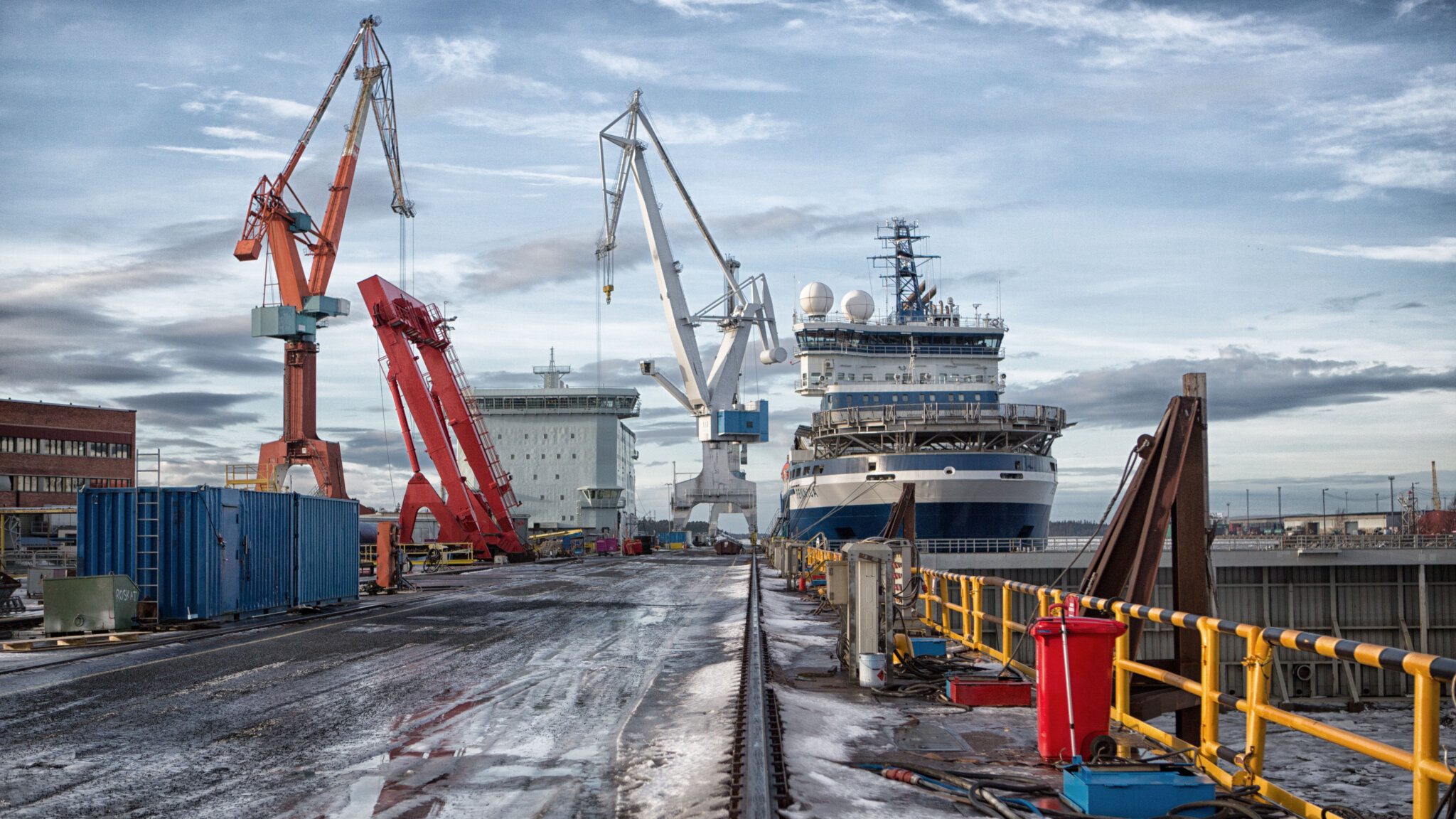
The service is expected to receive the first of up to 11 new medium-size icebreakers, Arctic Security Cutters, as early as 2028; a much-needed boost to its aging polar fleet. The vessels will be constructed with the help of Finnish and Canadian shipyards in part to avoid lengthy and ongoing delays with the domestically-constructed Polar Security Cutter heavy icebreaker.
With Force Design 2028 still in its early stages, the service acknowledges more change is coming. But the initial update highlights that recent operations in Venezuela, the North Atlantic and beyond are no longer exceptions but are becoming the norm as the Coast Guard is redesigning itself.
Editorial Standards · Corrections · About gCaptain

 Join The Club