South Korea’s Ulsan Port Authority said it has completed what it describes as the world’s first port-to-ship ammonia bunkering operation for a commercial vessel, marking a new step in shipping’s search for scalable zero-carbon fuels.
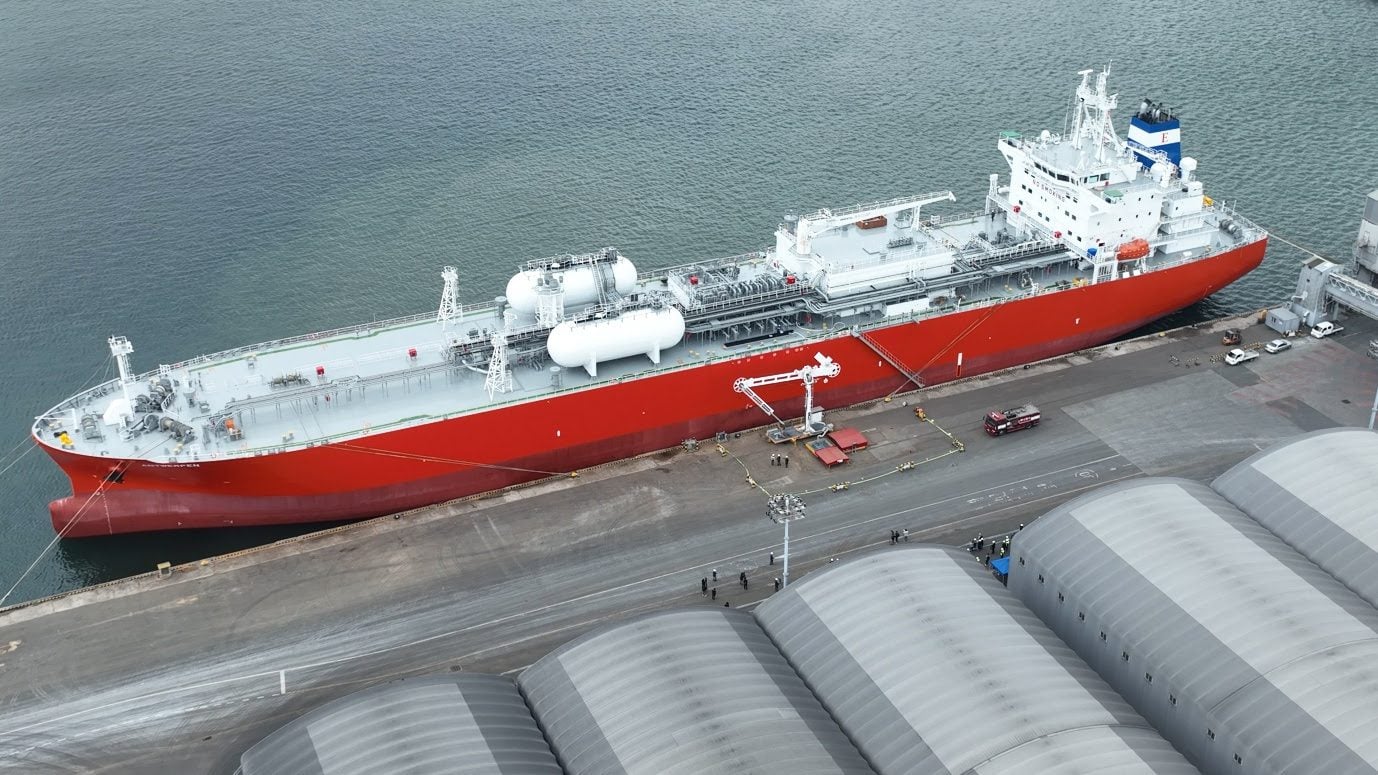
The bunkering operation took place April 23 at Pier 2 of Ulsan Main Port, where approximately 600 metric tons of clean ammonia were supplied to a 45,000-cubic-meter ammonia dual-fuel gas carrier built by HD Hyundai Heavy Industries. The fuel was delivered using a port-to-ship, or PTS, bunkering method by Lotte Fine Chemical, which has been designated as the demonstration operator for sustainable marine fuel supply at the port.
The demonstration adds ammonia to a growing list of alternative fuels tested at Ulsan, which has previously conducted methanol bunkering demonstrations and simultaneous LNG bunkering operations, positioning the port as an early mover in infrastructure for multiple low- and zero-carbon marine fuels.
The development is notable because ammonia, while widely viewed as a potential long-term marine fuel due to its carbon-free combustion profile, remains in an early commercialization stage, with safety, regulation, engine technology and fuel supply networks still evolving. Port infrastructure capable of handling ammonia safely is seen as a critical hurdle to broader adoption.
According to UPA, the milestone followed more than two years of preparation after stakeholders signed a memorandum of understanding in January 2024 to advance ammonia bunkering. The effort brought together Korean Register, Lotte Fine Chemical, HD Hyundai Heavy Industries and HMM, alongside government agencies and emergency response authorities, to address fuel supply logistics, vessel readiness, regulations and safety procedures.
The Ministry of Oceans and Fisheries, the Ulsan Regional Office of Oceans and Fisheries and the Ulsan Fire Department were also involved in overseeing safety and operational readiness for the transfer, according to the port authority.
The demonstration comes as shipowners, fuel suppliers and ports continue to hedge across multiple fuel pathways rather than betting on a single winner in maritime decarbonization. While LNG and methanol have moved further into commercial deployment, ammonia is increasingly attracting attention for deep-sea applications, particularly as engine manufacturers and shipbuilders push forward with ammonia-capable vessel designs.
“This world-first ammonia bunkering operation was made possible by Ulsan Port’s advanced energy infrastructure and accumulated bunkering expertise,” UPA President Byun Jae-young said in a statement. “It is a meaningful milestone that demonstrates the port’s readiness to support a range of major sustainable marine fuels.”
“We are committed to spearheading sustainable marine fuel bunkering and strengthening Ulsan Port’s position as a trusted global hub,” he added.

 Join The Club