Russia has taken a major step towards commissioning the second production line of the country’s flagship liquefied natural gas project, Arctic LNG 2. Despite ongoing U.S. sanctions to curtail the flow of material from Chinese yards, the first sections of a 650 MW power plant arrived in the Russian Arctic over the weekend.
The delivery of the power station is a significant blow to U.S. efforts to stop the expansion of Russian LNG production capacity. The completion of Train 2 with the aid of the Chinese plant potentially puts another 6.6 mtpa of Russian LNG into play.
U.S. efforts have, however, thus far been effective in stopping deliveries from the project. Arctic LNG 2 has been unable to find buyers for supercooled gas produced by Train 1 over the summer.
The late-season delivery of the massive power station aboard two Chinese heavy lift vessels turned into a race against time before winter sea ice closed off the Arctic route. A nuclear icebreaker, Sibir, escorted the convoy for around 750 nautical miles.
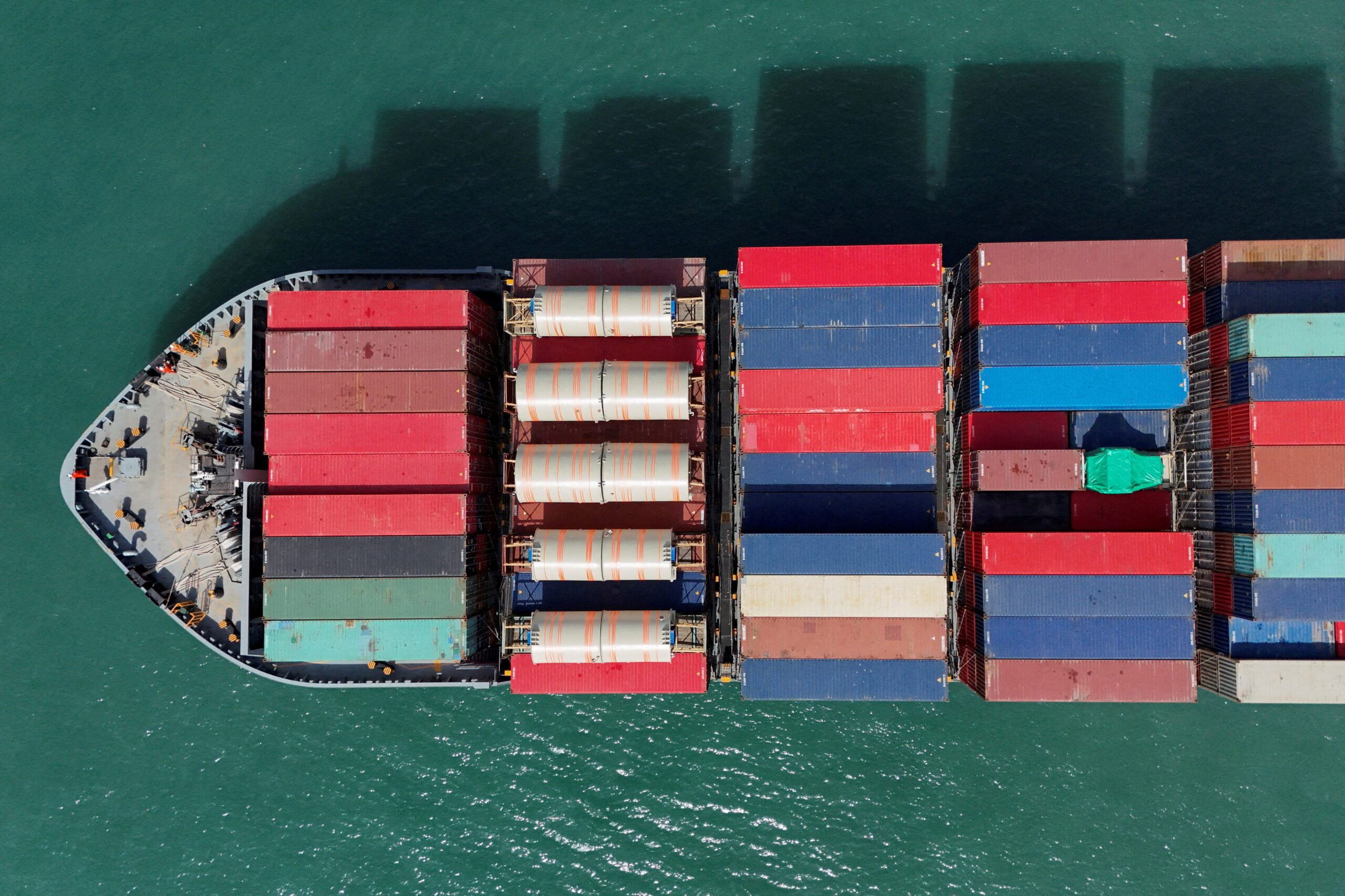
Satellite images and AIS data show the two vessels docking adjacent to the 6.6mtpa second train of the plant offloading the 5000-7000 tons modules. Ocean 28 and Nan Feng Zhi Xing carried a massive substation and the first of four large power-generation units.
The substation constructed for Train 2 of Arctic LNG 2 at Wison New Energies’ Zhoushan yard. (Source: gCaptain)
A second unit is set to arrive aboard the Hunter Star next week. Two additional units remain at Wison New Energies’ Zhoushan yard, presumably awaiting delivery during next year’s shipping season. In its final configuration the power plant will contain 24 Harbin Guanghan CGT30 turbines for a total power generation capacity of around 650 MW, documents seen by gCaptain confirm.
The construction of a Chinese onshore power plant became necessary after supplier Baker Hughes ceased delivery of American-made turbines following U.S. sanctions. Train 2 of Arctic LNG 2 was converted to be electrically-driven and has a total power demand of between 640-785 MW, depending on the time of year, sources tell gCaptain.
AIS tracking data show both vessels backed up against the dock, presumably to offload the substation and power generation units. (Source: Shipatlas)
The U.S. has sanctioned a number of heavy lift vessels and one Chinese construction yard, PJOE, but has thus far shied away from designating Wison New Energies. The company also built four pipe rack modules for Train 3 of Arctic LNG 2. It attempted a delivery of two modules earlier this summer before recalling the vessel likely over fear of sanctions.
Those modules remain aboard the heavy lift carrier, Wei Xiao Tian Shi, currently in the South China Sea. Sources tell gCaptain that the successful delivery of the power plant units for Train 2 without any future sanctions action may embolden Wison to reattempt a delivery of modules for Train 3 this winter. Those modules are bound for Novatek’s Belokamenka construction yard in the ice-free waters near Murmansk allowing for year-round access.
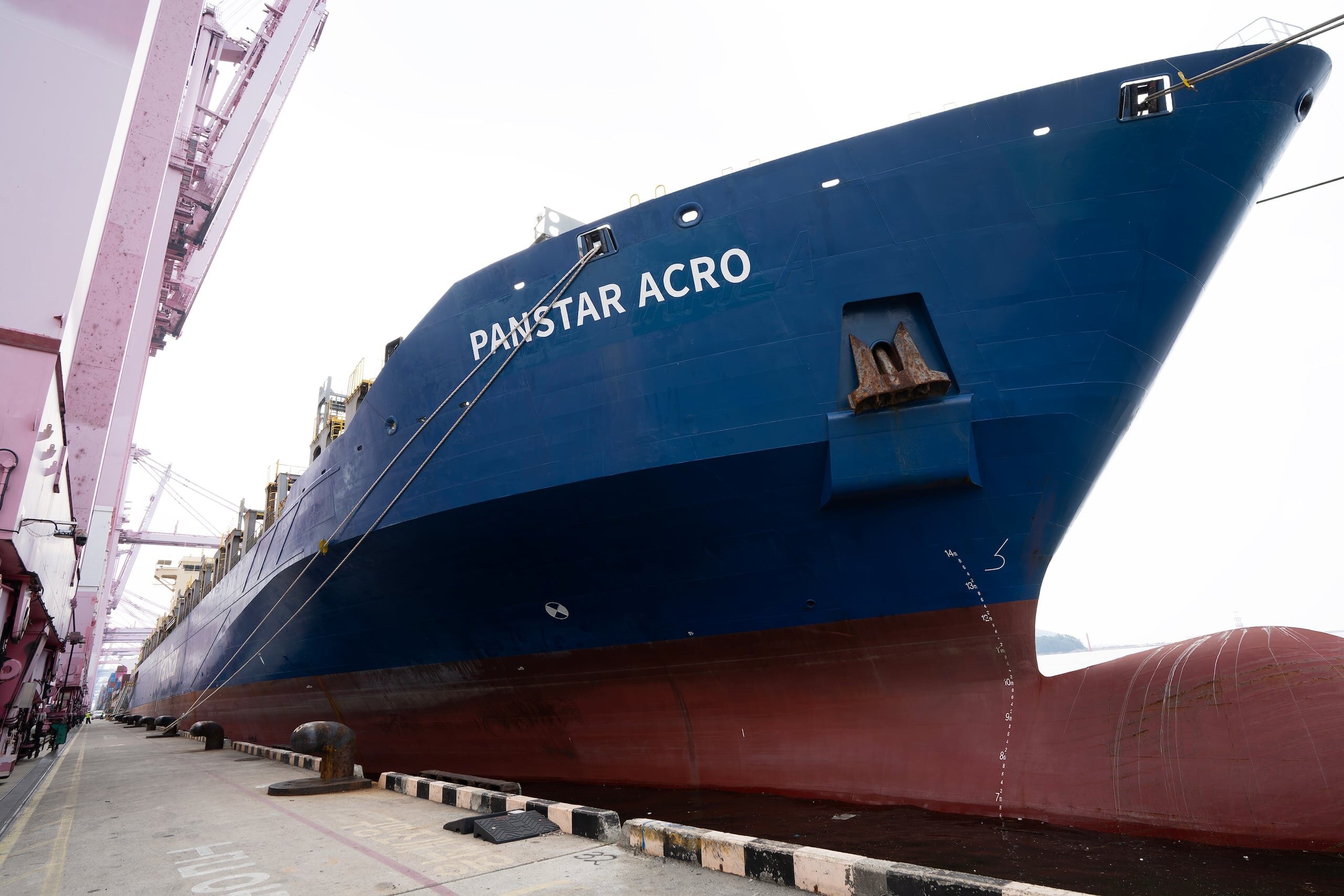
South Korea’s first container ship trial along the Northern Sea Route exposed the challenges of Arctic navigation, with crew members describing a near-abandonment decision after drifting ice blocked their path. The operator is now considering selling the vessel after a single round trip, reportedly negotiating a potential sale back to its former owner, HMM.
The UK is moving ahead with a £90 million investment in autonomous underwater systems, advanced sensors and artificial intelligence to strengthen the Royal Navy’s ability to track Russian submarines and...

 Join The Club