
 Join The Club



News
How the Houthis are Helping Iran Turn Saudi Arabia Into a Pressure Point
The Houthi attacks on Saudi Arabia are about more than Yemen.
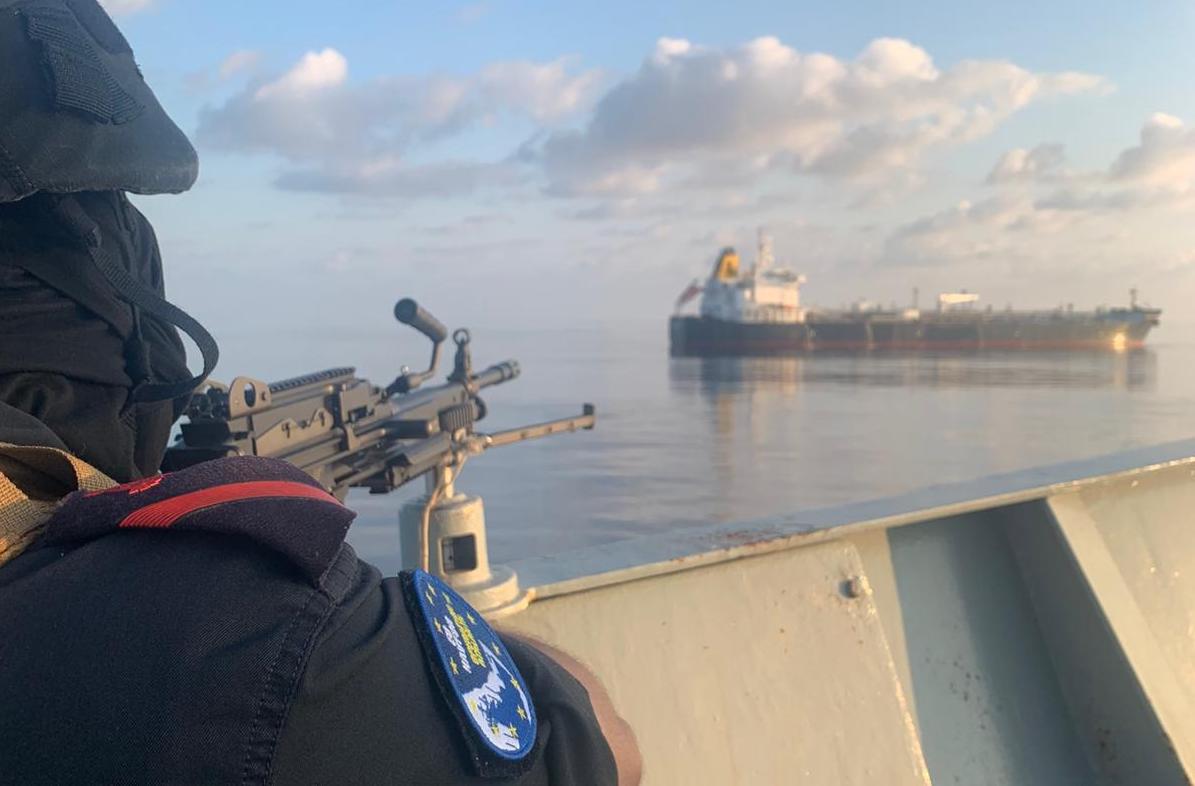
EUNAVFOR Operation ATALANTA photo of the Hellas Aphrodite liberation in the Indian Ocean, November 7, 2025.
U.S. forces disabled a commercial vessel in the Gulf of Oman on Thursday after its crew allegedly ignored repeated warnings and continued toward an Iranian port in violation of the U.S.-enforced maritime blockade, underscoring that enforcement actions remain firmly in place despite signs of diplomatic progress between Washington and Tehran.
In a statement released Saturday, U.S. Central Command (CENTCOM) said a U.S. aircraft fired a Hellfire missile into the engine room of the Gambia-flagged cargo vessel Lian Star on May 29 after the ship failed to comply with more than 20 warnings from U.S. forces.
“CENTCOM forces observed M/V Lian Star transiting international waters toward an Iranian port on the Gulf of Oman and issued more than 20 warnings while informing the vessel it was in violation of the U.S. blockade,” the command said.
The strike disabled the vessel and prevented it from continuing its voyage, according to CENTCOM. No information was immediately released regarding injuries, cargo, ownership, or the vessel’s intended destination.
The incident occurred just one day after President Donald Trump suggested a potential breakthrough in negotiations aimed at reopening the Strait of Hormuz.
In a Truth Social post Friday, Trump said the Strait “must be immediately open, no tolls, for unrestricted shipping traffic, in both directions” as part of a proposed agreement with Iran. Trump also said vessels stranded in the region due to the U.S. naval blockade “may start the process of heading home.”
The comments raised hopes that the three-month maritime crisis disrupting global energy markets could be approaching a resolution. However, the strike against Lian Star highlights that blockade enforcement remains active while negotiations continue.
CENTCOM said U.S. forces have now disabled five commercial vessels and redirected 116 others during blockade operations.
The strike comes just one day after maritime security authorities issued unusually direct warnings to commercial shipping operating near the Strait of Hormuz.
In advisories released this week through the Joint Maritime Information Center (JMIC), U.S. Naval Forces Central Command warned that vessels failing to comply with military instructions could be treated as imminent threats and subjected to “proportionate measures of self-defense.”
The notices further warned that blockade enforcement actions could include “disabling and destructive fires” against vessels that fail to demonstrate immediate compliance with blockading forces.
JMIC Advisory Note 006-26 reiterated that all traffic inbound to or outbound from Iranian ports remains subject to blockade enforcement throughout the Arabian Gulf, Strait of Hormuz, Gulf of Oman, and North Arabian Sea. The advisory also warned that vessels participating in ship-to-ship transfers intended to circumvent the blockade could be considered in violation.
For shipowners and charterers watching negotiations closely, the incident also serves as a reminder that any eventual political agreement may not immediately restore confidence in the region. Industry groups have repeatedly warned that commercial operators will likely require verified mine-clearance operations, stable security conditions, and clarity regarding enforcement measures before normal traffic resumes through the Strait of Hormuz.
For now, despite signs of diplomatic progress, the U.S. blockade remains in force—and vessels attempting to enter Iranian ports continue to face the risk of military intervention.

Sign up for gCaptain’s newsletter and never miss an update
Essential maritime and offshore news, insights, and updates delivered daily straight to your inbox
The Houthi attacks on Saudi Arabia are about more than Yemen.
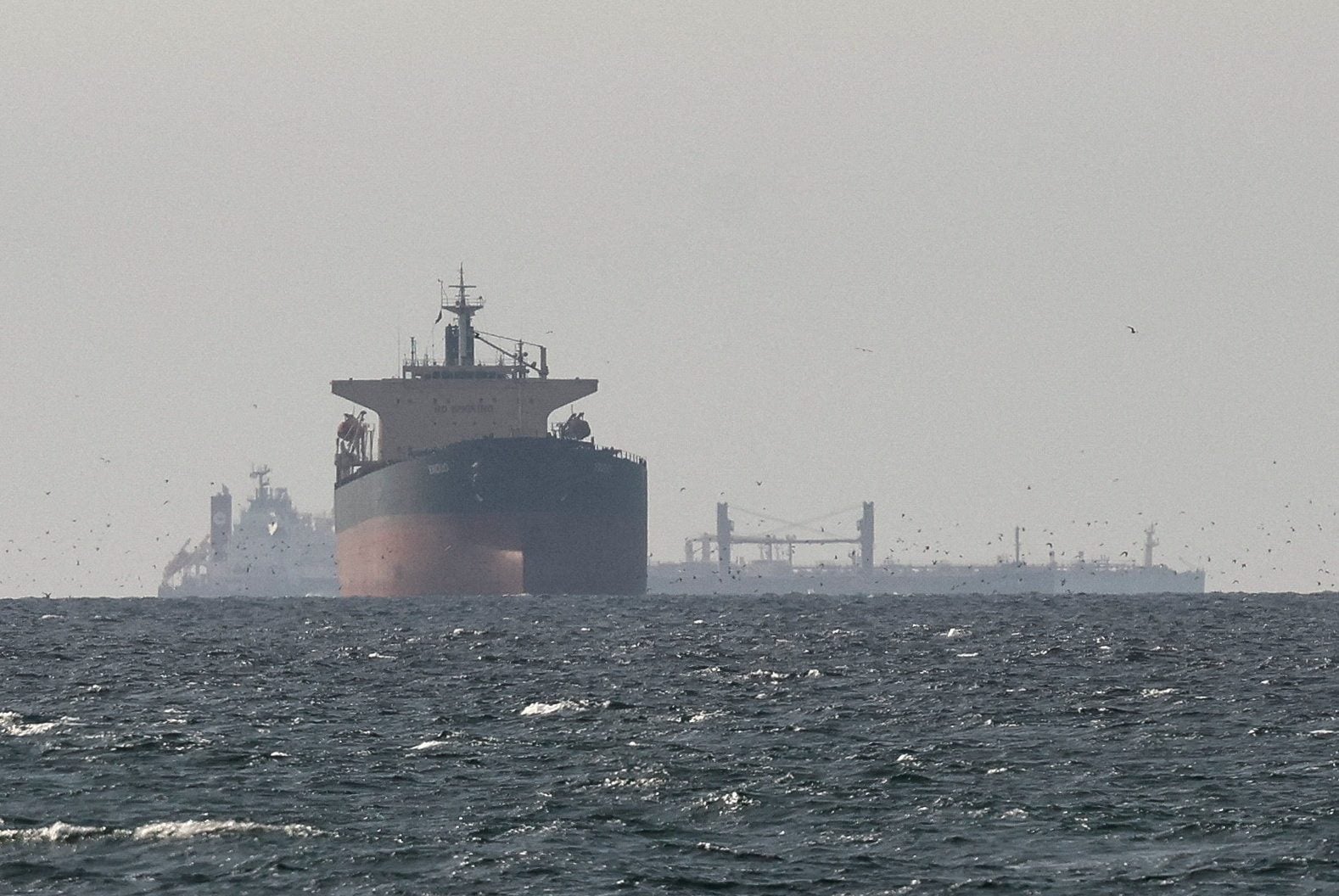
When the oil supertanker Esteem Explorer sails from the United States to Japan in late November, loaded with about 2 million barrels of crude, the journey will cost $81 million. The same journey would have cost $9.1 million last year, on average.
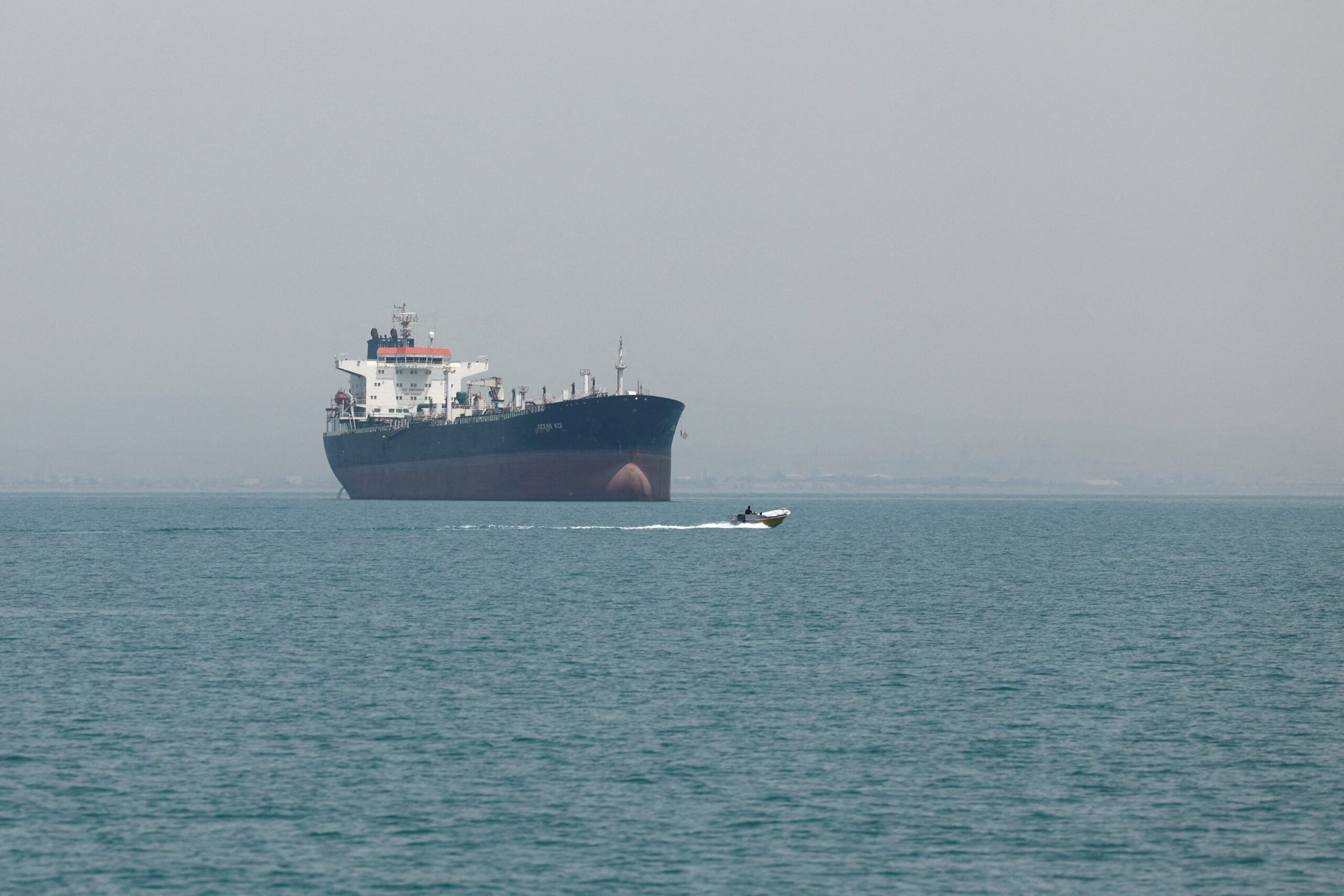
Shipowners are facing an increasingly fragmented fuel market as disruptions triggered by the Middle East conflict raise concerns about the availability and quality of supply.
Subscribe to gCaptain Daily and stay informed with the latest global maritime and offshore news



Essential news coupled with the finest maritime content sourced from across the globe.
Sign Up
