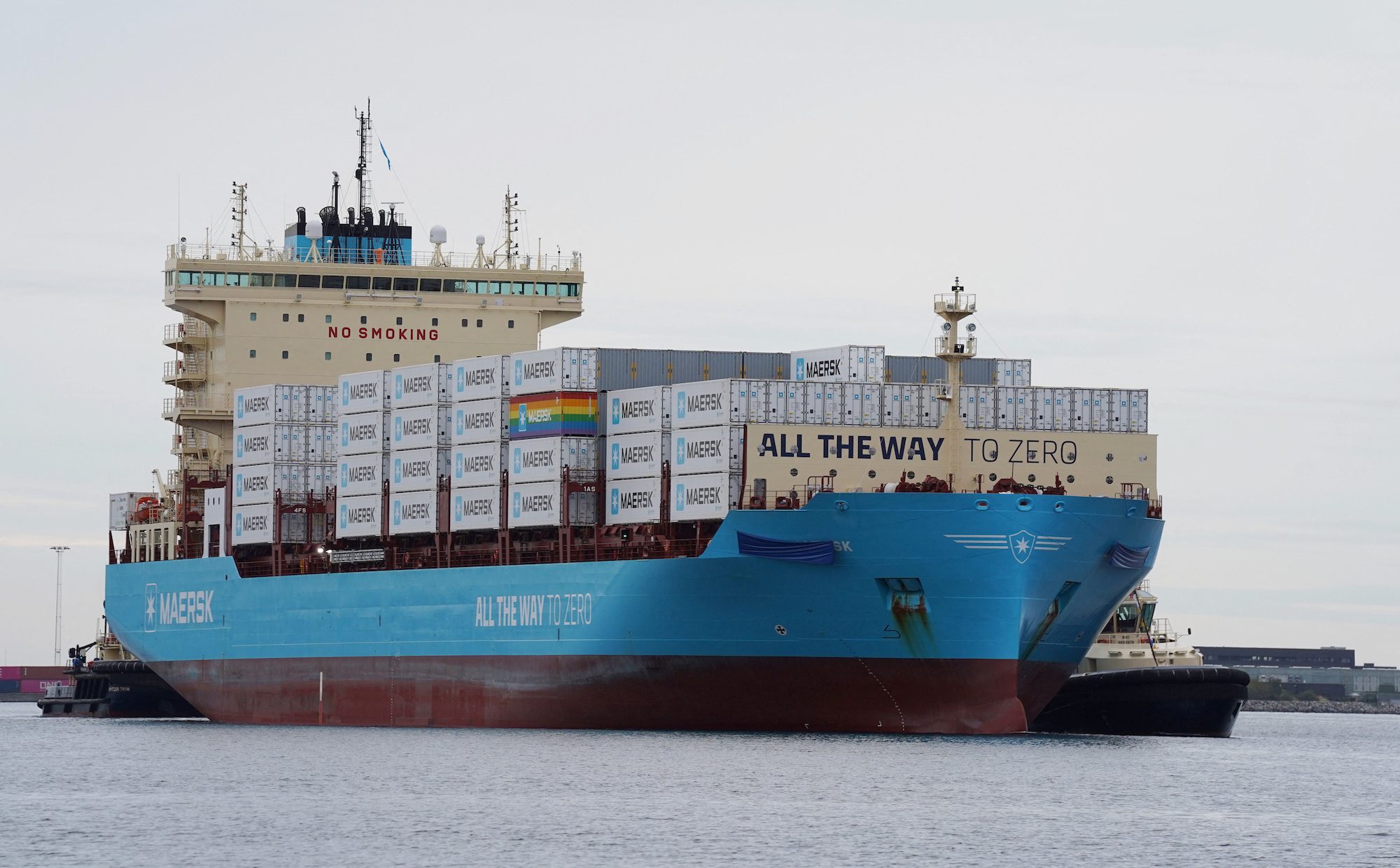
The global liner shipping industry’s investment in alternative-fueled vessels continues to accelerate, with the combined fleet of dual-fuel containerships and vehicle carriers surpassing 1,200 vessels delivered or on order, according to new data released by the World Shipping Council.
The industry group’s latest Dual-Fuel Fleet Dashboard shows 440 dual-fuel vessels now operating worldwide as of March 2026, marking a 65% increase from a year earlier. Another 764 ships remain on order, bringing the combined delivered and contracted fleet to 1,204 vessels representing more than $180 billion in private-sector investment.
The latest figures highlight how container shipping continues leading the maritime industry’s energy transition despite lingering uncertainty surrounding future fuel availability, infrastructure buildout, and global emissions regulations.
According to the WSC, 78% of container ship orders are now dual-fuel capable, while vehicle carriers are moving even faster, with 94% of vessels on order designed to operate on alternative fuels. Across the broader global orderbook outside those segments, only 17% of ships on order are dual-fuel capable.
“These vessels are long-term investments built with flexibility in mind,” said Joe Kramek. “Ships built today will operate for decades, and the ability to operate on different fuel pathways helps reduce risk, strengthen energy security, and support more resilient global supply chains.”
The updated numbers build on momentum that accelerated through 2025 as container shipping emerged as one of the few major maritime sectors still aggressively ordering alternative-fuel tonnage despite broader weakness in global ship contracting activity.
Industry investment has remained heavily concentrated in LNG-capable vessels, particularly among container lines, though methanol-capable ships continue gaining market share as carriers position fleets for proposed International Maritime Organization emissions rules and increasing pressure from cargo owners to reduce supply-chain emissions.
The surge in dual-fuel ordering comes as the shipping industry faces mounting pressure to decarbonize while still confronting major uncertainty over which fuels will ultimately dominate the sector’s long-term transition away from conventional bunker fuel.
Many of the vessels now entering service are designed to operate initially on LNG or conventional marine fuel while maintaining the flexibility to transition toward renewable or near-zero carbon fuels as infrastructure and fuel availability improve over the coming decades.
The figures also underscore the widening divide emerging across global shipping markets. While liner operators and vehicle carrier companies continue committing heavily to dual-fuel tonnage, other sectors including tankers and bulk carriers have remained more cautious amid volatile freight markets, uncertain fuel economics, and unresolved regulatory questions.
For now, container shipping remains the clear driver of large-scale maritime decarbonization investment.

 Join The Club