U.S. Senators Mark Kelly (D-Ariz.) and Elizabeth Warren (D-Mass.) are pressing the Trump administration to reinstate suspended port fees on Chinese-linked vessels, arguing the measures are critical to rebuilding America’s shipbuilding industry and reducing reliance on China’s maritime sector.
In a letter to U.S. Trade Representative Jamieson Greer, the senators called for the immediate restoration of Section 301 fees and restrictions that were suspended last November as part of a trade agreement between President Donald Trump and Chinese President Xi Jinping.
“Section 301 port fees are critical to revitalizing U.S. shipbuilding,” the senators wrote. “Presidents of both parties have long recognized the serious threat that Chinese shipbuilding dominance poses to the United States.”
The latest push comes as lawmakers from both parties increasingly frame shipbuilding capacity as a national security issue amid ongoing global supply chain disruptions and the continuing conflict involving Iran.
Kelly and Warren argued that China’s rise from producing less than 5% of the world’s commercial ships in 2000 to more than half of global commercial vessel production today has left the United States dangerously dependent on foreign shipyards. They noted that U.S. shipyards now account for just 0.1% of global commercial ship production.
“The dire consequences of this consolidation have only become more evident since President Trump launched his war in Iran,” the senators wrote, citing disruptions to global supply chains and growing reliance on domestic energy transportation. “A strong domestic shipping industry is essential for our national security, especially in moments of global conflict.”
The letter revives debate over one of the most consequential maritime trade measures proposed by the Trump administration.
The Section 301 fees stem from a U.S. Trade Representative investigation launched during the Biden administration into China’s targeting of the maritime, logistics, and shipbuilding sectors. The investigation concluded that Chinese industrial policies and subsidies distorted global competition and undermined supply chain resilience.
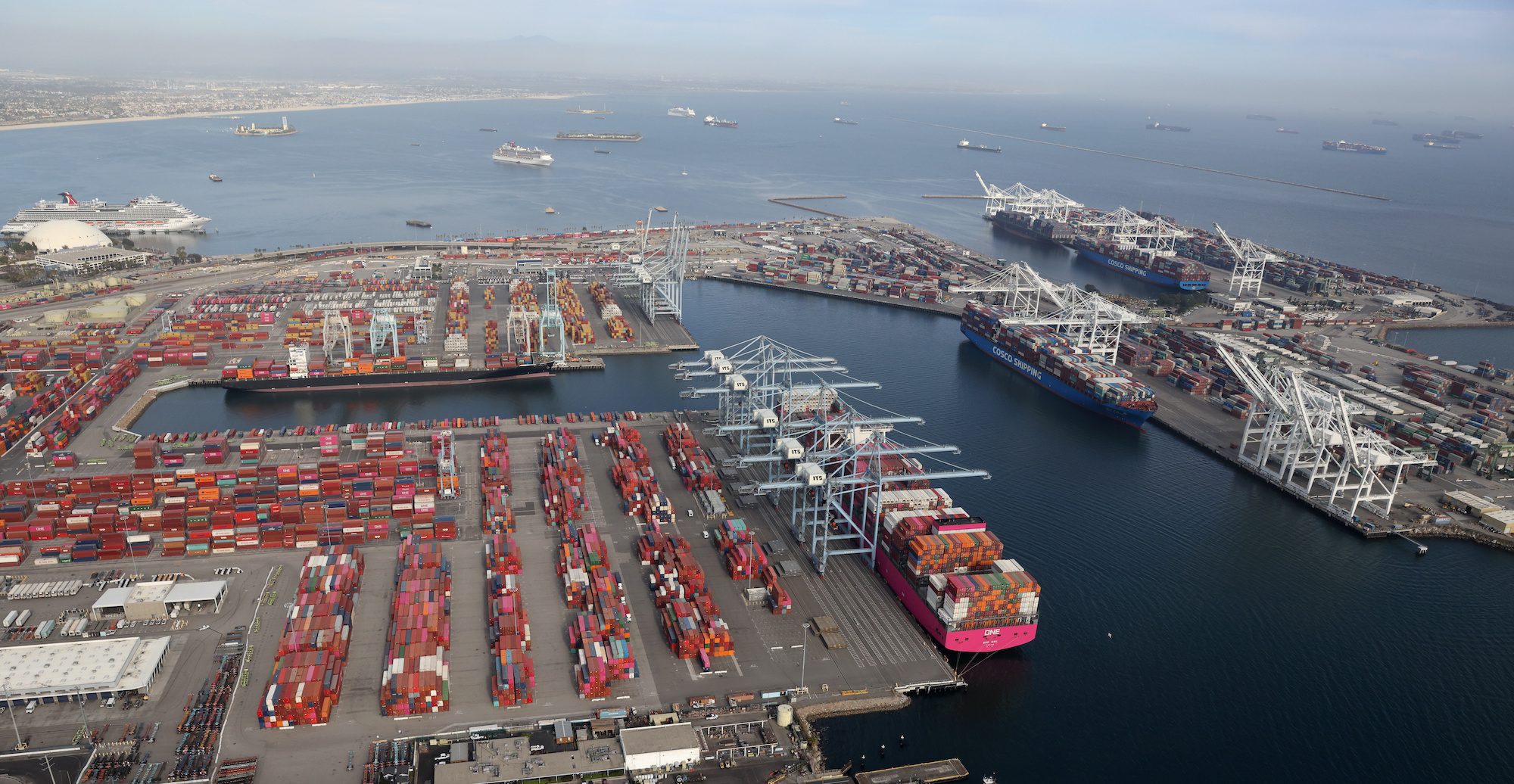
Following that investigation, the Trump administration proposed fees on Chinese-owned, operated, and built vessels calling at U.S. ports. The measures were scheduled to take effect in October 2025 and were widely viewed as a cornerstone of the administration’s broader effort to rebuild American maritime capacity.
According to Kelly and Warren, the prospect of the fees had an immediate impact on the global shipbuilding market. They cited industry data showing orders at Chinese shipyards fell 23.5% during the first nine months of 2025 following the announcement.
However, the administration suspended the fees in November 2025 for one year after negotiations with Beijing. The agreement also paused Chinese countermeasures against U.S.-linked shipping and formed part of a broader trade deal reached during a Trump-Xi summit. The suspension is scheduled to remain in effect until November 9, 2026.
The senators contend the pause has undermined efforts to rebuild U.S. shipbuilding. Their letter cites a subsequent increase in Chinese shipyard order backlogs and points to a major Maersk newbuilding order placed in China shortly after the suspension was announced.
The lawmakers also questioned whether the administration secured meaningful concessions from Beijing in exchange for delaying the fees.
Among eight questions posed to Greer, Kelly and Warren asked whether the administration intends to reinstate the fees, how many U.S. shipyard jobs may have been lost because of the delay, whether China offered concessions beyond removing retaliatory measures, and how the administration plans to fund its proposed Maritime Security Trust Fund without revenue generated by the port fees.
The senators are requesting responses by June 21.
The letter comes as bipartisan support continues to build around the SHIPS for America Act, legislation introduced by Kelly and Senator Todd Young (R-Ind.) that seeks to revitalize U.S. commercial shipbuilding, expand the U.S.-flag fleet, and strengthen the nation’s maritime workforce. Warren is a co-sponsor of the legislation.
The renewed push for Section 301 fees also comes as the Trump administration faces criticism from maritime labor groups and some lawmakers over its continued use of Jones Act waivers during the ongoing Middle East crisis. Labor organizations argue the waivers undermine the administration’s stated goal of restoring U.S. maritime strength by allowing foreign-flag vessels to carry cargo between U.S. ports at a time when Washington is simultaneously promoting policies aimed at expanding domestic shipbuilding and the U.S.-flag fleet.
Critics contend the contradiction raises broader questions about whether the administration’s maritime industrial strategy is being consistently applied across trade, shipping, and national security policy.
The Trump administration has repeatedly emphasized the need to restore American maritime capacity through its “Restoring America’s Maritime Dominance” executive order and accompanying Maritime Action Plan. Whether the administration ultimately reinstates the suspended Section 301 measures could become a key test of how aggressively Washington intends to challenge China’s dominance of global shipbuilding.
Editorial Standards · Corrections · About gCaptain

 Join The Club