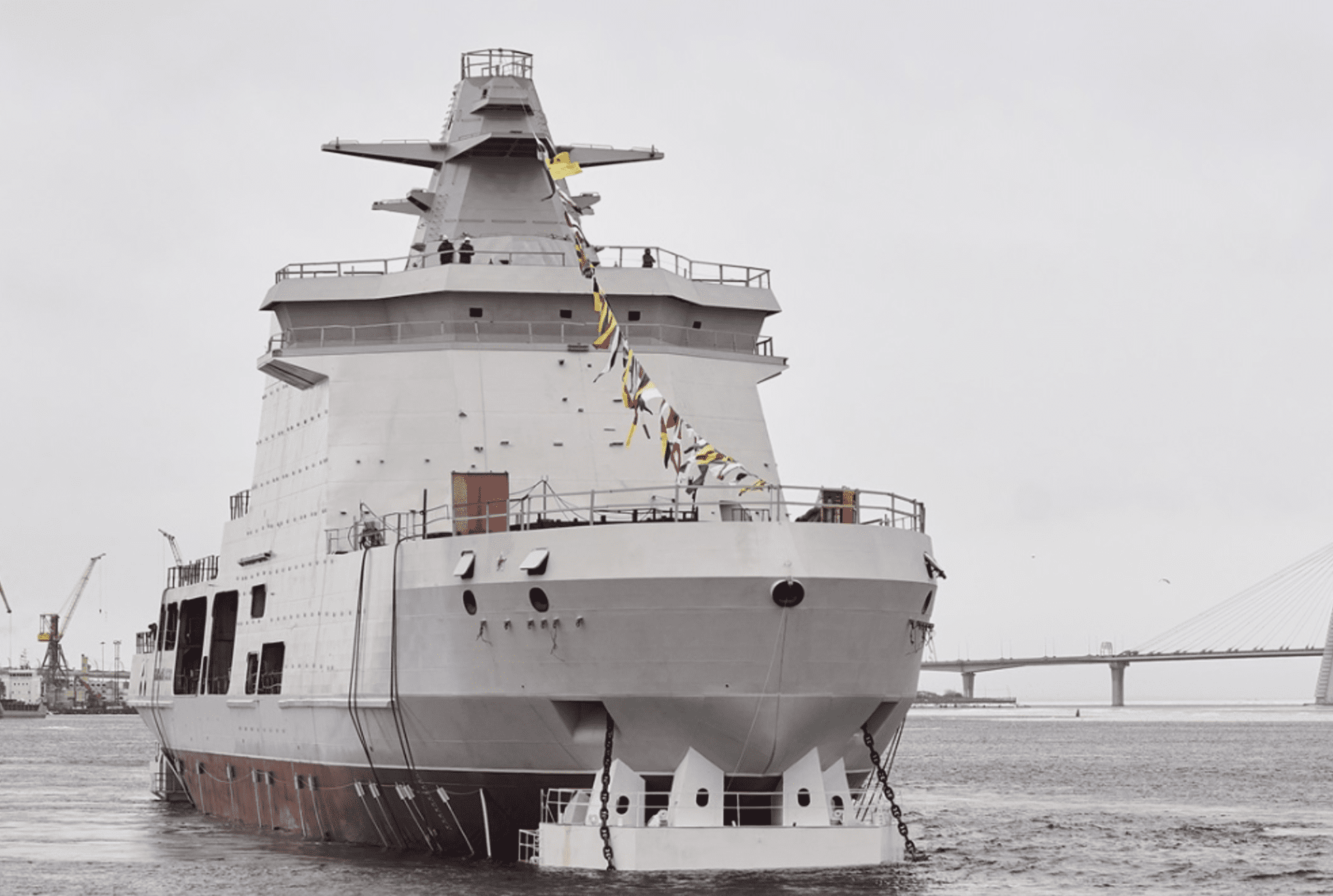
By Malte Humpert (gCaptain) – The Admiralty Shipyards in Saint Petersburg launched the second armed Arctic icebreaker for Russia’s Navy. Upon commissioning the Nikolay Zubov will become part of the country’s Northern Fleet Kola division. The Arc7 ice-class will allow the patrol ship to break through up to 1.7 meters of ice ensuring year-round access to Russia’s Arctic waters.
The launch comes just months after the initial vessel of the type, Ivan Papanin, headed for sea trials. The vessels are expected to patrol the waters of Russia’s main Arctic shipping lanes and the Bering Strait.
“These ships will form the basis of our group of surface forces in the Arctic zone and to protect the Northern Sea Route,” the commander in Chief of the Russian Navy, Admiral Alexander Moiseev, stated during the launch ceremony.
Two additional hulls – one launched and one under construction – are designated for service with the units of FSB Border Service. This fall patrol vessels of the Border Service operated within miles of Alaska’s coastline during a joint Russian-Chinese patrol above the Arctic Circle.
Project 23350 patrol icebreaker Ivan Papanin. (Source: Alekc2m under CC BY-SA 4.0)
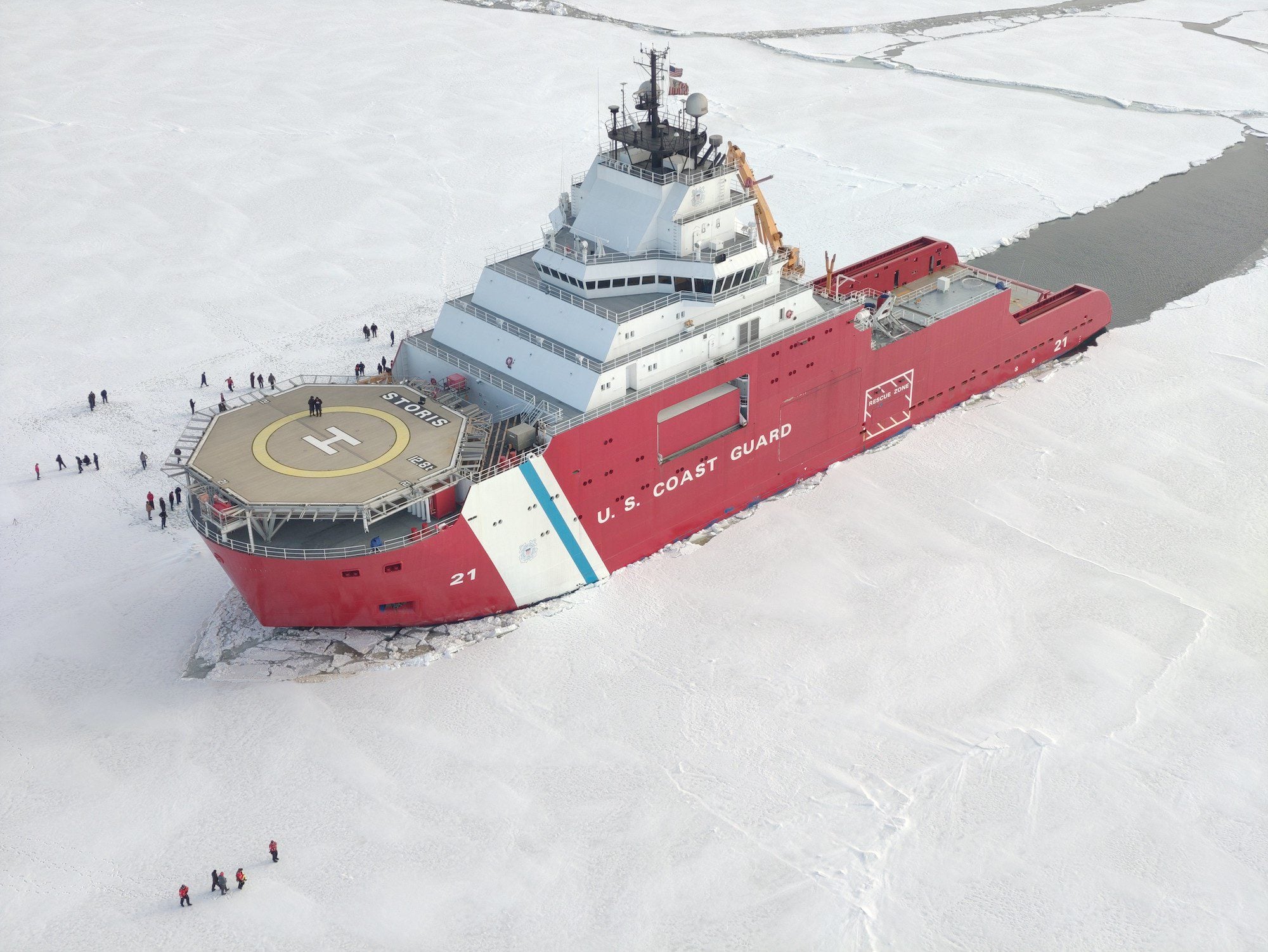
Work on the Project 23350 icebreakers began in 2017. With a displacement of 8,500 tonnes the patrol ships, also called ‘combat icebreakers’ by Russia’s Ministry of Defense, are a little less than half as large as the upcoming U.S. Coast Guard Polar Security Cutter, but will carry more armament. The Russian patrol icebreakers are designed to carry up to eight Kalibr-type cruise missiles or Kh-35 anti-ship missiles in addition to a 76.2mm naval gun.
This past year has seen significant activity surrounding icebreaking vessels, across both Russia and China. Over the weekend China’s Guangzhou Shipyard International Co. Ltd. delivered the 10,000 tonne-displacement research icebreaker Tan Suo San Hao (Exploration No. 3). In May the smaller 5,600 tonne icebreaking research vessel Ji Di entered into service.
Over the course of the past twelve months, Russia sent the fourth nuclear icebreaker of the new Arktika-class on sea trials, launched a fifth, and laid down a sixth vessel. These vessels will serve along the Northern Sea Route for Rosatomflot. The Russian Navy also commissioned icebreaker Evpatiy Kolovrat for its Pacific Fleet. These come in addition to the completion and launch of the two combat icebreakers.
KYIV, May 23 (Reuters) – The Ukrainian military said on Saturday it had struck Russia’s Sheskharis oil terminal – one of the largest on the Black Sea – and the nearby Grushova oil depot....
The U.S. Coast Guard’s newest polar icebreaker has returned to Seattle after a 36-day deployment to the Bering Sea, marking an early operational test for a cutter expected to play...
Leaders from two Nordic states expressed skepticism over ambitions to seize vessels linked to Russia’s so-called shadow fleet, signaling that proposals among allies to tighten restrictions on the Kremlin’s war economy face limits.
February 19, 2026
Total Views: 869
Get The Industry’s Go-To News
Subscribe to gCaptain Daily and stay informed with the latest global maritime and offshore news
— just like 105,559 professionals
Secure Your Spot
on the gCaptain Crew
Stay informed with the latest maritime and offshore news, delivered daily straight to your inbox
— trusted by our 105,559 members
Your Gateway to the Maritime World!
Essential news coupled with the finest maritime content sourced from across the globe.

 Join The Club