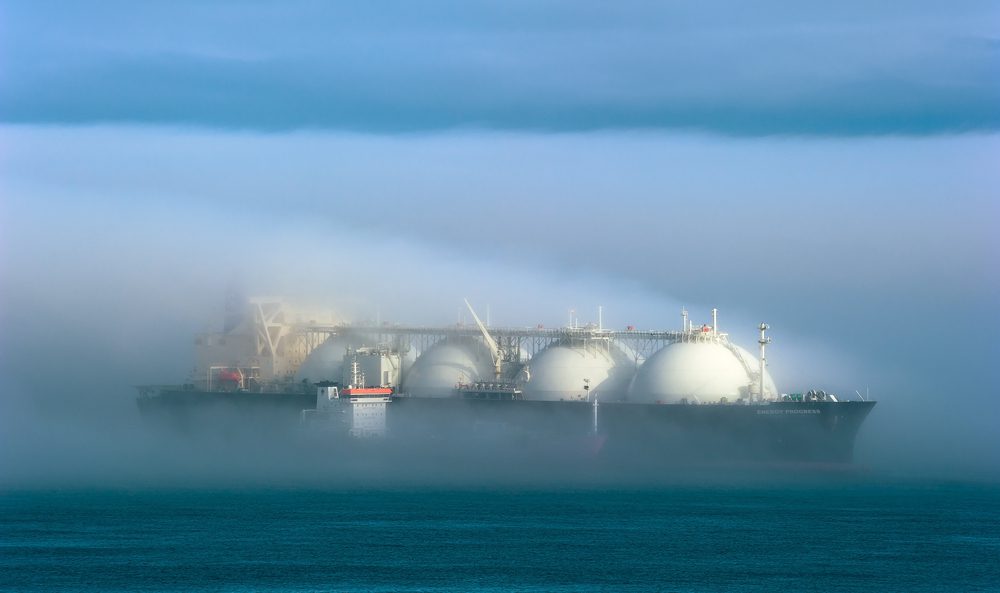
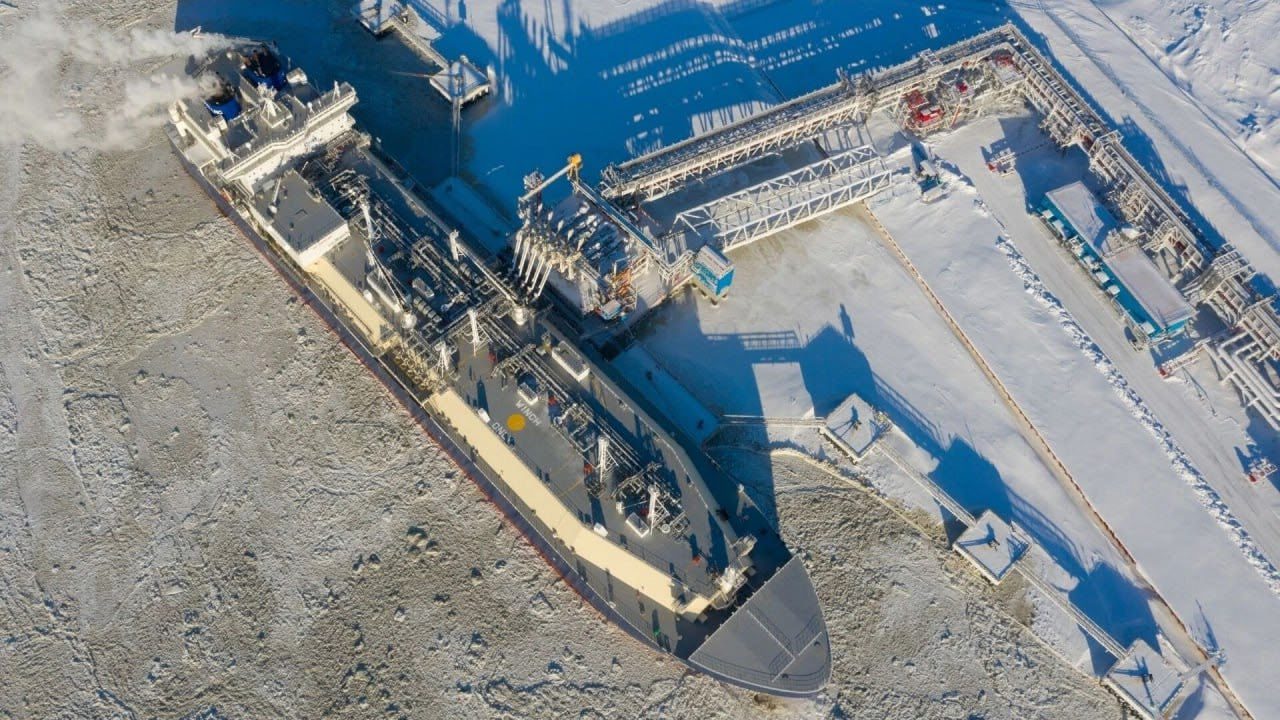
A liquefied natural gas tanker carrying sanctioned Russian gas has reappeared near China’s Hainan Island three weeks after a dark STS transfer. It is likely bound for the nearby Beihai terminal. The vessel received its cargo from a Chinese LNG carrier in the first-ever ship-to-ship transfer of sanctioned Russian gas.
The transfer occurred on October 18 involving the 170,471-cbm Perle and the 145,000-cbm CCH Gas. Both vessels attempted to hide their activity by spoofing their AIS signals. Satellite imagery showed the vessels side to side around 50 nautical miles off Malaysia’s coast.
While CCH Gas continues to send out a false AIS signal, Perle has since reengaged its transponder and made its way to Salalah, Oman.
Following the transfer the vessels escaped further scrutiny due to cloudy weather and limited satellite coverage. CCH Gas has now reappeared off the coast of Hainan Island, satellite images taken by Copernicus Sentinel-2 on November 9 reveal. The gas carrier can be seen steaming west toward the Gulf of Tonkin and the Beihai terminal.
Locations of CCH Gas and Perle during the STS on October 18 and CCH Gas on November 9. (Source: Shipatlas and Sentinel 2)
CCH Gas is carrying supercooled gas from Russia’s sanctioned Baltic Portovaya plant. A successful delivery by the vessel would be a sign of China’s willingness to expand imports at Beihai beyond the Arctic LNG 2 project. The U.S. sanctioned the Portovaya facility on January 10, 2025.
The arrival of Russian cargoes have already resulted in downward pressure on regional prices. China is receiving up to 40 percent discounts on Arctic LNG 2 deliveries. The landed cost of Arctic cargoes at Beihai is said to be around $7.00/MMBtu, substantially below existing spot rates.
It remains to be seen if Beihai terminal can continue its role as a regional price-setter during the upcoming winter season. Due to a shortage of ice-class LNG carriers, Russian gas company Novatek will likely be forced to partially mothball the Arctic project for the next 6-8 months.
Pickups at the plant have begun to slow down in recent days as conventional gas tankers can no longer use the Arctic shortcut and are being routed via the Suez Canal.
Indian refiners have cut back Russian crude purchases for November delivery, as rising competition from China pushes up prices at a time when buyers can tap alternative shipments from the Middle East.
South Korea's presidential office on Wednesday dismissed a Ukrainian report that Russia has imported petroleum products from South Korean ports, calling the accusation inappropriate.
October 7, 2026
Total Views: 817
Get The Industry’s Go-To News
Subscribe to gCaptain Daily and stay informed with the latest global maritime and offshore news
— just like 106,659 professionals
Secure Your Spot
on the gCaptain Crew
Stay informed with the latest maritime and offshore news, delivered daily straight to your inbox
— trusted by our 106,659 members
Your Gateway to the Maritime World!
Essential news coupled with the finest maritime content sourced from across the globe.

 Join The Club