By Prejula Prem and Julian Lee (Bloomberg) — The Strait of Hormuz remains largely shuttered, with Iran-linked vessels dominating what little traffic is moving across the waterway. An Iraqi supertanker’s rare passage has come to a halt after a retreat from the US naval blockade line.
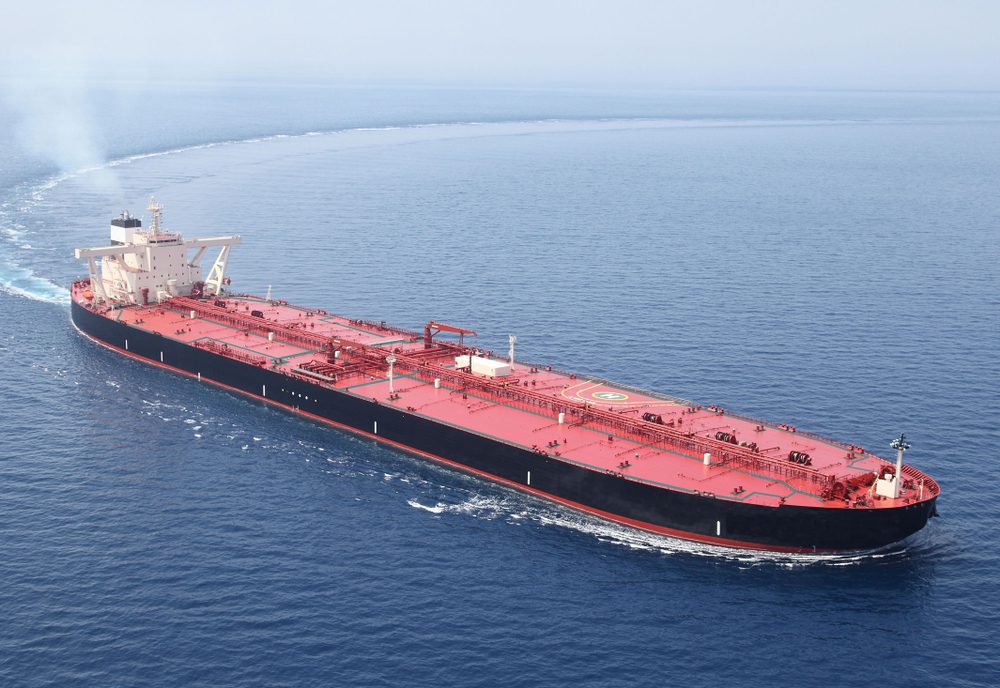
The Iraqi oil-loaded Agios Fanourios I, which cleared the strait at the weekend, is retracing its route after halting a journey to Vietnam on Monday as it approached the US position. The tanker’s unexplained U-turn underscores the risks to third-party shipping as Washington and Tehran enforce rival restrictions across the strait.
Meanwhile, a Qatari liquefied natural gas carrier, the Mihzem, appears to have cleared the strait, marking the only transit on Tuesday morning. Now headed to Pakistan, the tanker on Monday had demonstrated caution by turning back briefly and disabling its transponder. A similar shipment successfully transited the chokepoint over the weekend.
Hormuz Transits
Monday’s observable commercial transits in both directions were limited to six Iranian vessels and a bulker, according to ship-tracking data compiled by Bloomberg.
Outbound traffic included an Iranian liquefied petroleum gas carrier, two small fuel tankers, and a bulker. A regional cargo ship followed the same route out of the waterway.
Authorities in Qatar have instructed ships near their main LNG export facility to disable tracking systems as a safety measure, further muddying visibility. The LPG tanker Xin Ming Long went silent Monday while awaiting orders, with its transit status currently unconfirmed.
Diplomatic signals offer little reassurance. US President Donald Trump has dismissed Iran’s latest offer and signaled that a ceasefire is precarious, while Iran has deployed small submarines described as an invisible guardians to secure its position in the strait.
In a post on X, US Central Command confirmed that the military has diverted 62 commercial ships since the blockade on Iran took effect.
Meanwhile, inbound commercial transits on Monday included two Iranian bulkers and an oil product tanker. Two smaller bitumen carriers also navigated the route.
Widespread AIS signal spoofing has clouded the picture, making independent verification of ship traffic increasingly difficult.
The US naval presence may also be distorting the picture. Iran-linked vessels entering or leaving the Gulf could be switching off AIS signals to avoid detection, making it harder to track flows in real time. As a result, transit counts may later be revised upward when ships reappear further from high-risk waters.
Even before the US barred movement to and from Iranian ports, it was common for Iran-linked vessels to go dark when approaching Hormuz. Signals were often not restored until well into the Strait of Malacca — around 13 days’ sailing from Iran’s Kharg Island.
NOTES:
Because vessels can move without transmitting their location until they’re well away from Hormuz, automated positioning signals were compiled over a large area covering the Gulf of Oman, the Arabian Sea and the Red Sea to detect those that may have departed or entered the Persian Gulf.
When potential transits are identified, signal histories are examined to determine whether the movement appears genuine or is the result of spoofing — where electronic interference can falsify the apparent position of a ship.
Some transits may not have been detected if vessels’ transponders haven’t been switched back on. Iran-linked oil tankers often steam from the Persian Gulf without broadcasting signals until they reach the Strait of Malacca about 10 days after passing Fujairah in the UAE. Other ships may be adopting similar tactics and won’t show up on tracking screens for many days.
This tracker will be published during heightened tensions involving Iran, and aims to capture traffic for all classes of commercial shipping.
© 2026 Bloomberg L.P.

 Join The Club