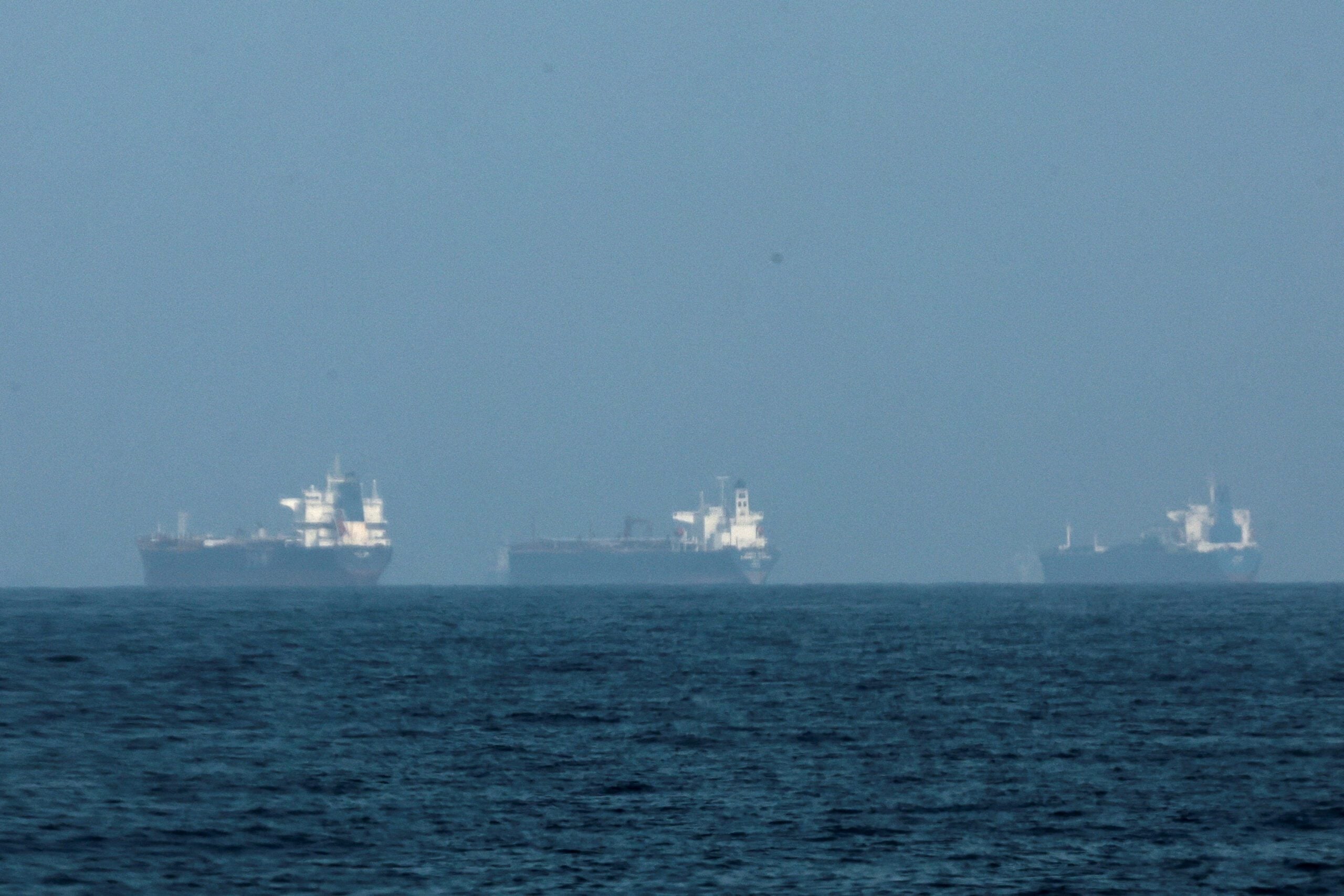
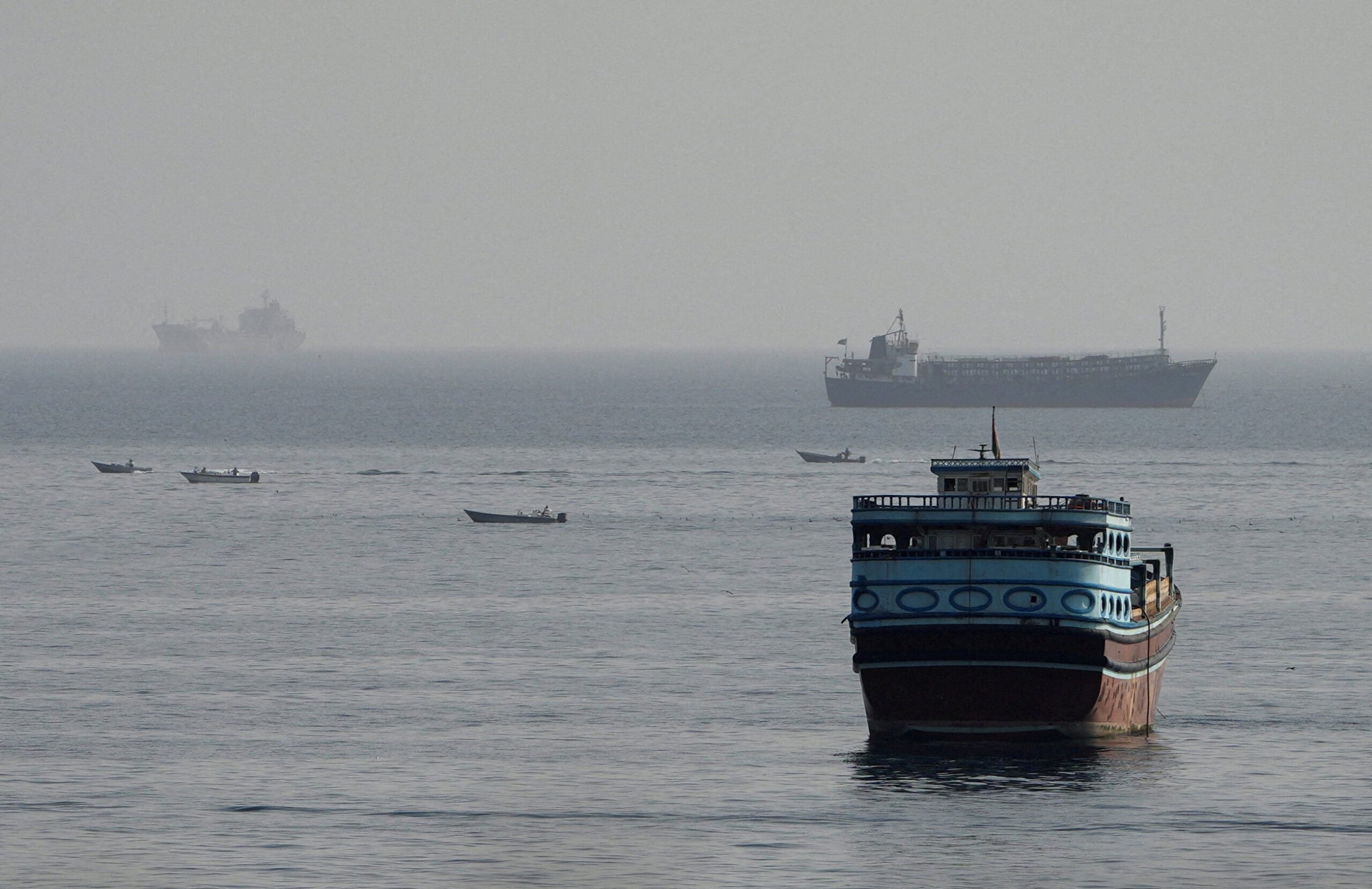
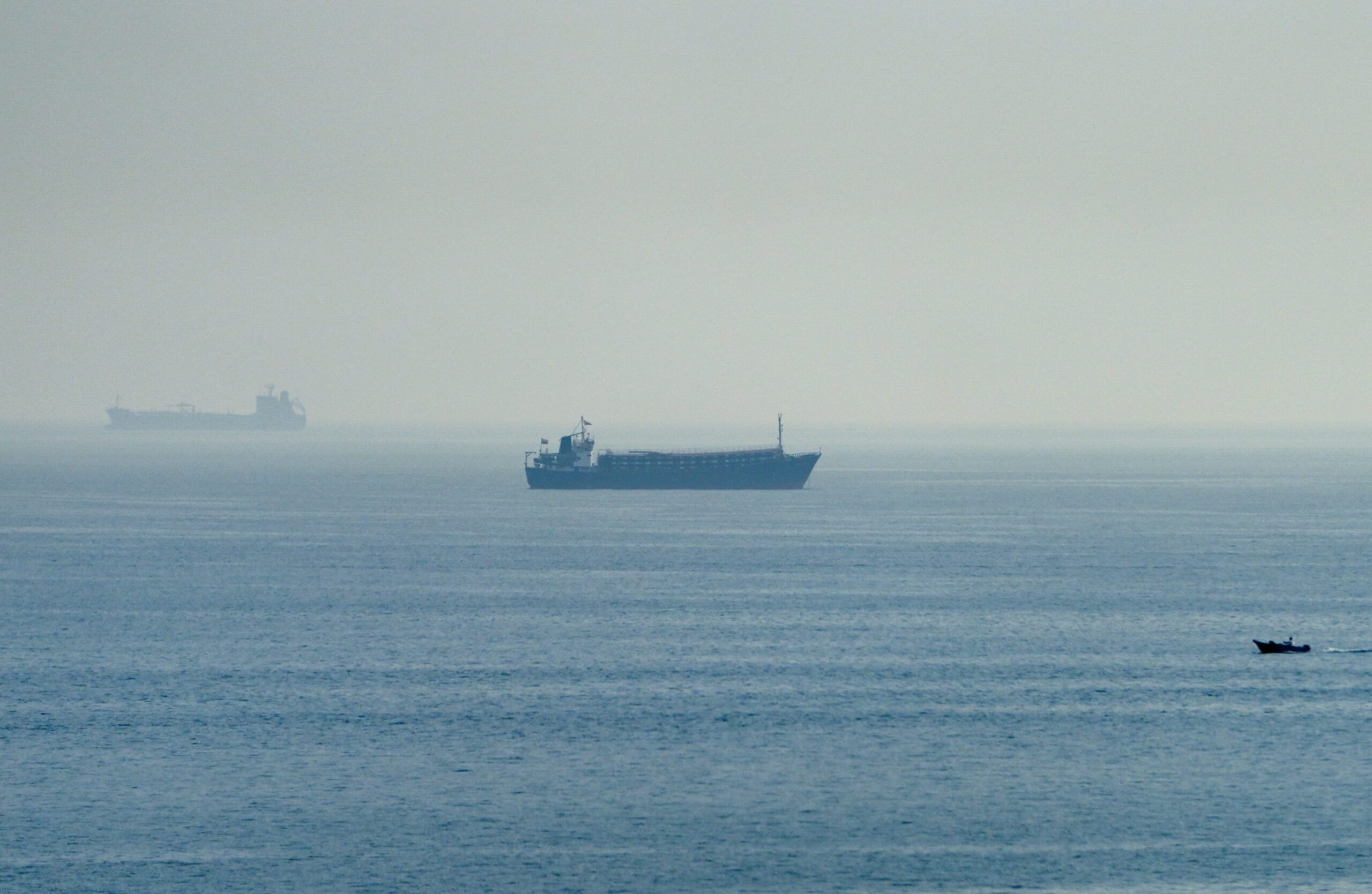
By Weilun Soon (Bloomberg) –Iraq-bound supertanker Agios Fanourios I has sailed into the Persian Gulf through the Strait of Hormuz on its second attempt, making it the first crude carrier to head west since a US blockade on Iran’s ports came into force.
Traffic through the chokepoint remains extremely limited. Some ships that made it through the narrow waterway and out into the Gulf of Oman as the blockade was put in place ultimately aborted their journeys and retraced their routes — including the US-sanctioned Rich Starry. The US has said six ships turned around on the first day, without providing detail.
Iran’s semi-official Fars news agency said one unnamed supertanker had sailed through Hormuz into Iranian waters in spite of US warships — a possible reference to the US-sanctioned Alicia, which is sailing out of the strait and into the Persian Gulf.
Despite Iranian controls over Hormuz and a US naval blockade threatening Iran-linked vessels on the other side, a trickle of ships moved in both directions through the corridor on Wednesday, according to tracking data. There appeared to be no Iranian tankers trying to make their way out of the Persian Gulf — the direction that would take them head-first into the US Navy — though the data does not capture ships that attempt to cross with transponders off.
Update: U.S. Turns Back Nine Ships as Iran Port Blockade Holds, Tankers Test Limits
Iran is considering a short-term pause on shipments, partly to avoid testing the blockade and to avoid scuppering potential peace talks, Bloomberg reported on Tuesday.
The Agios Fanourios I, which is not blacklisted and is broadcasting its destination as Basrah, in Iraq, where it will collect a cargo — has transited the strait along a Tehran-approved route between the islands of Qeshm and Larak, the data show. The Seachampion, a bulk carrier that delivered agricultural products to Iran last week, traveled in the opposite direction a few hours later, passing south of Larak on its way into the Gulf of Oman.
Read More: What to Know About the US Blockade of Hormuz Strait: Explainer
An armada of US warships, which aims to pressure Iran by curbing its oil exports, has been attempting to monitor and control traffic outside the strait in the Gulf of Oman.
Since Monday, shipowners, energy traders and investors have been closely monitoring transits through the strait for an indication of exactly how Tehran and Washington are exercising control over one of the world’s busiest shipping corridors — and for signs the two sides could be inching toward peace.
Agios Fanourios I’s first attempt to head back into the Persian Gulf was cut short on Sunday when talks between US and Iran collapsed in Islamabad. A call and an email sent outside regular hours to Agios Fanourios I’s manager, Eastern Mediterranean Maritime, as shown on database Equasis, weren’t answered.
The Seachampion, meanwhile, will test a US guarantee that humanitarian shipments, including food, medical supplies and other goods essential for the survival of civilian populations, would be permitted, subject to inspection. It left Iran’s Bandar Imam Khomeini, a major grains import hub, on Monday, data show, within a grace period that the US offered before the blockade came into effect. It’s indicating Shinas, an Omani port, as a destination.
Thenamaris ConBulk Inc. is listed as manager for Seachampion. A spokesperson for Thenamaris said it did not comment on commercial matters. The company complies with all international laws and sanctions, the person added.
Traffic through the chokepoint — at a near-halt since the US and Israel began strikes against Iran at the end of February — had ticked up last weekend, with three oil supertankers having made it through on Saturday, laden with cargo. But a collapse in peace talks and subsequent blockade threats prompted shipowners to say they would avoid transits until the rules of engagement are clear.
The Rich Starry has now sailed west in the strait and stopped off Qeshm island, data show. It’s signaling that it’s waiting for orders, often a sign that it has no clear port of call. Ship-tracking data shows that it is still fully laden with the same cargo it exited the Persian Gulf with, though Bloomberg News couldn’t immediately determine the nature of the shipment.
Read More: US-Sanctioned Tanker Tests Trump Blockade With Hormuz Exit
The Alicia has sailed alongside it into the Persian Gulf. That empty supertanker, sanctioned last year under its former name Montrose over its links to the Iranian oil trade, is currently heading out of the strait. It had briefly indicated that it was sailing to Iraq’s Basrah, but has since switched to indicate that it’s waiting for orders.
Rich Starry is owned by Full Star Shipping Ltd., which shares the same contact details as Shanghai Xuanrun Shpg. Co. Ltd.. A call made to Shanghai Xuanrun did not get through, while the company didn’t respond to an emailed request for comment. The Shanghai-based entity is also sanctioned by the US State Department.
A call made to Alicia’s owner and manager, Placencia Services Inc., wasn’t answered.
© 2026 Bloomberg L.P.

 Join The Club