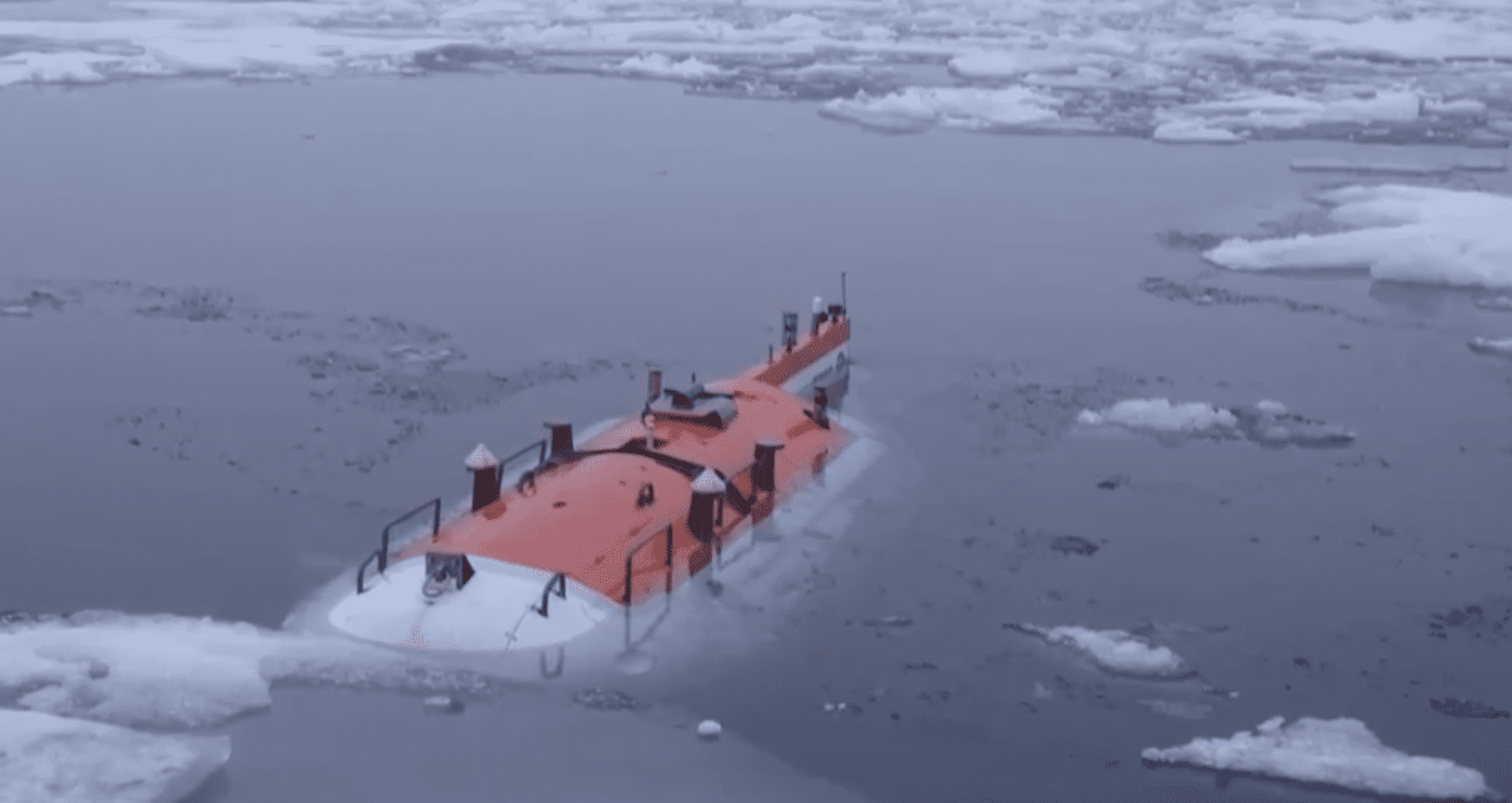
China has completed 43 successful manned submersible dives during its 2025 Arctic expedition, including coordinated missions using two crewed deep-sea vehicles, the country’s Ministry of Natural Resources announced.
“This is about deep-sea resource development and future generations. China is positioning itself to be the world leader in deep-sea and seabed resource management,” comments says Elizabeth Buchanan, a polar geopolitics expert at the Australian Strategic Policy Institute.
The deep-sea dives were carried out by two submersibles Fendouzhe and Jiaolong carried aboard the research ice-class vessels Tan Suo San Hao and Shen Hai Yi Hao. In total China dispatched five research ships, including an icebreaker, into the Arctic this past summer. Both submersibles are able to reach depths of at least 7,000 meters, with Fendouzhe reaching 10,909 meters at the Challenger Depth in 2020.
The dives occurred in the Beaufort Sea and in the central Arctic Ocean along the Gakkel Ridge. Gakkel is a mid-ocean ridge in an area of disputed extended continental shelf claims between Arctic coastal states, primarily Russia, Denmark/Greenland, and Norway.
The achievement underscores China’s growing presence in polar research, an area long dominated by Russia and Western nations.
A segment on China’s state broadcaster CCTV highlighted the “dual-manned submersible underwater collaborative operation mode.” Researchers say the dual submersible operations demonstrated new advances in navigation, communications, and under-ice safety critical to sustained Arctic exploration.
Submersible activity in the Arctic during the summer 2025. (Source: China Central Television CCTV)
While Beijing describes its Arctic activity as scientific, its expanding technical capabilities — including deep-diving and icebreaking operations — have drawn attention as the region is seeing increasing strategic competition and environmental impacts.
“I suspect Arctic rim nations particularly the U.S. would want to know exactly what devices were laid down by the submersibles at depths not easily reachable by current western capabilities. Again in the Arctic, this is a multi domain challenge for the West, and China has just upped the stakes in the deep-sea and seabed theatre,” she continued.
China has steadily increased its Arctic activity over the past decade, sending icebreakers, research vessels, and unmanned submersibles to the region. Beijing frames its efforts as part of a “peaceful scientific development” strategy, emphasizing climate research, marine biodiversity studies, and the mapping of undersea resources, while also seeking to secure a foothold along emerging Arctic shipping routes.
“The pace at which China is clearly shaping the battle field in the Arctic is impressive,” Buchanan concluded.
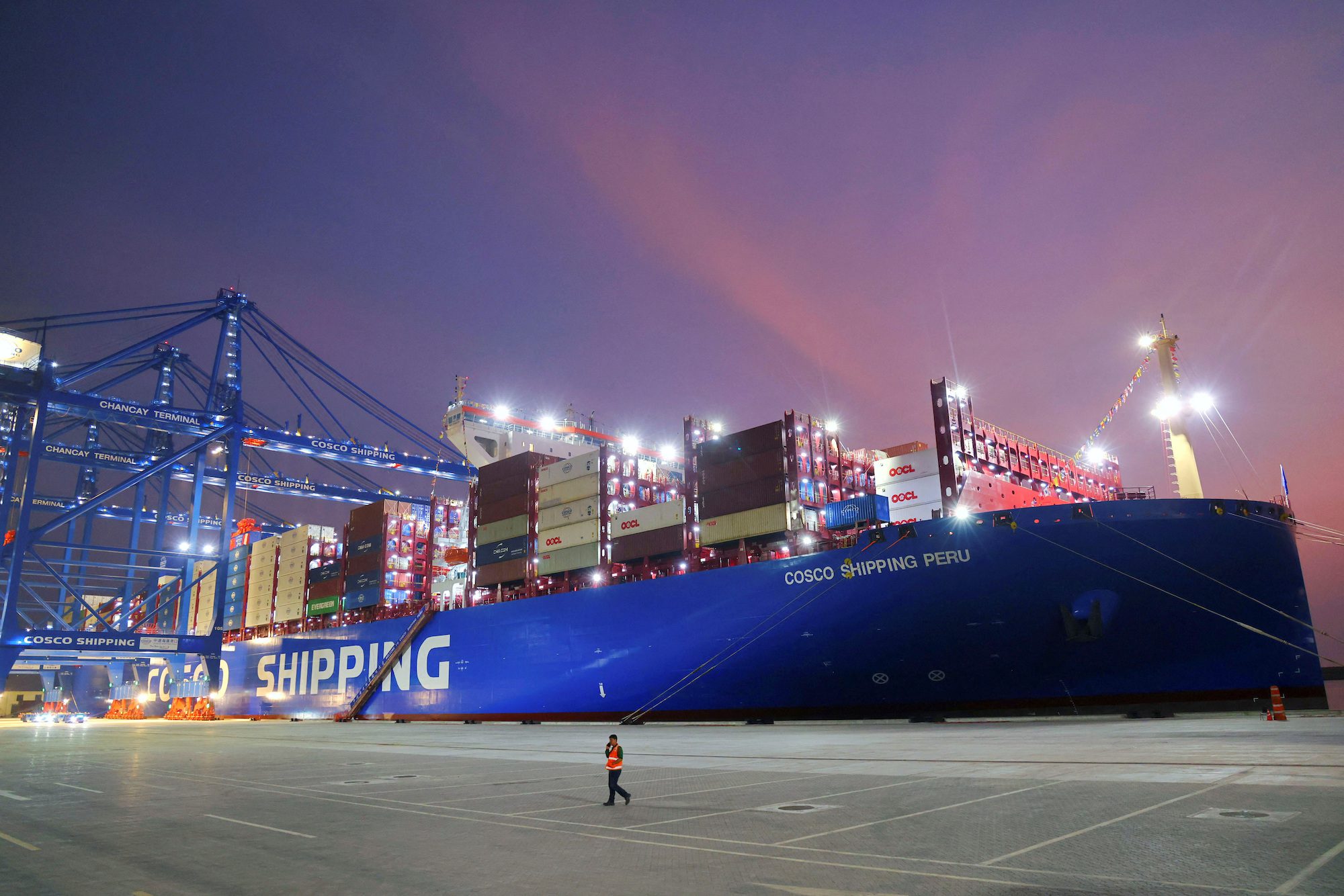
The Trump administration warned that Peru is losing sovereignty over a Chinese-owned port near its capital city, after a local judge ruled that the port is exempt from some regulatory oversight.
NATO will bolster its Arctic presence with a new mission after US President Donald Trump triggered an alliance crisis over his attempts to take Greenland.
Canada and France opened consulates in Greenland as Arctic tensions rise following Trump's claims the U.S. "needs" the territory. The symbolic move signals Ottawa's bid for a larger Arctic role amid decades of regional neglect.
February 8, 2026
Total Views: 1432
Get The Industry’s Go-To News
Subscribe to gCaptain Daily and stay informed with the latest global maritime and offshore news
— just like 107,230 professionals
Secure Your Spot
on the gCaptain Crew
Stay informed with the latest maritime and offshore news, delivered daily straight to your inbox
— trusted by our 107,230 members
Your Gateway to the Maritime World!
Essential news coupled with the finest maritime content sourced from across the globe.

 Join The Club