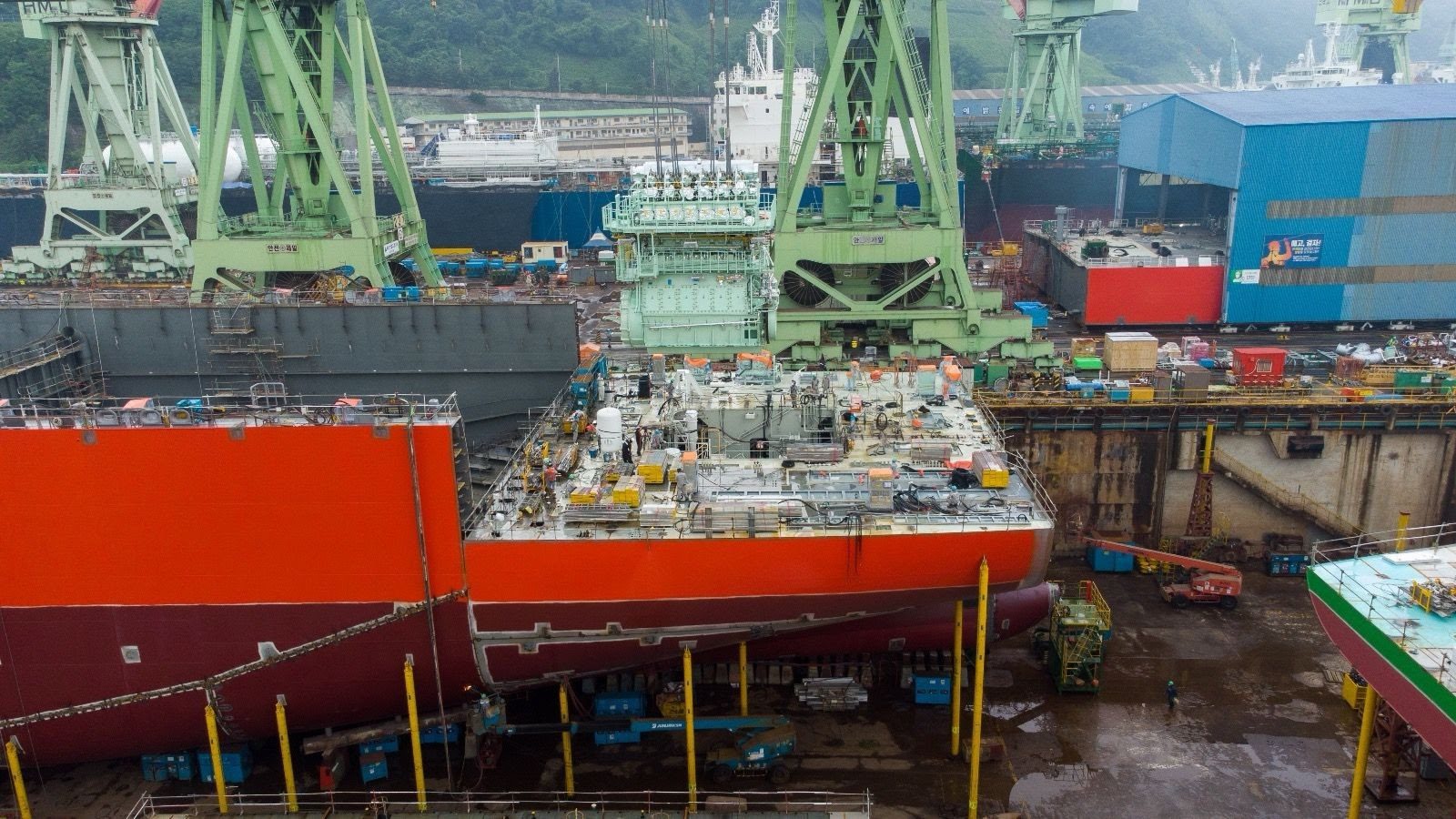
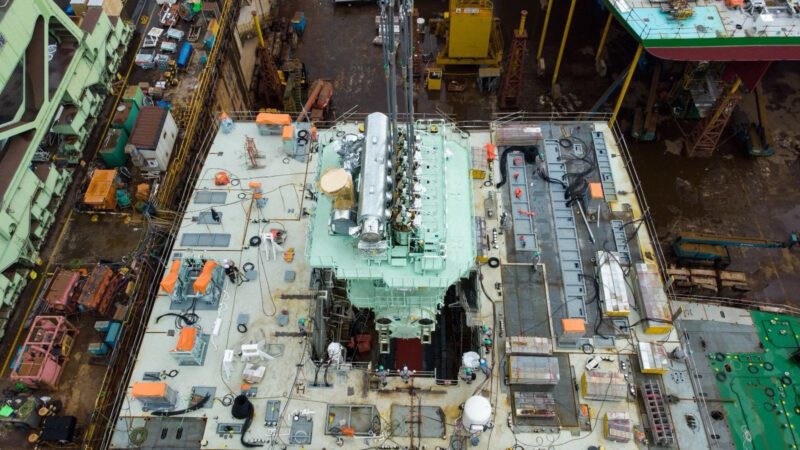
Swiss marine power company WinGD has achieved a significant milestone in maritime decarbonization with the successful delivery and installation of the world’s first ammonia-fuelled two-stroke marine engine. The X52DF-A engine has been installed on a 46,000m3 LPG/ammonia carrier being built for EXMAR, making it the first ammonia-fuelled gas carrier to enter service.
The 52-bore engine was built by HD Hyundai Heavy Industries’ Engine & Machinery Business Unit (HHI-EMD) and installed on the first of four sister vessels at HD Hyundai Mipo shipyard in South Korea. Factory testing confirmed the promising laboratory results, demonstrating low emissions and efficiency comparable to conventional diesel engines.
“With such convincing results it is clear that ammonia fuel has a vital role to play in the decarbonisation of our industry,” said Sebastian Hensel, WinGD Vice President of Research and Development. “Working with trail-blazer partners like EXMAR has been essential in bringing this technology to market.”
The 52-bore engine was built by HD Hyundai Heavy Industries’ Engine & Machinery Business Unit (HHI-EMD) and installed on the first of four sister vessels to be built at HD Hyundai Mipo shipyard in South Korea. Photo courtesy WinGD
The X-DF-A engine utilizes high-pressure ammonia injection with approximately five percent pilot fuel at full load. Performance metrics including load handling, dynamic response, and fuel efficiency match WinGD’s diesel-fuelled X Engines in both ammonia and diesel operating modes. Further optimization is planned for the second engine in the series, scheduled for delivery later this year.
WinGD is reporting an early orderbook of approximately 30 X-DF-A engines for various vessel types including gas carriers, bulk carriers, and container ships.
Ammonia’s potential as a marine fuel stems from its carbon-free composition, with the capability to reduce greenhouse gas emissions by up to 90% compared to conventional fuels when produced using renewable electricity. The X-DF-A platform offers shipowners a viable option as they navigate evolving regulatory and market demands on their journey to net zero emissions.
This development comes at a time when the maritime industry is experiencing a significant shift toward alternative fuels. According to recent data from DNV’s Alternative Fuels Insight platform, new orders for alternative-fuelled vessels reached 19.8 million gross tonnes in the first half of 2025, representing a 78% increase compared to the same period in 2024.
While LNG continues to dominate the alternative fuel market with 87 new vessels ordered so far this year, ammonia is showing early signs of adoption, particularly for tanker and general cargo operations.
As Jason Stefanatos, Global Decarbonization Director at DNV, noted, the industry is “actively recalibrating” its approach to decarbonization, with upcoming IMO fuel intensity rules expected to further accelerate the trend toward cleaner fuels.
For a decade, LNG has been sold to shipowners as the sensible bridge fuel. Cleaner than heavy fuel oil, widely available and backed by mature engine technology, it has won...
A new study from the Mærsk Mc-Kinney Møller Center for Zero Carbon Shipping finds that ethanol could become a practical alternative fuel for ships, particularly those already equipped with methanol-capable...
Alternative-fuel ship orders rebounded sharply in the third quarter, with September delivering the strongest monthly total in nearly two years as LNG remained the dominant choice for new vessels. Shipowners...
October 1, 2026
Total Views: 573
Get The Industry’s Go-To News
Subscribe to gCaptain Daily and stay informed with the latest global maritime and offshore news
— just like 106,720 professionals
Secure Your Spot
on the gCaptain Crew
Stay informed with the latest maritime and offshore news, delivered daily straight to your inbox
— trusted by our 106,720 members
Your Gateway to the Maritime World!
Essential news coupled with the finest maritime content sourced from across the globe.

 Join The Club