Two sanctioned Russian shadow fleet tankers caught fire in the Black Sea on Friday after suspected Ukrainian naval drone strikes off the Turkish coast. Extensive rescue operations successfully evacuated all crew members as Turkish authorities continue firefighting efforts.
The Security Service of Ukraine has reportedly claimed responsibility for the attacks in a joint operation with the Ukrainian Navy using “Sea Baby” naval drones.
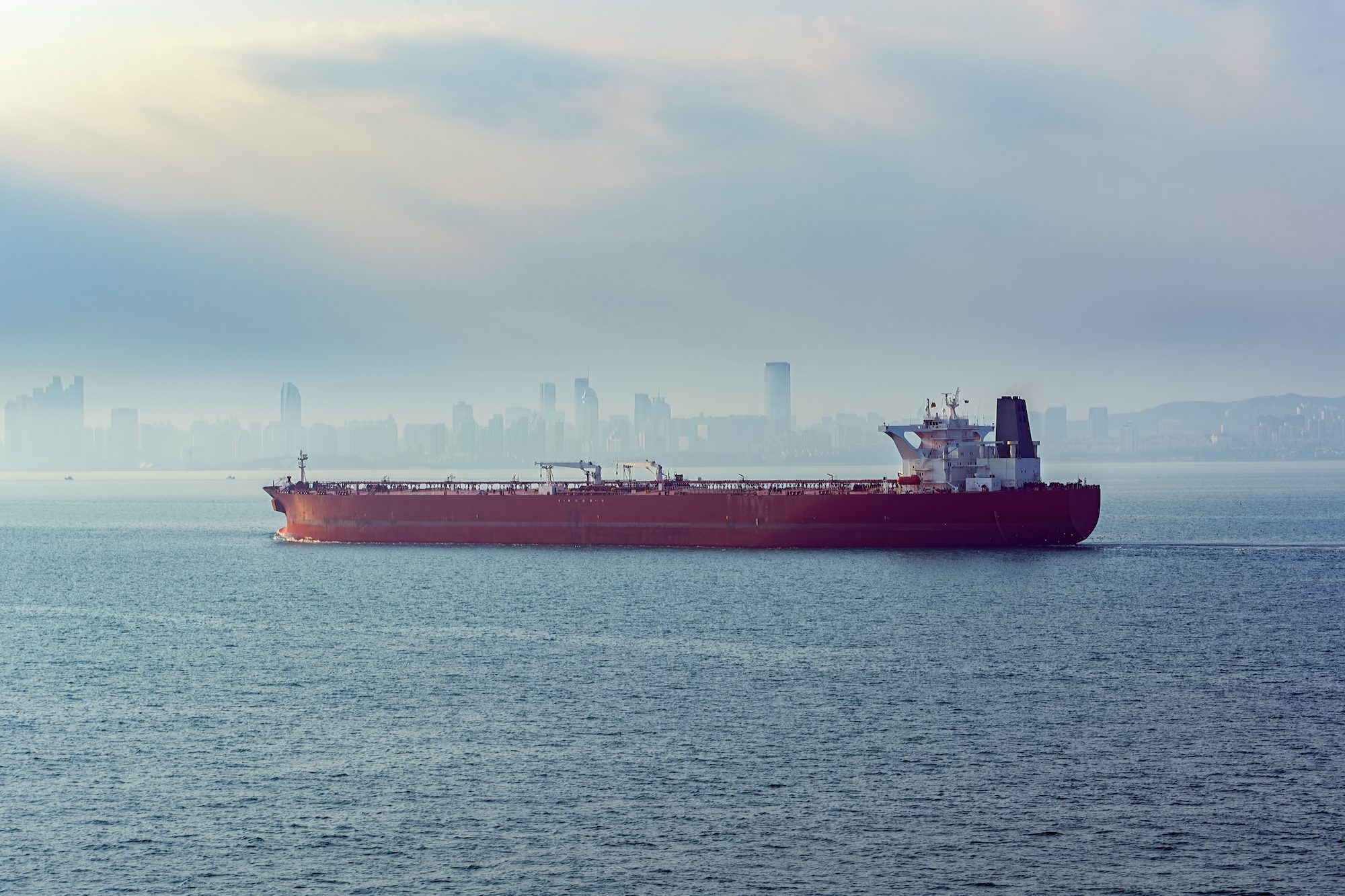
The 274-meter-long tanker Kairos, en route from Egypt to Russia’s Novorossiysk port, suffered an explosion and fire approximately 28 nautical miles offshore. Turkey’s Ministry of Transport and Infrastructure confirmed that all 25 personnel were safely evacuated by units from the General Directorate of Coastal Safety.
“During the Egypt-Russia voyage, the 25 personnel on the KAIROS tanker where a fire broke out due to an explosion have been safely evacuated by our teams from the General Directorate of Coastal Safety,” the ministry stated in its latest update.
Turkish rescue vessels KURTARMA-12, a tug, and NENE HATUN, an Emergency Response Vessel, worked throughout the night to combat the blaze. According to the ministry, “the fire on the open deck has been completely extinguished, and extinguishing and cooling efforts continue in the enclosed areas.”
Ukraine’s Sea Baby naval drones have delivered another blow to Russia’s shadow fleet — striking the sanctioned oil tankers KAIRO and VIRAT in the Black Sea and crippling both vessels.
According to an SBU source, the drones inflicted critical damage, effectively knocking the… pic.twitter.com/PbzPTuTWJx
A second tanker, the Virat, was struck approximately 35 nautical miles offshore in the Black Sea later the same day. Heavy smoke was detected in the engine room, though all 20 crew members were reported in good condition. Turkish rescue units and a commercial vessel were dispatched to assist.
The situation escalated on Saturday morning when the Virat was attacked again by unmanned vessels, sustaining minor damage to its starboard side above the waterline. The Turkish ministry reported that despite the second attack, “the vessel is maintaining its stable condition” and “the crew’s health condition is good.”
Both vessels are under international sanctions for their involvement in transporting Russian oil. The Kairos faces sanctions from the UK and EU, while the Virat has been sanctioned by the U.S. and EU.
Ukrainian officials claimed responsibility for the incidents. An official at the Security Service of Ukraine told Reuters that naval drones hit the two tankers as they headed to a Russian port to load oil destined for foreign markets.
“Video shows that after being hit, both tankers sustained critical damage and were effectively taken out of service. This will deal a significant blow to Russian oil transportation,” the Ukrainian official stated.
The incidents highlight growing concerns about Russia’s so-called “shadow fleet” of vessels operating outside normal regulatory oversight. Maritime intelligence analyst Michelle Wiese Bockmann of Windward AI revealed that Kairos was among 72 vessels recently deleted from the Gambian ship registry for fraudulently issued certificates.
“So this vessel [the Kairos] is flagless, stateless, and any insurance and class (if it has any) is invalidated by the fact that it’s falsely purporting to fly the flag of Gambia,” Bockmann stated. She added that “the dark fleet is an accident waiting to happen and incidents like this are but a harbinger of what is to come.”
The attacks represent an escalation in Ukraine’s campaign against Russian energy infrastructure. While Ukraine has been attacking Russian oil refineries for months using long-range aerial drones, the strikes on tankers at sea represent a different tactical approach.
Uncrewed naval drones have played a prominent role in Ukraine’s counteroffensive in the Black Sea, helping push back Russia’s fleet of warships.
Separately, the Caspian Pipeline Consortium, which handles more than 1% of global oil, halted operations on Saturday after a mooring at Russia’s Black Sea terminal was significantly damaged by a Ukrainian naval drone attack. The consortium exports mainly from Kazakhstan via Russia, and Kazakhstan called the attack unacceptable.
Turkish environmental unit experts and diver teams remain on standby in the region for inspection as firefighting efforts continue. The two incidents did not disrupt shipping traffic through the Bosphorus Strait, which continued normal operations.
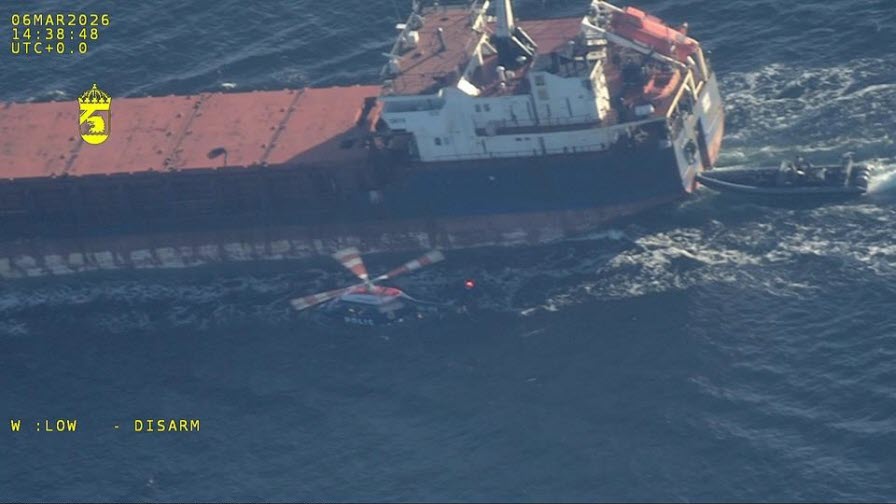
Swedish authorities have boarded and taken control of a cargo vessel in the Baltic Sea after determining the ship was operating as a suspected stateless ship, triggering an investigation and raising fresh concerns about illicit cargo flows tied to Russia’s war in Ukraine.
Russia is providing Iran with targeting information that includes locations of U.S. warships and aircraft in the Middle East, the Washington Post reported on Friday, citing three officials familiar with the intelligence.
The U.S. Treasury Department has issued a temporary sanctions waiver allowing Indian refiners to receive Russian crude oil cargoes already loaded on tankers, a narrowly targeted move aimed at preventing...
March 5, 2026
Total Views: 2149
Get The Industry’s Go-To News
Subscribe to gCaptain Daily and stay informed with the latest global maritime and offshore news
— just like 107,445 professionals
Secure Your Spot
on the gCaptain Crew
Stay informed with the latest maritime and offshore news, delivered daily straight to your inbox
— trusted by our 107,445 members
Your Gateway to the Maritime World!
Essential news coupled with the finest maritime content sourced from across the globe.

 Join The Club